By Matt Wallace
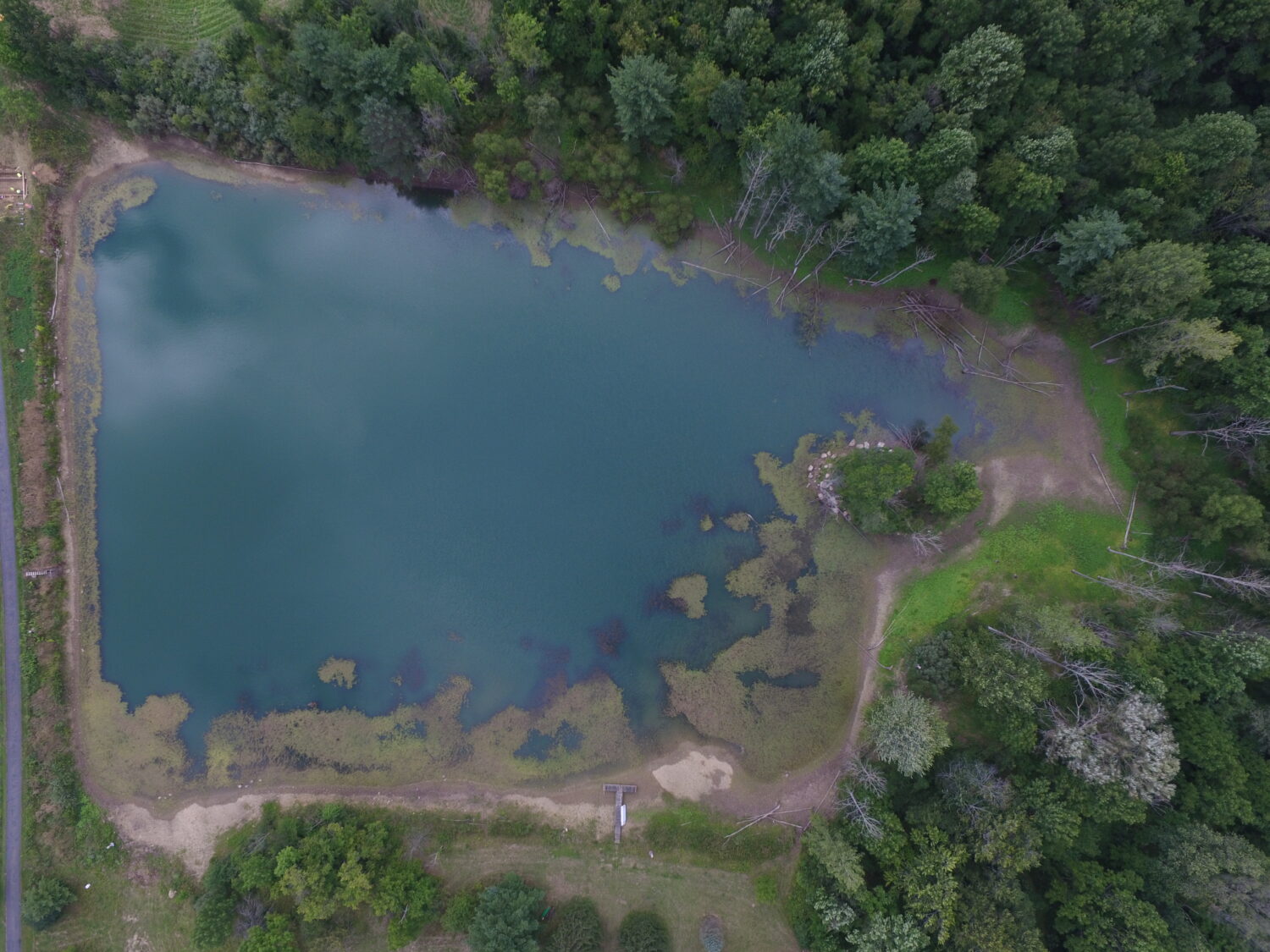
Springtime will bring about opportunities to make new memories with family and friends around your pond, but did you experience issues with various plants last year that you may have forgotten about? Things like watermeal (green, floating, granular plant), duck weed (small lobed floating green plants with a tiny root), cattails (green in the summer and brown in the winter extending above the waterline), or broadleaf watermilfoil (submerged leaves are finely dissected and cause the shoot to resemble the form of a raccoon tail, whereas leaves on the emergent bracts tend to be smaller and appear only in summer).
All of these plants can have the potential to provide feeding, loafing, and protective cover opportunities for waterfowl, fish, and other mammals. But like so many other things, they can become a nuisance, reduce plant biodiversity, create hypoxic zones and need to be controlled. Things like watermeal and duckweed are indicators of a high nutrient load in your pond which feed off muck in the bottom of your pond. Muck is natural and comes from dead and decaying plant material that can reduce oxygen, increase nutrients, and reduce your ponds volume. The best way to correct this is by using a live beneficial bacteria coupled with pond aeration. This will reduce the amount of muck in your pond, reduce the nutrients that cause excessive plant growth, and restore lost volume. For pond advice, give us a call.