2026 is Off to a Good Start

Highlights from our recent events!

By Theresa Sutter

Winter is quieter in terms of our work, but it is a great time to plan, decide, and organize what we want to accomplish during the year.  We are assisted by following our Annual Plan of Work which ensures we stay on track. There are always speaking events, school requests and other items that pop up, but they make our days interesting. No day is alike and that’s the way I like it!

We kicked off the year with our first Conservation Creation Arts & Crafts Workshop series in January.  Pete Porter of the Richland Solid Waste Management Waste Authority was our guest speaker, and he clued us in on what his organization does, what items to recycle, and where to recycle.  We transformed a nondescript recycled tin can into a pretty container.

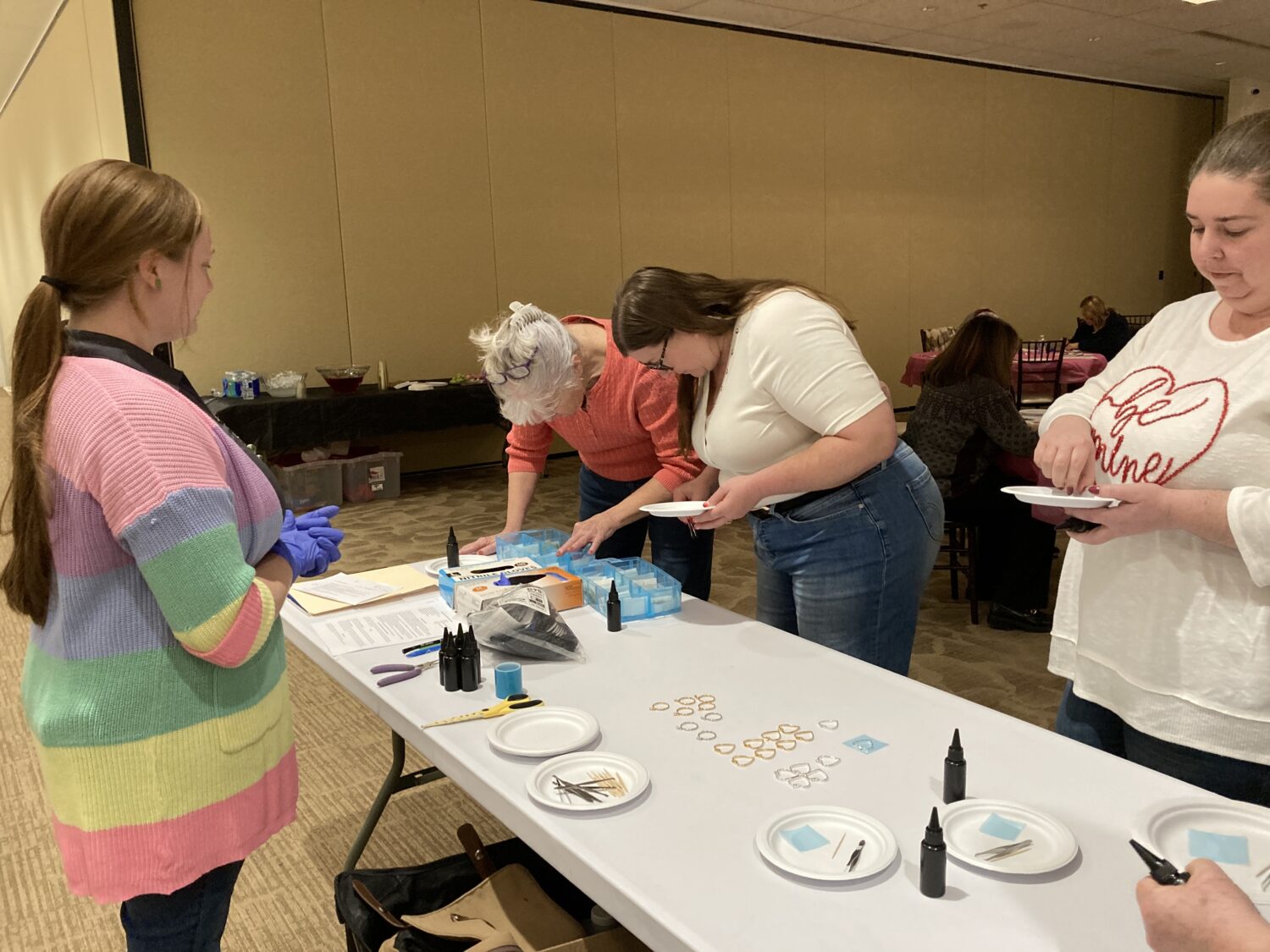
In February we collaborated with Kingwood Center Gardens and North Central Women Owning Woodlands (NCWOW) to offer a special Galentine’s Day event.  Abigail Kent of Emerald Bee directed us on how to make beautiful woodland-themed resin jewelry pendants. They turned out beautiful!  Katie Gerber and Karen Gotter of NCWOW told us about their organization, included fun tree facts and opportunities to win field guides, and sparked lively discussions.  Plus, we had fantastic food and beverages!

4 women gathered around a table with their recycled containers smiling for the camera.
January Conservation Creation Workshop
4 attendees around a table gathering supplies to make their pendants.
February Galentine’s Day Event

In March our thoughts turned to ponds and the annual pond fish sale. Both activities get us excited about the upcoming spring and summer seasons.  Steve Fender of Fender’s Fish Hatchery is an expert on pond management and stocking a pond. He has an easy-going style and instead of a classroom format our Pond Clinic is a Question-and-Answer session. The informality encourages questions and discussion, and everyone has their questions answered. Sometimes we don’t always know what questions, so the Pond Clinic is especially beneficial to those who are considering a pond.

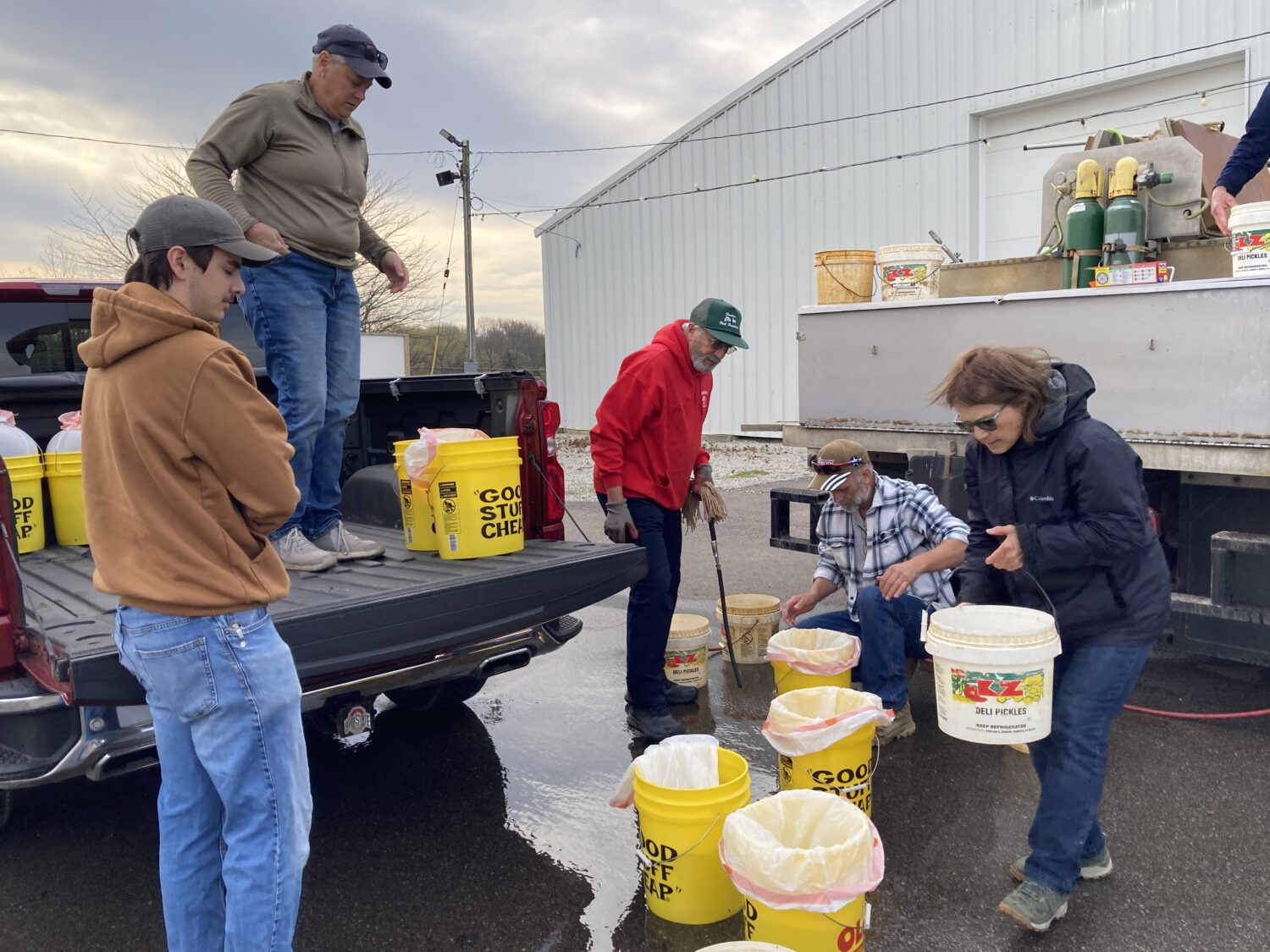
If you have a pond, one of the ways you might want to enjoy it is by stocking it with fish. Fishing is a wonderful way to bond with family and friends.  One service we offer is the opportunity to purchase fingerling fish through our annual pond fish sale. Fender’s Fish Hatchery out of Baltic, Ohio brings up the “fish truck” (try to envision the old ice cream trucks with freezer sections for the different varieties of ice cream only each section is for a different fish species.) If you haven’t been to Baltic, it’s a beautiful drive, but a bit of a distance. The sale eliminates the drive so saves customers time and money. This year’s deadline to order was April 2 and the pickup was April 10 at the Richland County Fairgrounds.  Watch our website and social media for next year’s sale.
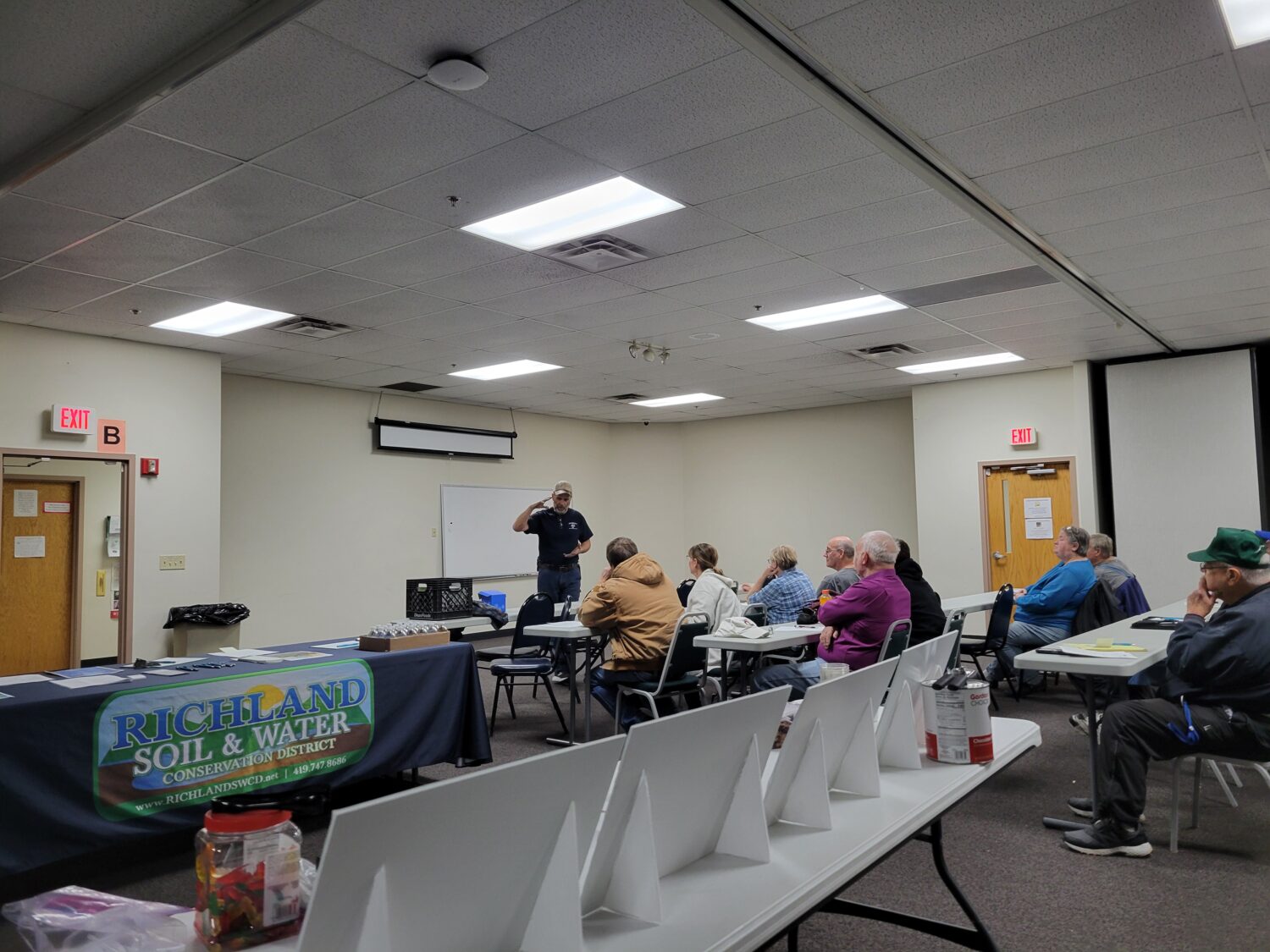
Steve Fender speaking to a group of seated people at the pond clinic.
Pond Clinic
5 people gathered around buckets working the fish sale
2026 Fish Pick-Up

Our second Conservation Creation workshop was April 14.  We made seed tape and Beth Brown, Ohio State University Master Gardener, was our guest speaker.  She is a flower, herb, and vegetable gardener and shared her successes and challenges.  At each workshop we have trivia with the theme of the evening’s topic, which was seeds.  It’s amazing what you can learn while having so much fun!

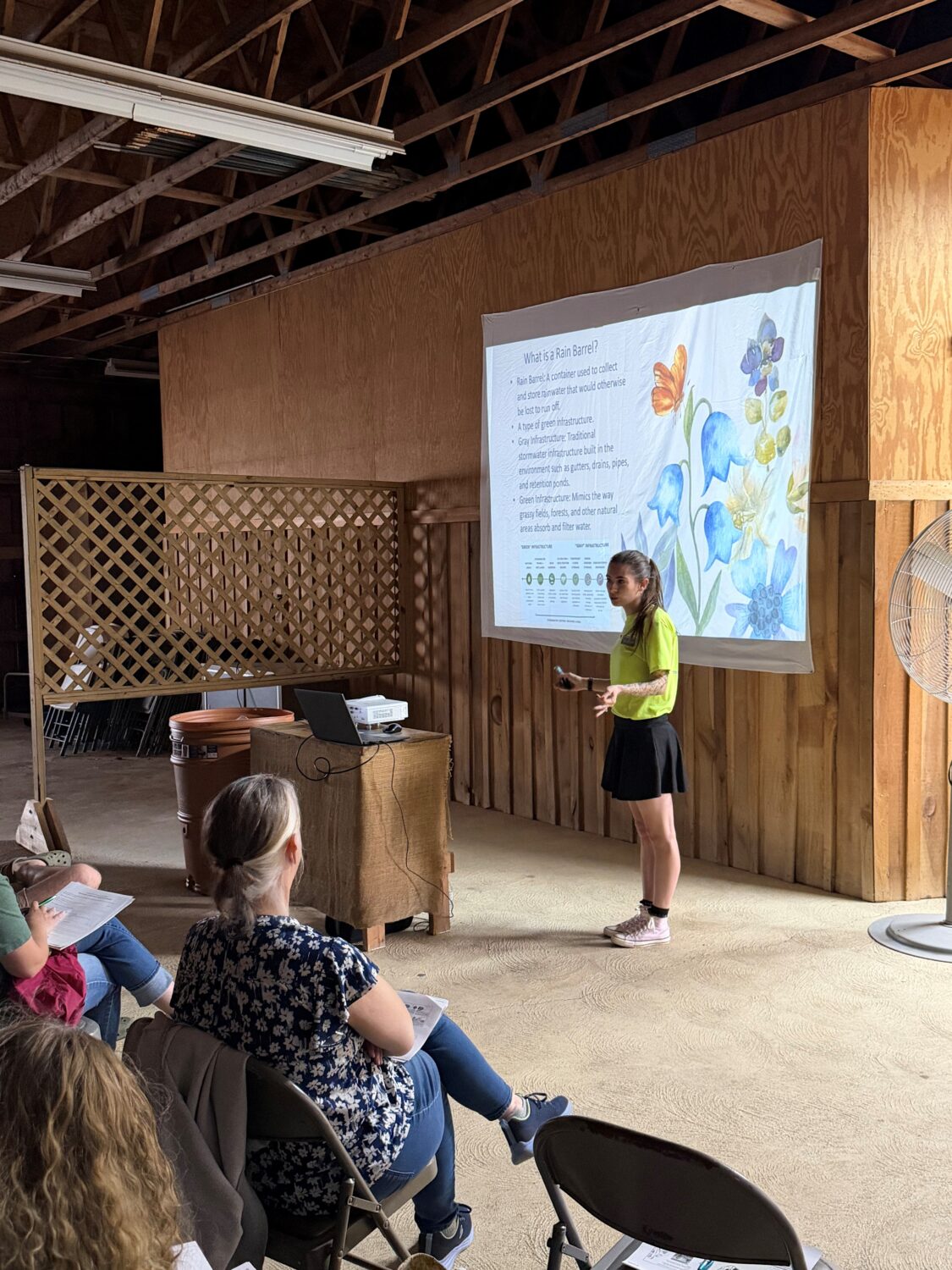
To help manage stormwater in a pretty and practical way, we recommend using Rain Gardens and Rain Barrels.  Rain gardens are planted with native plants in a saucer-shaped garden that collects rain off roofs, driveways, or yards so plants are watered whenever it rains. Rain Barrels collect rain off roofs, too, and the water may be used to water gardens. The rain barrels we sell also have a lid that may be used as a planter and filled with pretty plants. Although Rain Gardens and Rain Barrels are attractive, they fulfill their primary purpose of preventing runoff, especially polluted runoff that is unfiltered and ends up in local waterways. To learn more about the benefits and purposes of Rain Gardens and Rain Barrels we held a workshop April 15 to a full house at the Richland County Fairgrounds Nature Park. As part of the workshop, we gave attendees a free Rain Garden guide to spark their imagination and interest.
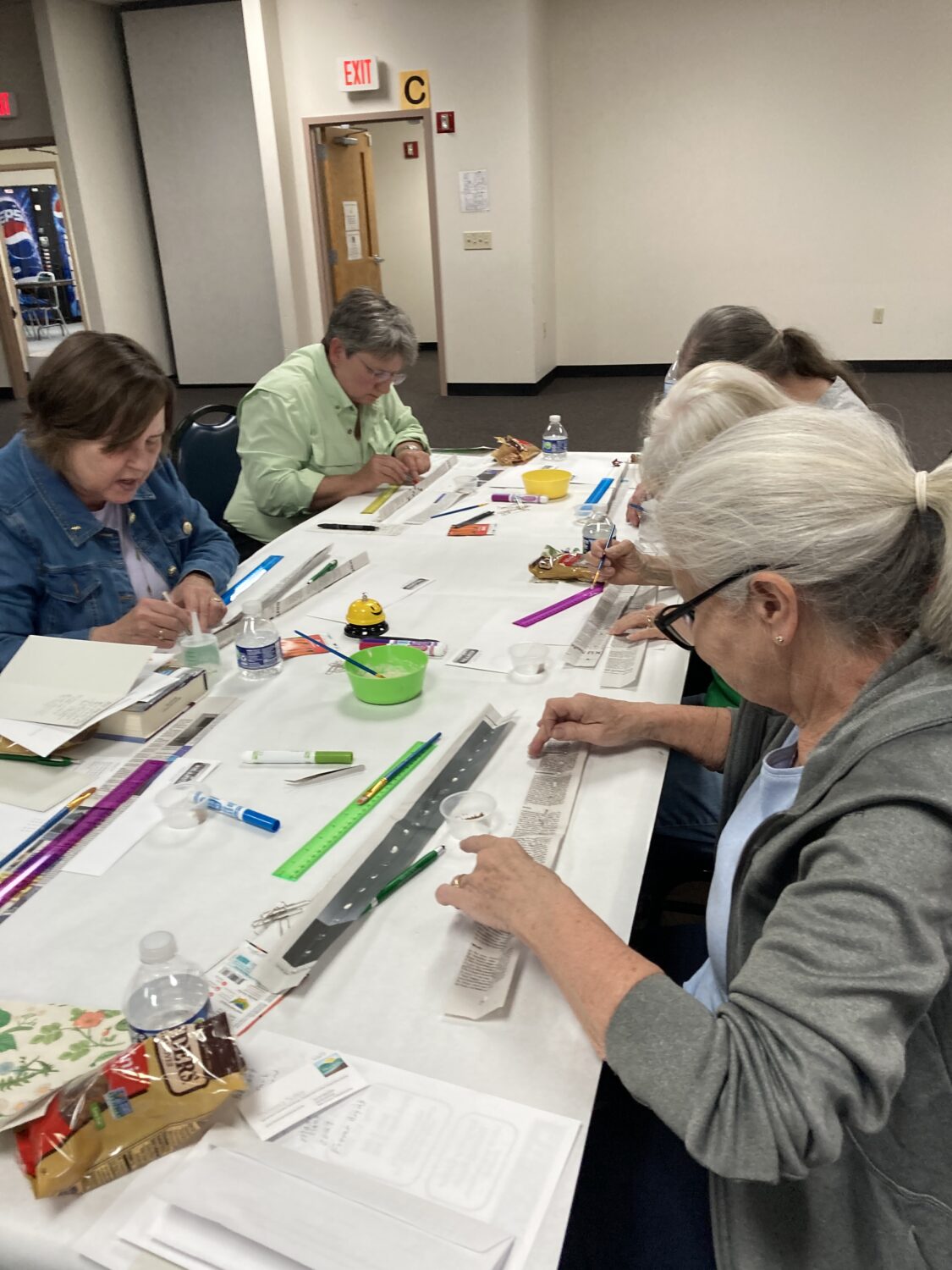
5 ladies gathered around a table making seed tape out of newspaper
April Conservation Creation Workshop
Zoe standing in front of a powepoint slide titled "what is a rain barrel". There are 2 audience members in the front row,
2026 Rain Garden & Rain Barrel Workshop

Our final spring event I want to highlight is our Native Plant Workshop Plus Sale on May 12 at our office building located at 1495 W. Longview Avenue in Mansfield. This is a free workshop where you can learn more about native plants, plus purchase them. Our guest speaker is Rachel Coy-Mecurio of Pheasants Forever and she’ll discuss pollinator habitat establishment and management at the 6 pm workshop. Native plants are available for purchase from 5 to 6 pm and briefly after the workshop. The Native Yard Project and Wild Acre will also have tables. Reserve your seat for the workshop at https://richlandswcd.net/event/native-plant-program-plus-sale/.

To find out about future events watch our website at https://richlandswcd.net/, our Facebook page at https://www.facebook.com/richlandswcd/ or Instagram page at https://www.instagram.com/richlandswcd/?hl=en.
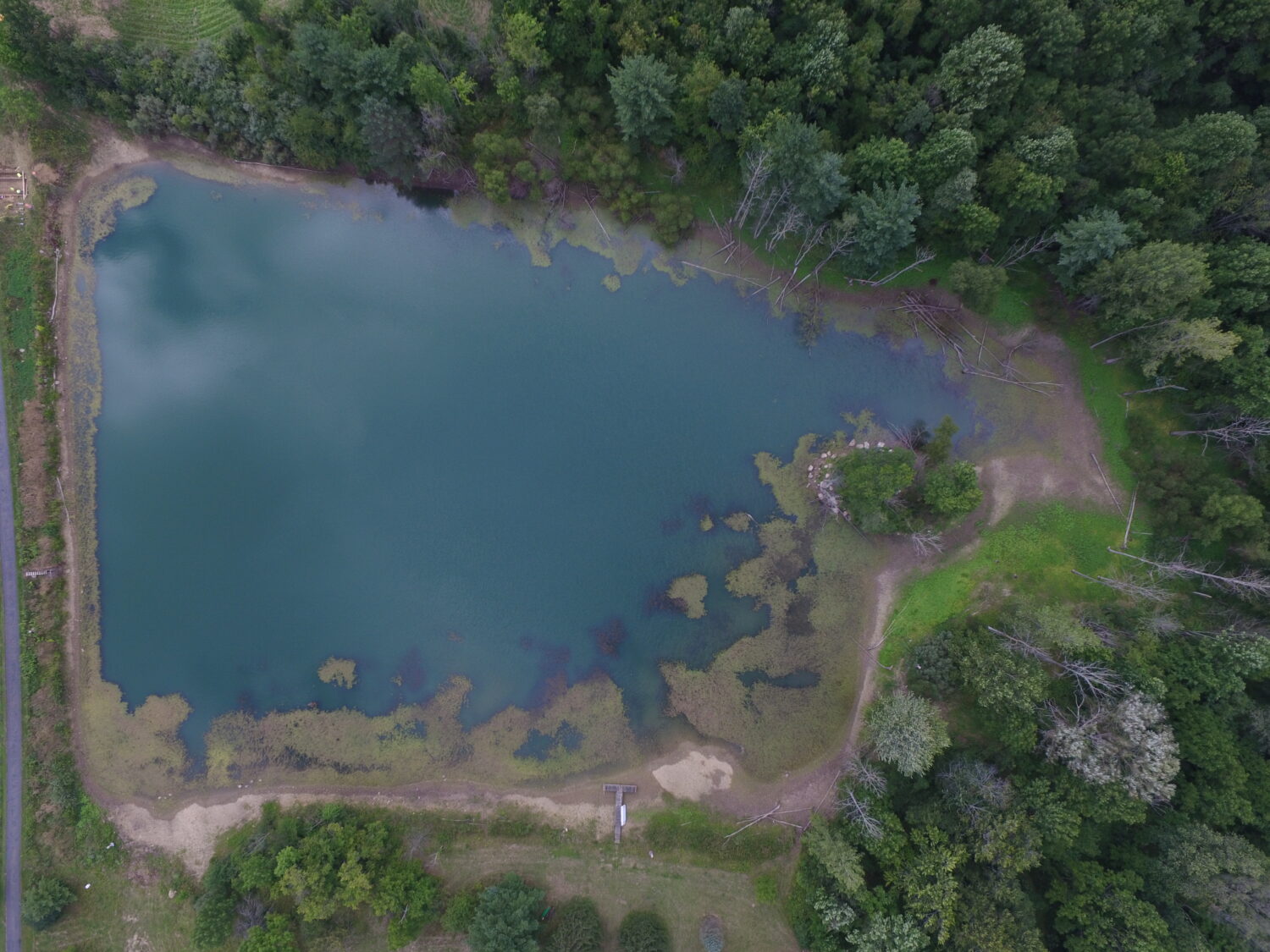
Photo of Theresa Sutter, Marketing & Volunteer Coordinator. Her bio reads "Theresa and her husband live in the Lucas area. They both love the different terrain and wildlife throughout the County, and enjoy the beauty of nature whenever possible."

Upcoming Events

Don’t miss these spring events!

Upcoming Events

Ponds and Plants

How nutrients impact your pond.

By Matt Wallace

Springtime will bring about opportunities to make new memories with family and friends around your pond, but did you experience issues with various plants last year that you may have forgotten about? Things like watermeal (green, floating, granular plant), duck weed (small lobed floating green plants with a tiny root), cattails (green in the summer and brown in the winter extending above the waterline), or broadleaf watermilfoil (submerged leaves are finely dissected and cause the shoot to resemble the form of a raccoon tail, whereas leaves on the emergent bracts tend to be smaller and appear only in summer).

All of these plants can have the potential to provide feeding, loafing, and protective cover opportunities for waterfowl, fish, and other mammals. But like so many other things, they can become a nuisance, reduce plant biodiversity, create hypoxic zones and need to be controlled. Things like watermeal and duckweed are indicators of a high nutrient load in your pond which feed off muck in the bottom of your pond. Muck is natural and comes from dead and decaying plant material that can reduce oxygen, increase nutrients, and reduce your ponds volume. The best way to correct this is by using a live beneficial bacteria coupled with pond aeration. This will reduce the amount of muck in your pond, reduce the nutrients that cause excessive plant growth, and restore lost volume. For pond advice, give us a call.

Aerial image of a big pond with green algae growing along the edges.
Drone photo by Matt Wallace
Photo of Matt Wallace, District Technician. His bio reads "Matt is a lifelong resident of the Shiloh area where he resides with his wife and their two fur babies. He has a passion for the outdoors and being a part of the CB&S Joint Fire District."

Stormwater Permits: How Many and Who’s Covered

Spring permit numbers and a stormwater exemption reminder.

By Sam Foley

There’s been a lot of activity in the stormwater permitting office to start off 2026. So far this year Richland SWCD has issued 24 residential stormwater permits and 23 residential permit exemptions. Exempted permits are projects or sites that don’t reach any of the thresholds outlined in the County’s Stormwater and Sediment Control Regulations. We have also issued 21 commercial permits, with the majority of those being small commercial site maintenance at oil and gas wells. If your project is carried over from 2025 you can expect our office to be requesting stabilization of your site this spring. Warm weather is right around the corner and there’s no better time to get some grass growing!

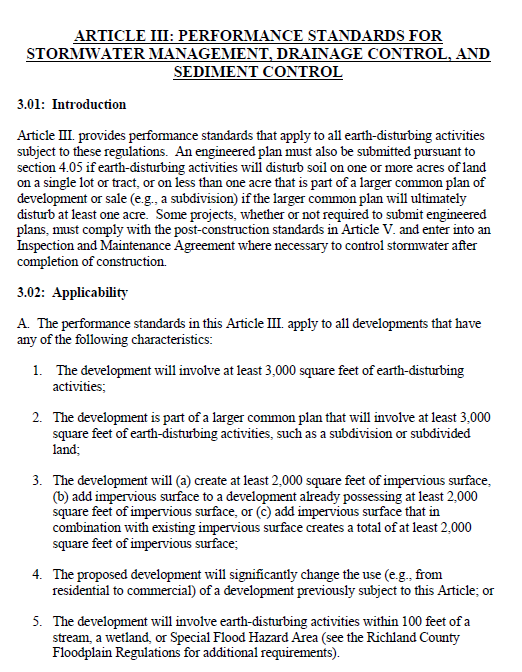
For this month’s stormwater minute, I wanted to briefly touch on the regulations mentioned above. In the Applicability section of the County’s regulations, it is laid out which projects will be required to adhere to these standards. Projects involving earth-disturbing activities of over 3,000 square feet or new hard surfaces of over 2,000 square feet, must obtain the stormwater permit. A development that would significantly change the use of the property (from residential to commercial, for instance) would also be applicable. Finally, any development involving earth-disturbance within 100 feet of a stream, wetland, or Special Flood Hazard Area must follow the performance standards laid out in the regulations.

Think your project might be exempt? Great, but we still need to make that call! Stop by our office and fill out an application so Zoe or I can officially confirm and sign off on your stormwater permit exemption. If you have any questions about applicability of your project, please contact our office for guidance.

Screenshot of the applicability section of the Sediment and Erosion Control Regulations of Richland County.
Photo of Sam Foley, District Technician. His bio reads "Sam is passionate about sustainability and enjoying the finer things in life. He grew up in Shelby, OH, but moved to the big city and now resides with his family in Mansfield. When he’s not at work, he’s spending time with them."

From Planning to Prevention: Spring MS4 Update

First quarter updates and green car washing practices!

By Zoe Baumberger

The first quarter of 2026 focused on behind-the-scenes administrative work to prepare not only for the year ahead, but for the 2026-2030 permit term. This included submitting our annual report to the Ohio Environmental Protection Agency and closing out a successful 2025. Sam and I also created a map of the post-construction BMPs we’ll be inspecting this permit term. It was a bit of an undertaking and we’re proud of the result. Another key focus of Q1 was developing goals for the new permit cycle. We plan to update our outfall maps and collaborate with partner organizations to create new opportunities for public education and involvement. We have clear goals for the next permit terms and are excited to see them come to fruition.

As spring arrives washing the winter salt off your car is a good maintenance practice. However, when you wash your car in your driveway or on other impervious surfaces, soap, oil, dirt, and salt can run off into storm drains. Runoff from vehicle washes can contain high amounts of nutrients, metals, and hydrocarbons that adversely affect aquatic ecosystems. What goes down the drain goes into the environment!

So what can you do to protect local waters?

  • Go to a commercial car wash facility that treats wash water
  • Use a biodegradable, phosphate-free, water-based detergent
  • Limit the amount of detergent used
  • Wash cars in the yard
  • Direct wash water to pervious areas like grass or gravel
  • Use a car wash kit to protect nearby storm drains from wash water

Together we can ensure that only rain goes down the storm drain! Learn more about green vehicle maintenance and car washing here: https://www.epa.gov/system/files/documents/2023-01/bmp-vehicle-maintenance-and-washing.pdf

Graphic of a soapy car bumper being washed. Text reads "it's not just soap from washing your car that goes down the storm drain. It's also the oils and dirt from your car that go directly into the drain and run into our lakes and rivers, untreated, harming the fish and our water."
Photo of Zoe Baumberger, District Technician. Her bio reads "Zoe grew up in Mansfield and now lives in Ashland with her husband and their two canine companions. She enjoys spending time outdoors whether that’s gardening, admiring native plants or finding new ways to live more sustainably. When she’s not outside, you’ll find her reading or baking while listening to Taylor Swift."

ODA Cover Crop Demonstration Plot – Spring Observations

Timelapse video and recent observations.

By Jordan Keller

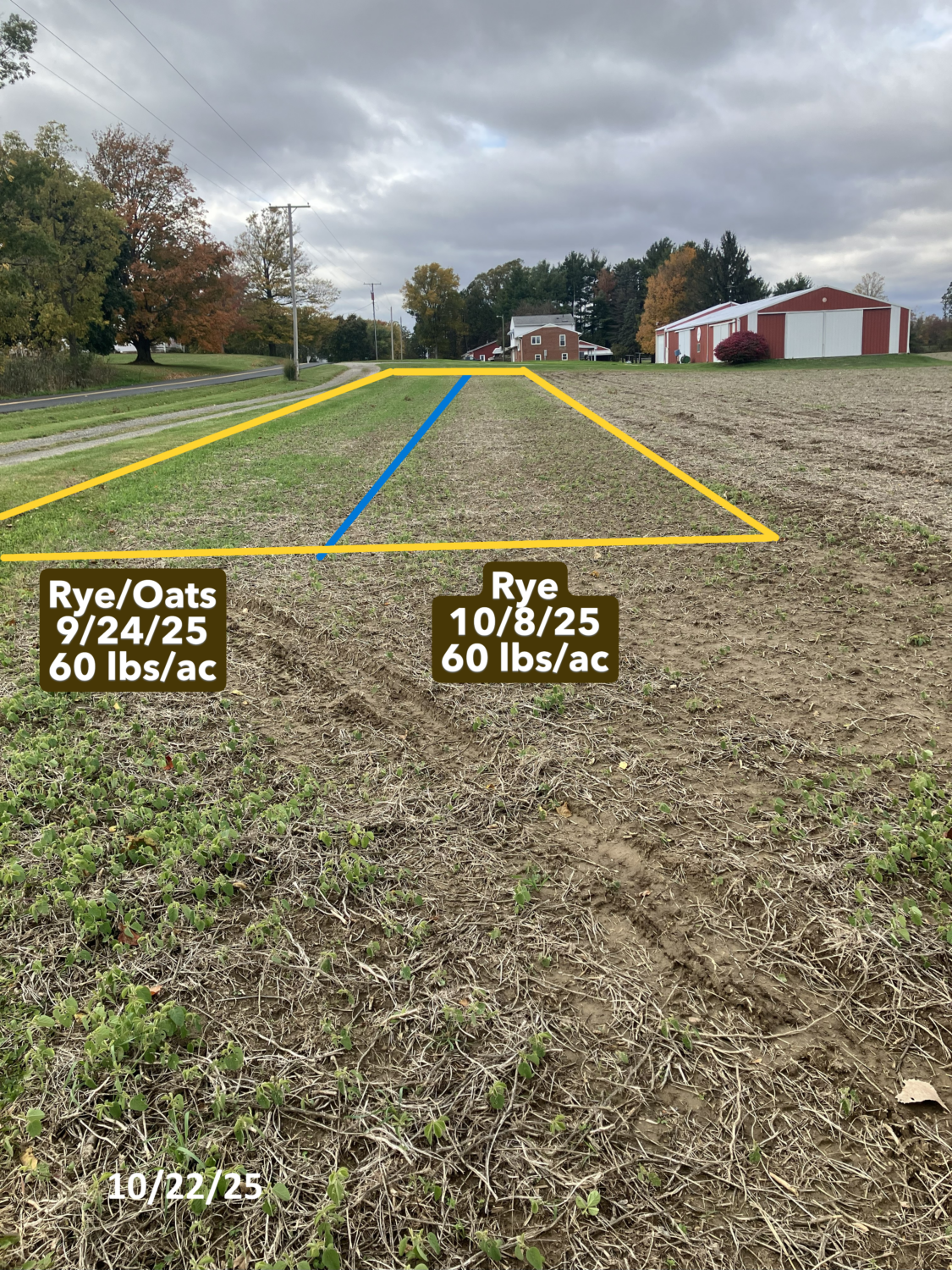
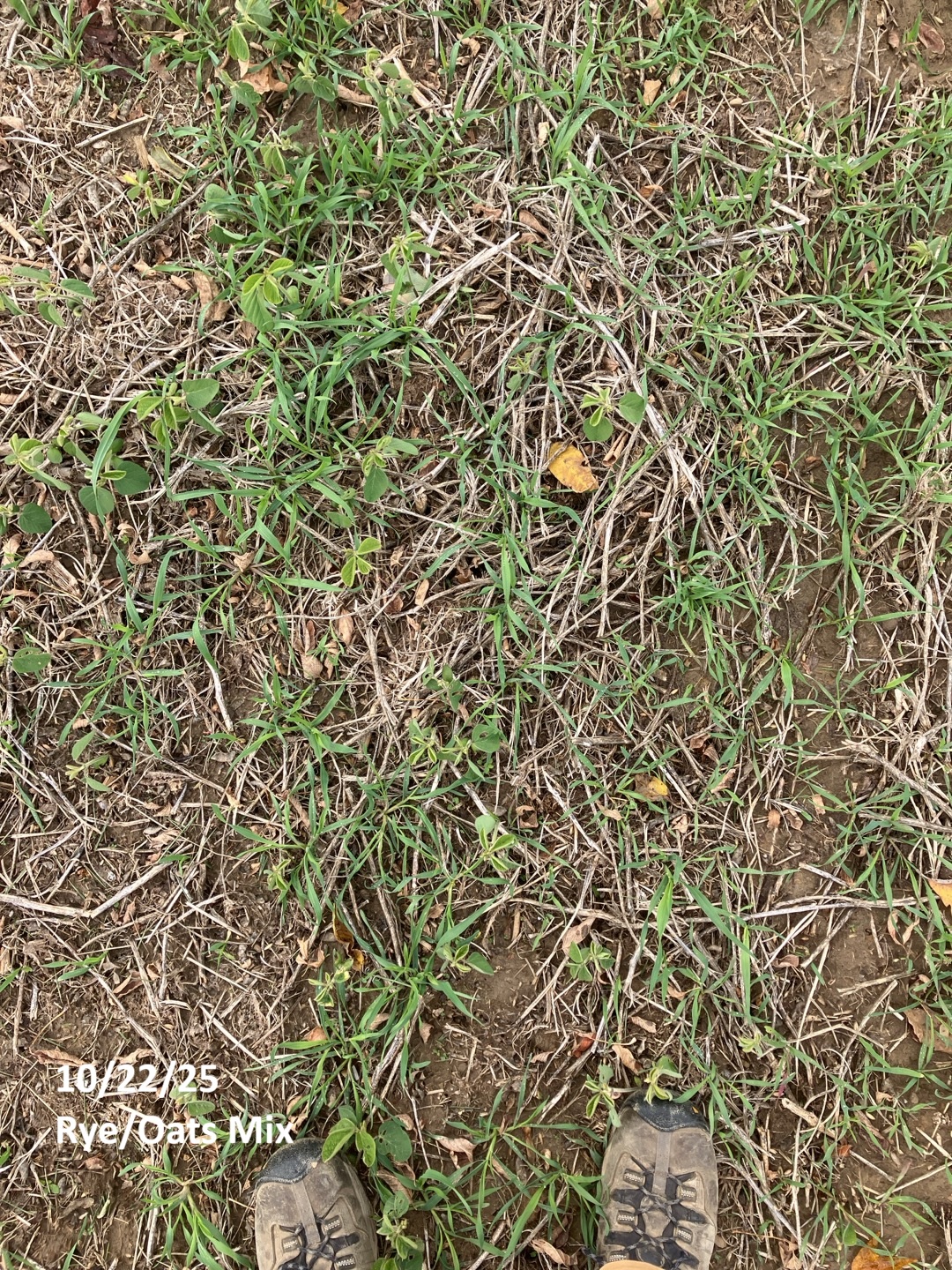
Heading into dormancy in November of 2025, Plot 1 (Rye/Oats mix spread at 60lbs/ac on 9/24/25) had an estimated vegetative coverage of 44%. Coming out of dormancy, the vegetative coverage was estimated at 60% on March 13 and 71% on March 26. The average height of the rye in plot 1 going into dormancy was around 7”, and the average height now is around 8.5”.

Plot 2, (rye-only cover crop broadcast at 60lbs/ac on 10/8/2025), really benefited from the warmth and moisture we saw in March. It doubled its vegetative coverage between March 13 & March 26, going from 15% to 30% coverage over that two-week span. This was a welcomed surprise considering when plot 2 went dormant in November had an estimated 2% coverage. The average height of the rye in plot 2 going into dormancy was around 2”, and the average height now is around 5”.

Both plots will continue to be monitored biweekly through mid-April or whenever the producer decides it’s time to terminate them so he can get the field ready for planting row crops. Check out the timelapse to see plot 2 come to life in March 2026.

For a more detailed recap of our observations from planting through winter dormancy, check out the Winter 2026 Newsletter.

Photo of Jordan Keller, District Technician. His bio reads "Jordan grew up in Shelby and now lives in Mansfield with his wife, two children and Basenji. He’s passionate about plants, insects and water quality. He enjoys being outdoors; hiking, gardening and playing with his kids."

H2Ohio Spring Stats

Spring H2Ohio Update!

By Jordan Keller

2022-2025

Our initial H2Ohio contracts were completed upon verification of all practices with the latest practice for these contracts ending in March 2026. Practice completion rates and incentive payments will be calculated and shared at the 2026 Annual celebration this summer. 30 out of 33 producers re-enrolled for H2Ohio crop years 2026-2027.

2026-2027

11 Comprehensive Nutrient Management Plans (CNMPs) were developed for producers with significant livestock operations. 27 Voluntary Nutrient Management Plans (VNMPs) were developed for producers without livestock. Our 38 H2Ohio producers have signed up 31,046.1ac for crop years 2026/2027. These contracts are projected to bring in 2.98 million dollars in incentive payments to producers who complete the best management practices per the H2Ohio standards.

Photo of Jordan Keller, District Technician. His bio reads "Jordan grew up in Shelby and now lives in Mansfield with his wife, two children and Basenji. He’s passionate about plants, insects and water quality. He enjoys being outdoors; hiking, gardening and playing with his kids."

Where Grasses Meet Masts, the Edge

Give an advantage to wildlife by re-creating transitional zones between different habitat types.

By Rachel Coy-Mecurio

The abrupt shift from crop land to manicured lawns or to the clean lines along woodlots seem to be more prevalent today than ever. Transitional areas, or buffers between landscape types, have slowly disappeared. By softening the edges that currently exist and providing a gradient in species composition and structure, we give an advantage to wildlife that need additional coverage from predators, improve species diversity, and support other services like improving water quality. Edge feathering is a technique used by landowners to re-create transitional zones between different habitat types.

Edge feathering can be accomplished through a combination of approaches like thinning over-story trees, allowing natural regeneration to take place, or by planting species that complement your goals. If you plan to feather into a woodlot, selective cuts and manipulation of the mature trees should be completed. Cut sick or undesirable tree species, as well as any trees that exceed 4 to 8 inches in diameter. Some of the selected trees can be girdled and left standing as snags, while others can be carted away and made into brush piles to further benefit wildlife on the property. If feathering into an open space, patience is needed while waiting on seed bed germination – planting plugs or saplings can help woody vegetation establish quicker.

If you plan on planting trees and shrubs, or allowing the seed bed to sprout, site preparation may be needed, depending on the vegetation currently growing. If turf grasses or invasive species are present, herbicide may be needed to create space and resources for the desired tree and shrub establishment to take place. Edges are great hosts to species that do not perform well in mature forests, due to the lack of resources that are able to penetrate the dense forest over story, or do not survive the constant disturbance needed in a perennial herbaceous stand. Often, these are soft mast producers like Rubus, or fruit trees.

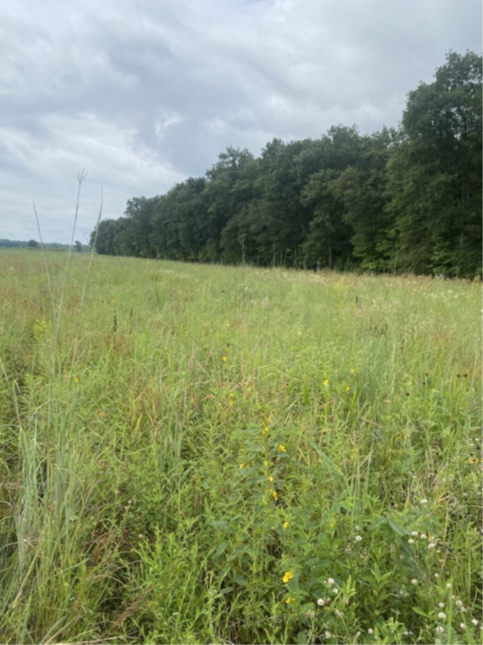
An herbaceous buffer near a wooded area. Many green grasses and forbs are growing next to the woods instead of a crop field.
Photo by Rachel Coy-Mecurio. Herbaceous buffer, not quite a textbook “feathered edge” but provides a softer transition then just a crop field meeting a wood lot.
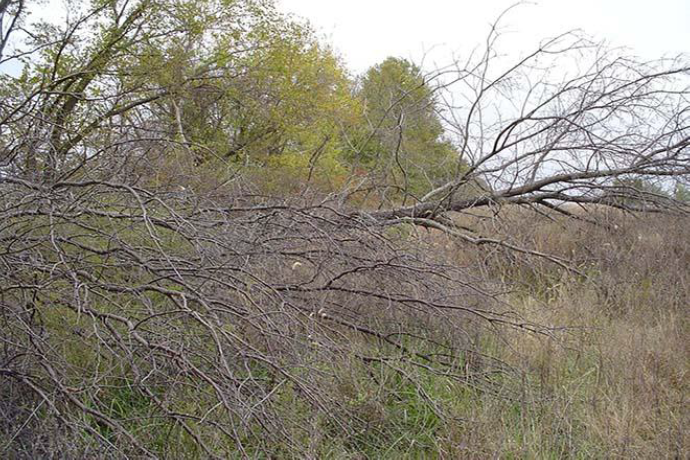
A feathered edge with a fallen or cut down tree.
Photo by Eric Ressel, Quail Forever

Edge feathering can be simplified into three zones of management. Your three zones will all fit into a 50 to 150 foot wide space and will include:

  • Taller trees/shrubs (75% tree cover, approximately 10×10 foot spacing)
  • Smaller trees/ shrubs (50% tree cover, 6×6 foot spacing)
  • Herbaceous grass and forb zone (<25% woody cover)

The best time to treat and begin implementing a feathered edge is in the fall/winter after leaves fall off. After the edge has been established, continued management will be needed to ensure succession does not continue its course into young forest habitat. Control of any invasive species that had infiltrated the edge should be completed annually. The denser wooded areas should be re-treated when tree diameters exceed the threshold of approximately 8 inches. The grassy area should be managed on a 3-to-5-year cycle to prevent excessive woody encroachment and to continue to provide that smooth transition.

If you find yourself in a situation where the property you manage has a singular habitat type and you would like to increase resources available to wildlife on your property, practices like woodlot openings or shrub plantings within your grassland can help address these goals, too. If you are interested in implementing any of these practices on your property, reach out and I would be happy to offer additional, site-specific guidance.

Pollinator TreesWet LovingShade Tolerant Wildlife ShrubsDeer Trees
Flowering dogwoodBald cypressEastern red cedarEastern red cedarAmerican hazelnut
Eastern redbudAmerican beechEastern redbudWillow (native, not hybrid)Flowering dogwood
Black cherrySwamp white oakPawpawDogwoodRedbud
HackberrySycamoreDogwoodSilky dogwoodAmerican plum
American hollyBuckeyeSpicebushRedbudCrabapple
PlumPawpawBuckeyeAmerican plumServiceberry
Tulip poplarHackberryServiceberryCrab appleElderberry
Eastern red-cedarElderberryWitch hazelHawthorn Swamp white oak
BlueberryEastern hemlockAmerican hazelnutSpicebush
BirchBirchServiceberryPawpaw
WillowCottonwoodSumacBlueberry
PawpawEastern red cedar
SassafrasPine (for windbreaks)
Wild black cherry
Photo of Rachel Coy-Mecurio, Ohio Farmbill Wildlife Biologist for Pheasants Forever. Her bio reads "Rachel covers five counties - Richland, Huron, Erie, Crawford, and Seneca - and is passionate about helping landowners achieve their habitat goals and manage perennial landscapes. Outside of work she enjoys spending time with her husband and their two four-legged children, crafting, or just enjoying time set aside to relax."

Cultivating Health Through Gardening

Learn about the health benefits of gardening!

By Sam Foley

As winter comes to an end and spring arrives, growers everywhere are planning our plots and taking inventory of what we may need for this upcoming season in our gardens. Many of us are looking forward to being out in the sun and getting an increase in vitamin D. The winter blues are a real thing and what better way to break out of them than working outside in our gardens!

There are many health benefits to gardening. It’s a physical activity that can help keep one fit. Digging in the soil and working up a sweat is a great feeling! Watching our plants flourish and eventually harvesting our fruits and vegetables is extremely beneficial to our diets. There’s scientific evidence that getting one’s hands in the soil can greatly benefit our immune systems. For me, the biggest benefit of gardening is the positive impact on my mental health. According to Harvard Health Publishing, gardening can be a mental tonic that soothes mood, sharpens the brain, and can even fertilize relationships.

It’s easy to become caught up in the day-to-day hustle of our lives. Using gardening to connect with nature can decrease anxiety, stress, and even depression. In the garden we can become totally immersed in the day’s work of tending to our plants.  Distractions can be set aside temporarily while we sow the seeds of tomorrow’s harvest. Gardening stimulates the brain through focus and memory; even just a quick 20 minutes have been shown to improve brain activity. Gardening can also be a social experience. I’ve recently spoken to two community garden clubs in our county, and the social network I’ve seen is inspiring. These bonds have been built over the years and it’s a great opportunity to stay in touch with friends. Also, what better way to be a good friend than to share your bountiful harvest?

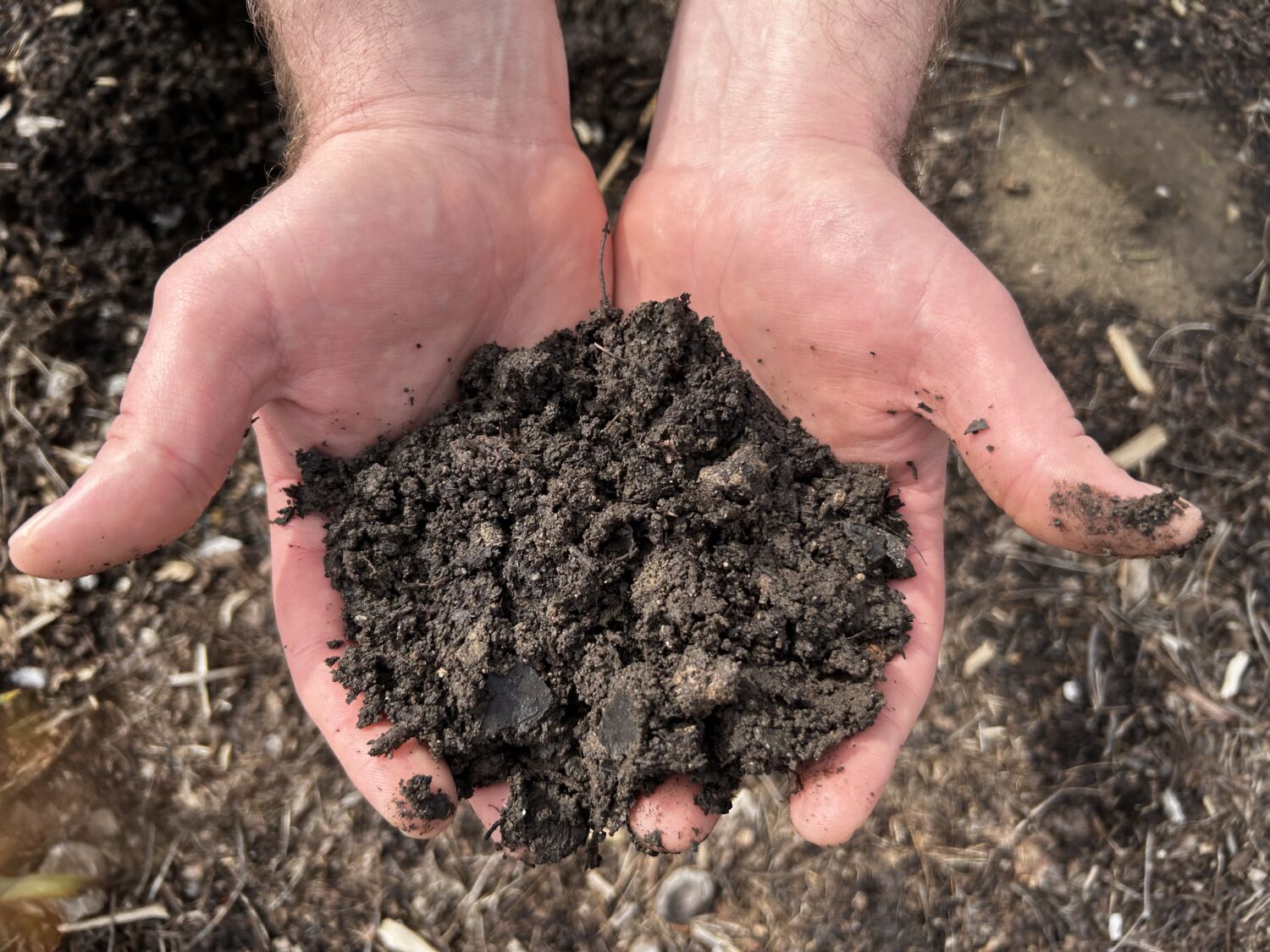
Sam holding a handful of dark brown soil
Richland SWCD photo

For me, just writing these articles has opened so many conversations with local growers and gardeners. Sharing our experiences and ideas with each other helps build relationships and teaches us all to be better gardeners. Chatting with folks who bring in soil samples and discussing the reports puts a huge smile on my face. I appreciate everyone who follows along with my articles and look forward to hearing about how gardening has enhanced your life and well-being!

Learn More: Harvard Health Publishing

Photo of Sam Foley, District Technician. His bio reads "Sam is passionate about sustainability and enjoying the finer things in life. He grew up in Shelby, OH, but moved to the big city and now resides with his family in Mansfield. When he’s not at work, he’s spending time with them."

Cover Crops at Work

ODA cover crop demonstration update!

By Jordan Keller

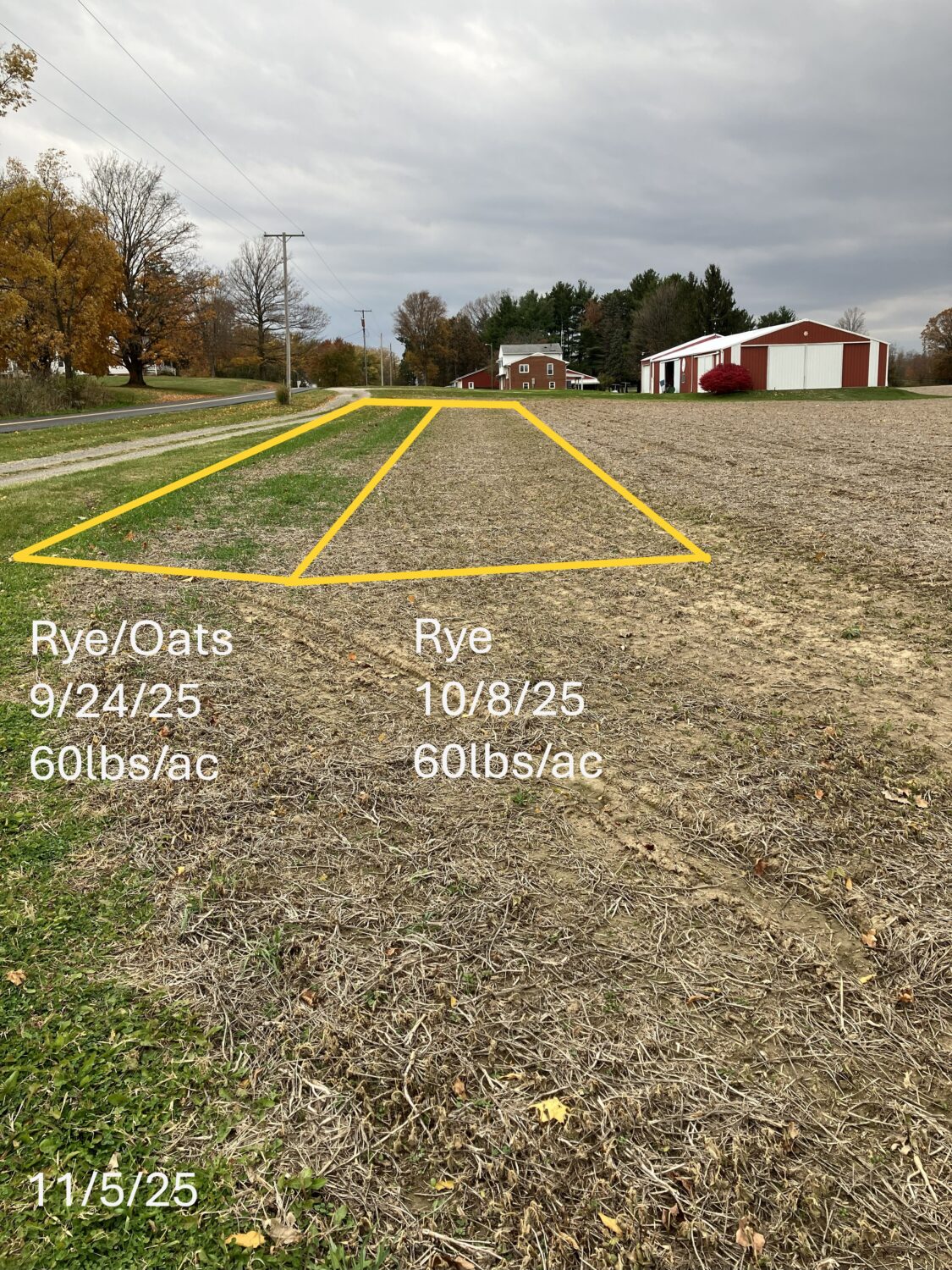
With assistance from the Ohio Department of Agriculture and cooperation from a local producer, Richland SWCD installed two overwintering cover crop demonstration plots after the harvest of a soybean crop in Fall of 2025. Following harvest, the field was lightly tilled by the producer to allow for better seed-soil contact. On September 24, 2025, we broadcast a rye/oat cover crop mix at a rate of ~60 pounds per acre (lbs/ac) across 0.1ac of the lightly tilled farmland. Then on October 8, 2025, we broadcast a rye-only cover crop at ~60lbs/ac on a 0.1ac plot directly adjacent to the first plot. The plots were monitored bi-weekly until going dormant at the end of November. The following is what we’ve observed so far:

  • We initially had some volunteer soybeans act as a cover crop while our first planting of rye/oats got established. The volunteer soybeans died back after the first hard frost.
  • The rye broadcast on Oct. 8 did not germinate well and that plot is sparsely covered as a result.
  • Going into dormancy, the rye/oats plot had an estimated coverage of 44% with average height of the rye grass around 7 inches. It does not appear that the oats germinated. The rye-only plot had an estimated coverage of 2% with an average height of 2 inches headed into dormancy.

We will revisit the plots this Spring as they come out of dormancy and continue our biweekly monitoring until the cover crops are terminated. For cover crop rates and seeding dates reference NRCS appendix A. The goal of the demonstration is to gain a better understanding of the overall impact of NRCS appendix A (download below) cover crop seeding dates and rates across Ohio.


Photo of Jordan Keller, District Technician. His bio reads "Jordan grew up in Shelby and now lives in Mansfield with his wife, two children and Basenji. He’s passionate about plants, insects and water quality. He enjoys being outdoors; hiking, gardening and playing with his kids."

2025 Stormwater Numbers

Updates from the final quarter of 2025 and advice on preventing runoff through snow melt.

By Sam Foley

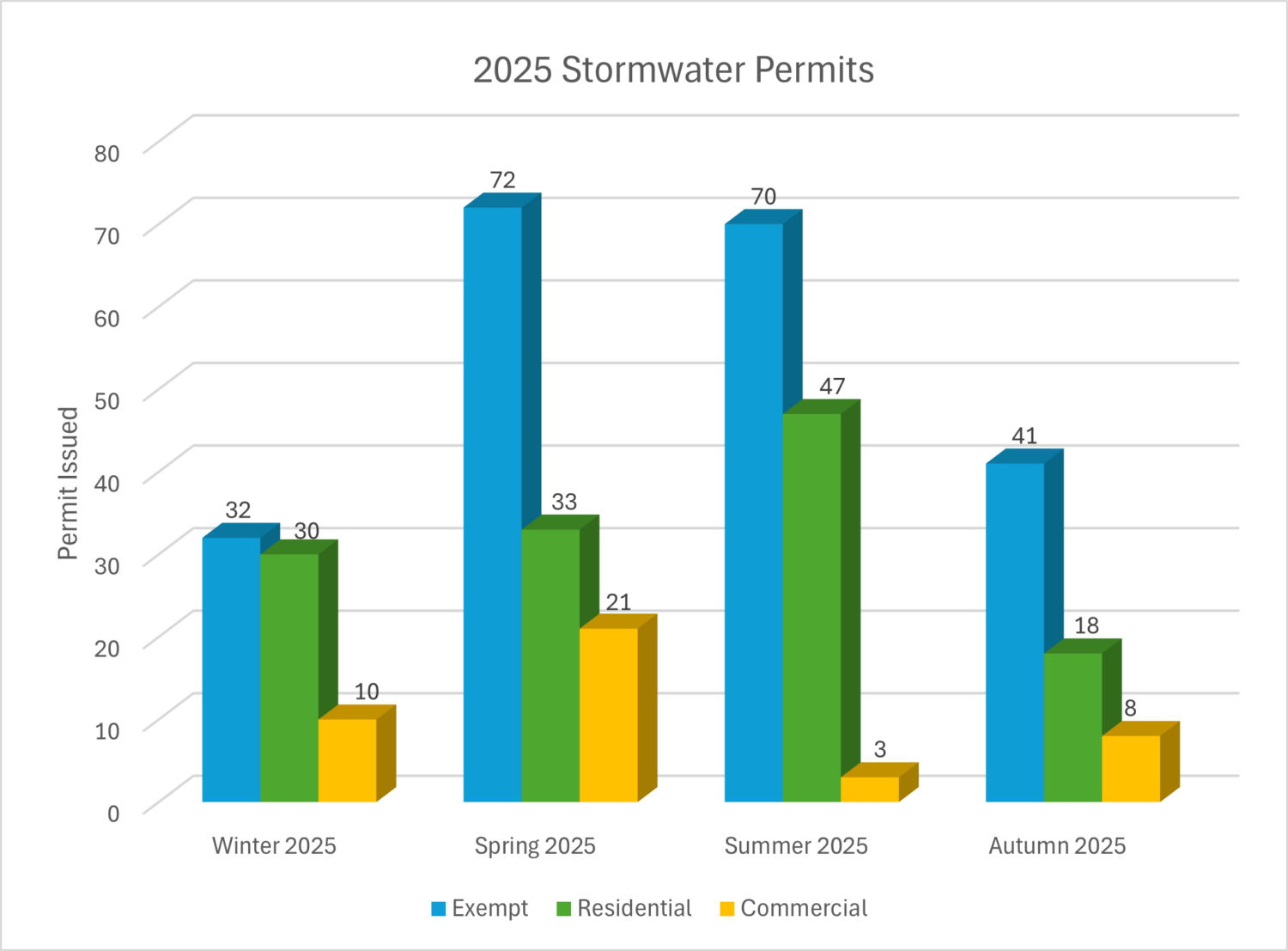
Our final quarter of the year brought in fewer permits than the summer months, but that’s to be expected. Despite the unpredictable winter weather, we still issued 8 permits for commercial projects and 59 residential permits between October 1 and December 31, 2025. Of those 59 residential permits, 41 of them were some sort of exemption.

In 2025 we issued a total of 385 stormwater permits and performed over 700 site inspections.

Please remember, if you are moving soil in the unincorporated areas of Richland County you need to consult with us about a stormwater permit to ensure you are following the Stormwater Management and Sediment Control Regulations of Richland County. Reference Matt Christian’s article on what information and documents you need to obtain a stormwater permit.

Bar graph comparing the number of permits issued each quarter of 2025. Summer 2025 brought in the most permits and autumn 2025 had the least.
Stormwater Permits in 2025 by Quarter

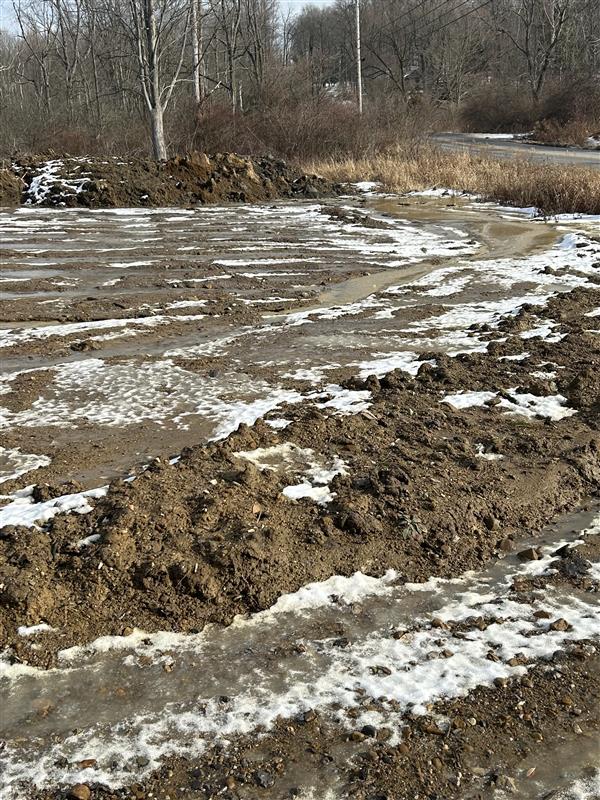
How about a stormwater minute? Even though colder weather is here, and the ground is mostly frozen, you can still find Zoe and I out and about performing site inspections. Frozen ground could maybe be considered temporarily stabilized, but as soon as the thaw comes, the potential for runoff and erosion concerns is very high! Snow melting can contribute to runoff volume and if you are unable to achieve permanent stability in the fall, chances are you are going to see some erosion and soil loss as the ground thaws. Please ensure that you are monitoring site conditions and add the appropriate sediment controls as needed. If you need advice on managing your site, please give us a call, we are happy to help. Be sure to have a plan in place for finish grading and seeding as the warmer weather returns in the spring. Please keep in mind that we don’t consider the permit requirements completed until your site reaches permanent stability.  

A disturbed construction site with bare soil covered in ice.
Photo by Sam Foley

Photo of Sam Foley, District Technician. His bio reads "Sam is passionate about sustainability and enjoying the finer things in life. He grew up in Shelby, OH, but moved to the big city and now resides with his family in Mansfield. When he’s not at work, he’s spending time with them."

Seeking Candidates for Marketing Internship

Thanks to the generosity of the Fran and Warren Rupp Fund of the Richland County Foundation, we have a marketing internship available.

By Theresa Sutter

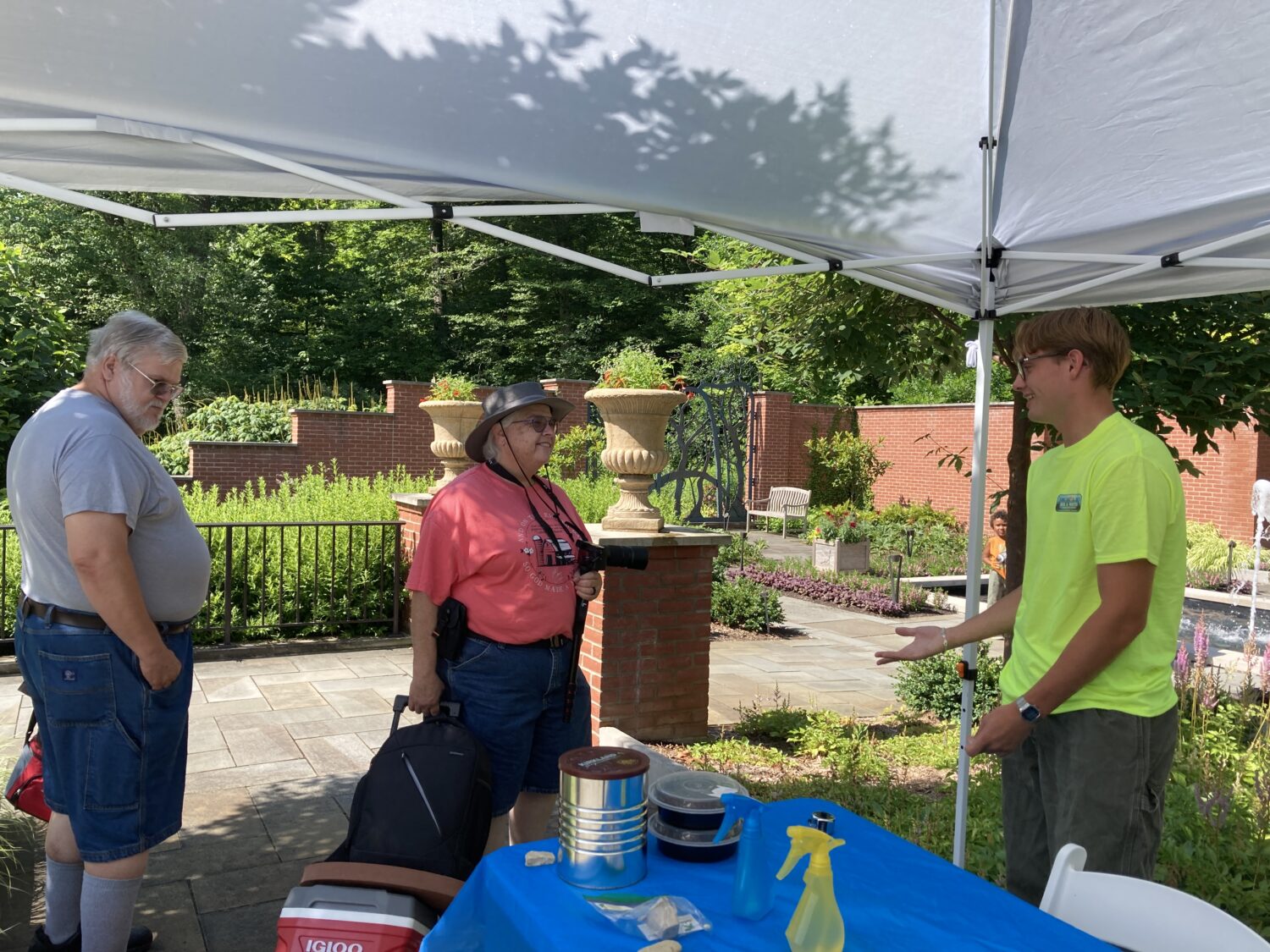
Thanks to the generosity of the Fran and Warren Rupp Fund of the Richland County Foundation, we have a paid marketing internship available for a college student. The intern will gain hands-on experience in the areas of graphic design, writing press releases, and social media plus learn about soil and water conservation. Information about the internship is available at: https://richlandswcd.net/get-involved/careers-and-Internships/

Intern speaking to two guests at our vendor booth at Kingwood Center
Summer 2025 Intern at Kingwood Center
Intern speaking to a guest at the soil open house.
Winter 2025 Intern at the Soil Open House

Photo of Theresa Sutter, Marketing & Volunteer Coordinator. Her bio reads "Theresa and her husband live in the Lucas area. They both love the different terrain and wildlife throughout the County, and enjoy the beauty of nature whenever possible."

Mulch Madness

The easiest and most immediate step you can take towards healthy soil is mulching. Learn how!

By Sam Foley

I’m going to let the audience in on a secret today; I’m incredibly passionate about healthy soil. I love talking to folks about their soil test results and discussing ideas to increase soil health. The easiest and most immediate step you can take towards healthy soil is mulching. The benefits a mulch layer can add to your garden are listed below:

  • Preventing soil erosion: By covering the top layer of soil there’s greater protection from erosion during watering and rain events.
  • Retaining moisture: Mulch helps lock in moisture after watering and prevents rapid evaporation. This also helps combat drought.
  • Controls temperature: Protects the soil during times of extreme weather. Beneficial for both winter and the hot summers. This can be especially helpful in raised beds.
  • Microbes: This extra protection for the top layer of soil increases microbe activity, which in turn, greatly impacts soil health and productivity. Find the microbial activity in your soil by taking the Soil Your Undies Challenge.
  • Weed suppression: Though it’s not 100% effective, mulch greatly reduces weed pressure and makes pulling what weeds do pop up that much easier. Most weeds spread by seed, and a few inches of mulch can prevent these seeds from even making it to the soil.
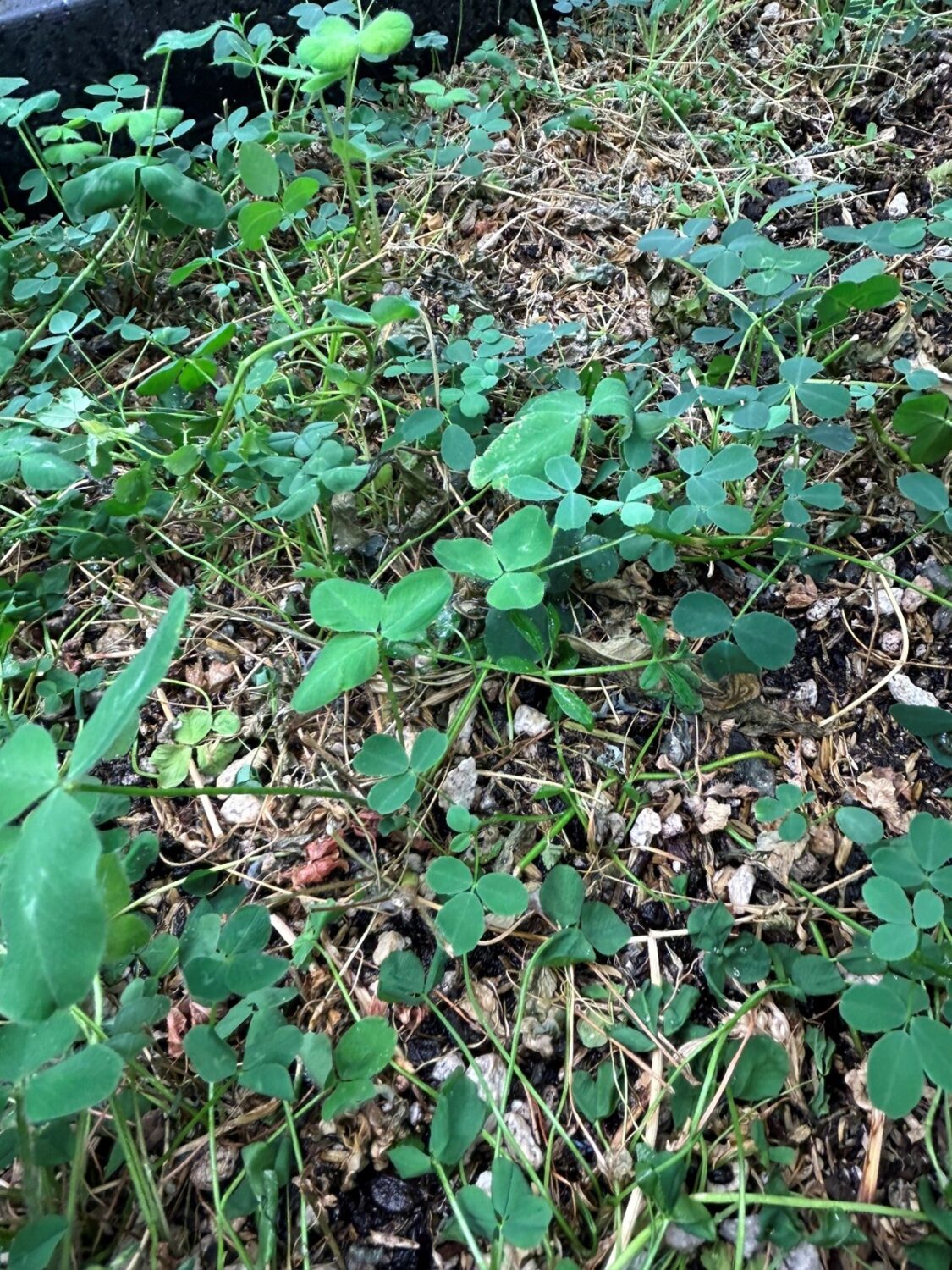
Mulch and cover crops in a raised container

Mulch can be made of almost any material and is simply a cover spread over top of our growing media to enrich and insulate that media. My favorite mulches are organic options. Several examples of commonly used organic mulch are compost, leaf litter, straw, grass clippings, shredded bark, and rice hulls. Another option could be a living mulch. This could be made up of cover crops or even herbs, that grow as companions to a target crop. Living mulch can be “chopped and dropped”, cut and laid on the surface of soil, providing an additional layer of cover. Organic mulch not only provides the traditional benefits of mulch, but it also adds nutrients back into the soil as it slowly breaks down over time. This is a regenerative solution that can help build up soil health year after year.

Soil in your garden should never be left bare. Keeping soil covered with mulch and cover crops is essential to soil health. Always maintain a layer and leave mulch in place year-round. If you’re looking for guidance or just want to chat about growing, please reach out to me! Stay tuned for future articles on gardening.


Photo of Sam Foley, District Technician. His bio reads "Sam is passionate about sustainability and enjoying the finer things in life. He grew up in Shelby, OH, but moved to the big city and now resides with his family in Mansfield. When he’s not at work, he’s spending time with them."

Why Natives are Important in Landscape Plantings

Learn about the benefits of planting natives!

By Rachel Coy

Why is planting native species important?

Native plants and vegetation have historically evolved in the locations they are found, and their evolution coincides with that of the soil, water/drainage, climate, topography, and site history. These plants are adapted to the conditions of a certain area, and in nature nothing happens by accident. Good land management practices include utilizing native species to fill out resource concerns and goals before resorting to non-native alternatives. Along with the native plants being adapted to the conditions of a given site, native wildlife has been evolving and depending on these species throughout their mutual history with one another. A few examples are monarch and milkweed, bee balm and hawk moths, spice bush and the spicebush swallow tail, the list goes on and on.

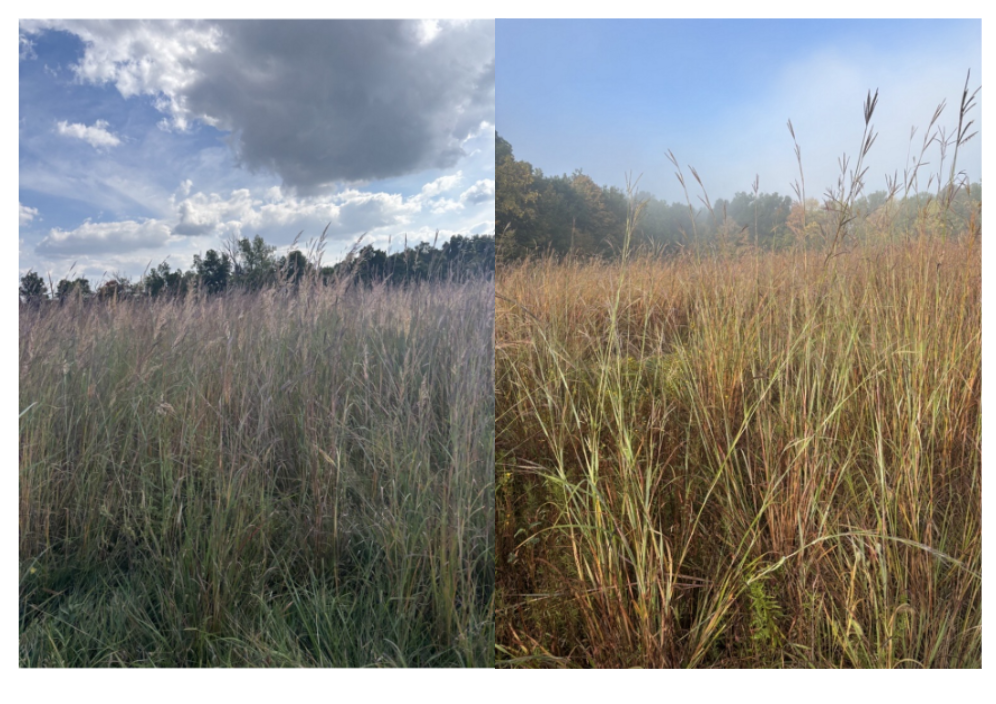
Two native perennial grass stands consisting of big bluestem and indiangrass
Big Bluestem and Indiangrass

Why would non-native species be desirable?

A general lack of knowledge on the topic is usually how non-natives find their way into our landscape. Native plants can almost always address the goals of landowners without adding the potential for future landscape escapement, possibility of natives not getting pollinated for future populations, and energy being focused on conserving the WRONG species. A lot of our invasive species were brought over for one of three reasons: intentional landscape management (i.e. autumn olive on reclaimed mine land), beautification (i.e. Bradford Pear in garden beds), or the unintentional transport of the seeds/ species. To be non-native simply means the plant is growing outside of its native range. A non-native invasive is growing outside its native range, has escaped its controlled setting into neighboring landscapes, and has an advantage over the native species that grow there (i.e. prolific seed spreader, longer growing season, etc.) Additionally, natural checks that keep this species in balance in its natural range no longer exist (herbivore partners, insects and pests, disease, etc.) Plants observed in their native range typically are seen as well behaved based on observations from the species’ host territory, where it belongs and behaves accordingly with surrounding vegetation, as opposed to the transplanted site where it may have advantages over the natives on site.

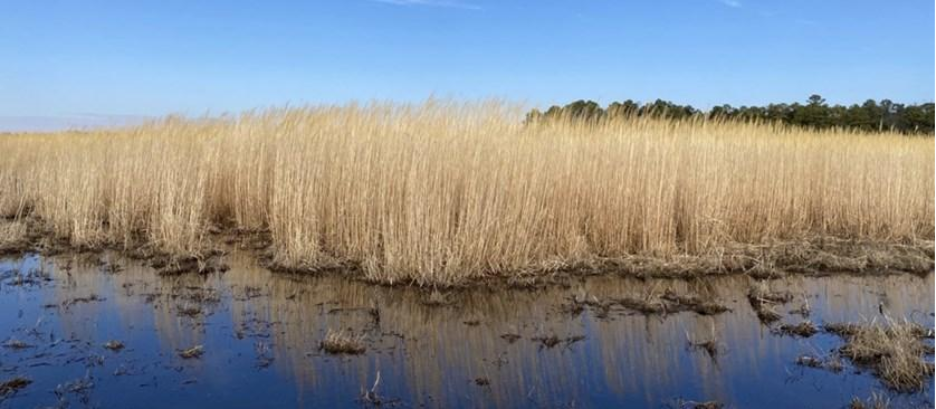
A non-native perennial grass stand.
Photo from University of Maryland Extension of Giant Miscanthus, a non-native perennial grass.

What can you do?

There are a lot of non-native species that are hot commodities in landscaping! Things like butterfly bush, burning bush, miscanthus for deer hunters, and so many more. Below is a list of native alternatives to popular landscape plants:

  • Plant spice bush, red chokeberry, or red osier dogwood instead of burning bush
  • Plant Indiangrass or switchgrass instead of miscanthus
  • Plant mountain Mint (brushy herbaceous) instead of butterfly bush
  • Plant native apples or flowering dogwood instead of Bradford pear
  • Plant creeping mint or phlox instead of English Ivy
  • Plant redbud instead of princess tree
  • Plant American wisteria instead of Chinese/Japanese wisteria
  • Plant viburnum instead of privet
  • Plant ninebark instead of barberry

By utilizing natives in your landscape plantings, we are not only achieving the aesthetic factor many are drawn to, but the environmental factors that often don’t get considered.


Photo of Rachel Coy, Ohio Farmbill Wildlife Biologist for Pheasants Forever. Her bio reads "Rachel covers five counties- Richland, Huron, Erie, Crawford, and Seneca- and is passionate about helping landowners achieve their habitat goals and manage perennial landscapes. Outside of work, she enjoys spending time with her husband and their two four-legged children, crafting, or just enjoying time set aside to relax!"

2026 Events

Our Calendar of Events is packed with exciting opportunities to learn, connect and get involved. Click to see what’s in store!

Upcoming Events

Project Helper

Do you have everything you need to apply for a stormwater permit? Use the I Have a Project questionnaire to be sure!

By Matt Christian

Winter is upon us. When we’re not thinking about snuggling up to a fire to stay warm, planning skiing trips, drinking hot chocolate, and cleaning snow off our driveways, we begin to start thinking about projects we’d like to do when the weather breaks. This could involve building something on your property; maybe an addition, new garage, pole barn, shed, or possibly a pond. If you are thinking about a project like this, you may need to contact our office about obtaining a Stormwater Permit.

Richland SWCD implements the Stormwater Management and Sediment Control Regulation program on behalf of the Richland County Commissioners. This program was created to ensure that disturbed soil from construction stays on site and does not run off the property. It also considers how rainwater will flow off of new buildings, driveways, and concrete and that it outlets in a way to encourage water to soak into the soil onsite.

If you need a Stormwater Permit, we want to make sure the process is as smooth and painless as possible. We have two technicians that are happy to assist you with the permitting process, Sam Foley and Zoe Baumberger. A few years ago, we developed an interactive questionnaire that will assist you in making sure that you have everything you need before you come see Sam or Zoe, It is called “I Have a Project” and it’s located on our website, Richlandswcd.net (linked below).

It asks you a series of questions about your project then provides a list of all the other permits or documents you will need to get before you apply for a Stormwater Permit. It will even prepare you whether to expect a permit fee or not. The goal of “I Have a Project” was to inform applicants of what they needed before coming in. One of the most frustrating things for applicants is to make the trip to the office to get the permit only to find out they actually have to leave and go acquire a septic permit first, for example, then make another trip back to the office.

So, if you’re looking to complete a project in Richland County, please check out “I Have a Project”. There are a couple of different ways to find it on our website:

  1. Click on the link to go directly to “I Have a Project”: https://richlandswcd.net/stormwater-drainage/i-have-a-project/
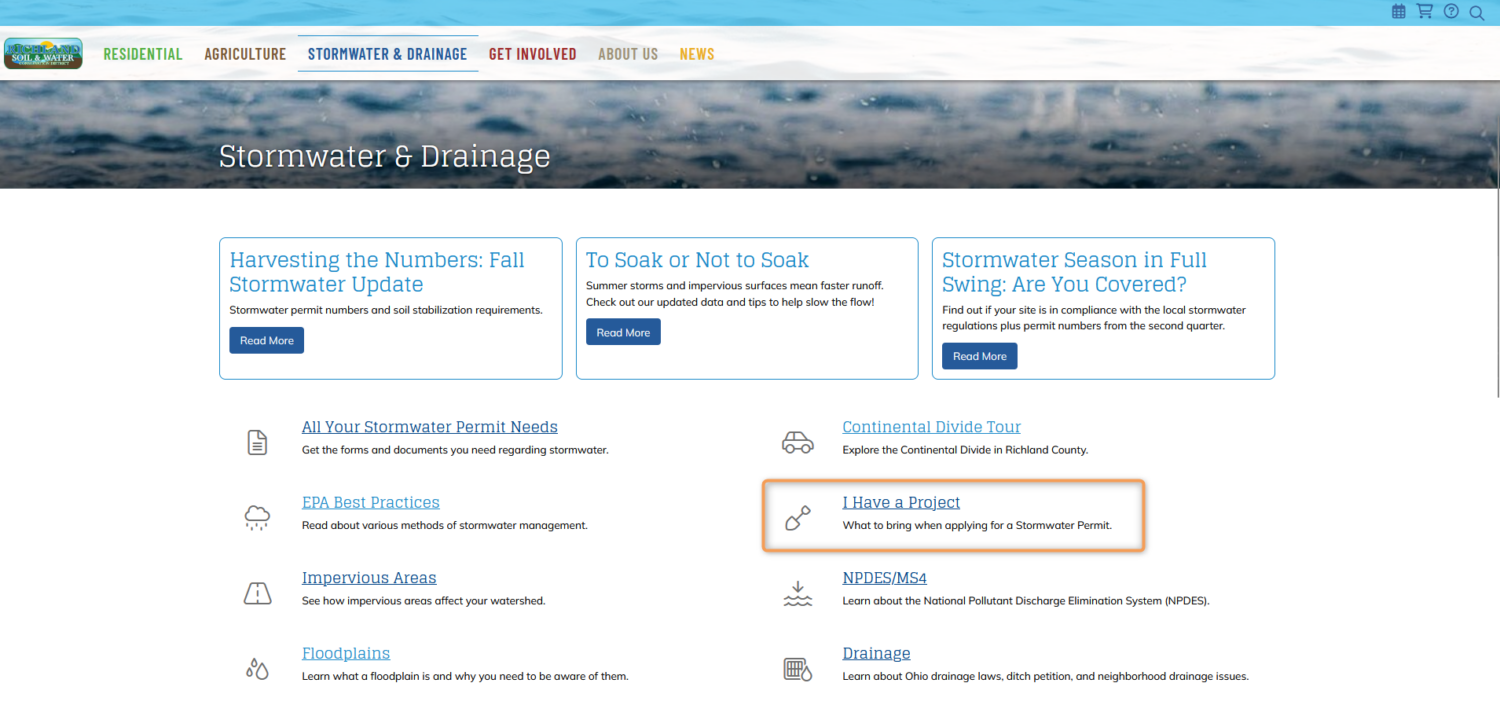
  2. Go to www.richlandswcd.net , click on “Stormwater & Drainage” at the top of the page, scroll down to the links and just below “Continental Divide Tour” you will find “I Have a Project”, click on that link and click “Start the Questionnaire”. Then answer the prompted questions. (See photos below for guidance)

If you have any questions about the permit process, please contact Sam Foley at (419) 747-8077 or Zoe Baumberger at (419) 774-8986.

Screenshot of the RIchland SWCD homepage. The stormwater and drainage tab is outlined in orange.
Richland SWCD home page
Screenshot of the stormwater and drainage page on the Richland SWCD website. The I Have a Project button is circled in orange.
Richland SWCD Stormwater & Drainage page
Screenshot of the I have a project page on the RIchland SWCD website. The start the questionnaire button is outlined in orange.
Richland SWCD I Have a Project page

Photo of Matt Christian, Director. His bio reads "Matt hails from northern Richland County. He enjoys traveling and outdoor activities with his wife and girls, particularly walking the family dog."

Field Nutrients & Floodplains

Guidance on applying nutrients to farm fields and working in a floodplain.

By Matt Wallace

Field Nutrients and You

Application of nutrients prior to planting is common and may be seen throughout farm fields in Richland County. It is recommended that nutrients be placed on your field and tilled into the soil before you plant. If that can’t be done, apply nutrients once the crop begins to grow. Both options allow for the biggest return on your investment (fuel, time, wear and tear on equipment) and the best chance for waterways to not be polluted.

Placing manure on snow covered, frozen, or rain-saturated ground is discouraged. Nutrients produced on your farm or brought in from other sources can readily leave your farm fields through melting snow or saturated soils.  A good rule of thumb is to not apply nutrients when there is a chance of a half inch of rain or more. Winter applications are only recommended if there isn’t any more manure storage space available. In that case, only apply enough to free up the amount of storage space needed.

Additional best management practices include looking for tile blowouts and fixing them before nutrient application. During drier times when soil may be deeply cracked, utilize a tillage implement to close the soil cracks and keep nutrients from directly accessing field tiles.

Setbacks are highly recommended by the Ohio Department of Agriculture (ODA) to keep your nutrients on fields. The recognized setback standards to follow may be found in the United States Department of Natural Resources Conservation Service (USDA-NRCS) 590-CSP-1 document. Click on the link below to access the document, pick up a copy in our office, or request it be emailed. https://www.nrcs.usda.gov/resources/guides-and-instructions/nutrient-management-ac-590-conservation-practice-standard

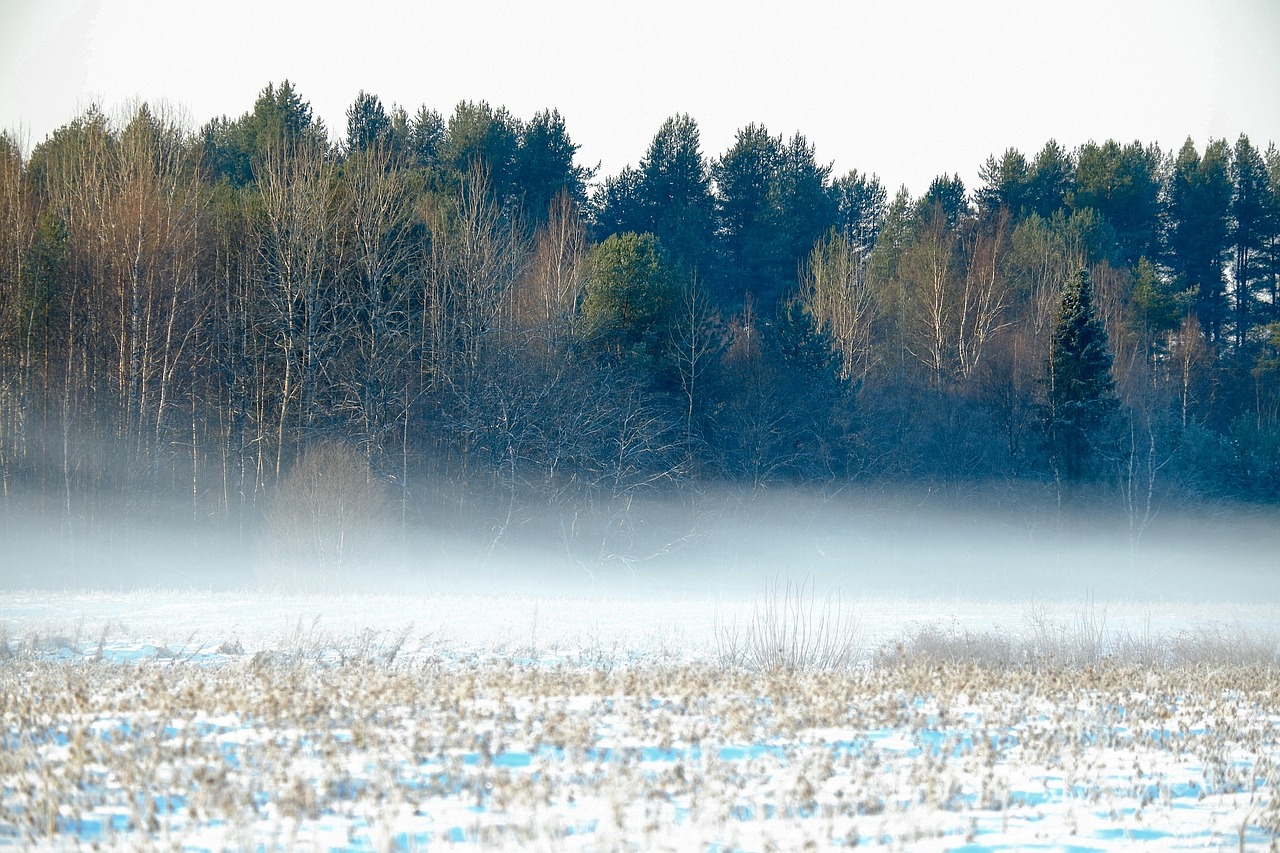
Frozen farm field covered in snow. Corn stalks are poking through the snow.
Richland SWCD photo

Floodplain 101

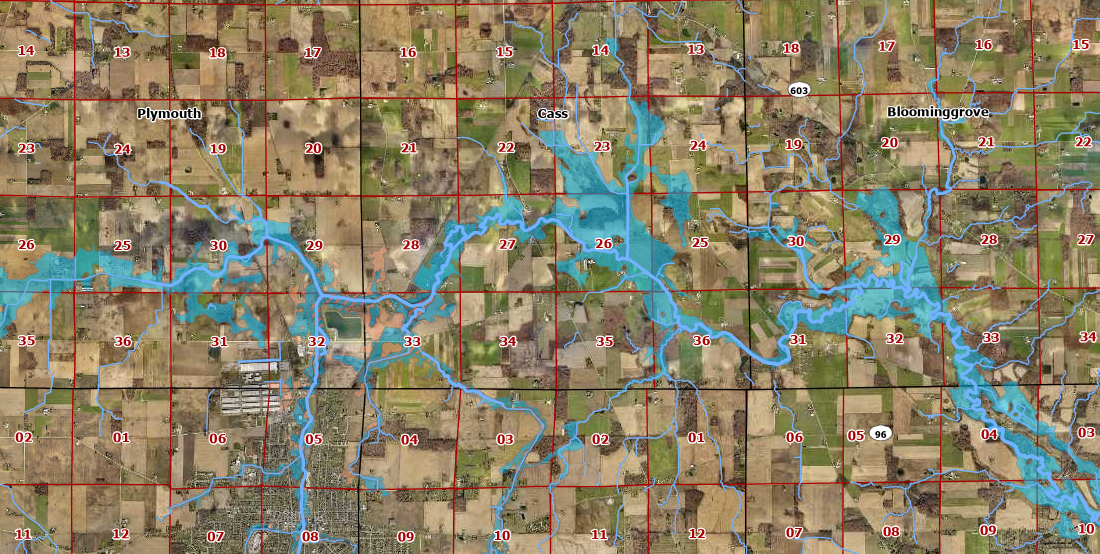
What is a floodplain? A floodplain is an area adjacent to a river, stream, or low-lying area that is adjacent to another water body that becomes overwhelmed with water during times of heavy and/or prolonged rainfall or when snow melts. Typically, these areas contain soils that are nutrient rich and identified as being hydric, or very wet.

How are floodplains and maps determined?  These unique areas are determined by multiple factors such as topography, soils, proximity, engineering, historic floods, and photographs of historic floods.

Floodplain maps, officially known as Flood Insurance Rate Maps (FIRM), show areas of high, moderate, and low-flood risk which are shown as series of zones. Communities use maps to set minimum building requirements for coastal areas and floodplains; lenders use them to determine flood insurance needs and costs.

Filling and building within the floodplain may come with many challenges which may be costly. Additional requirements for building in a floodplain may include but is not limited to hydraulic/hydrologic studies, additional permits, elevation of entire structures, and additional compaction. These construction standards can influence decisions like “Should I build here? or Should I purchase this property?”.

Screenshot of floodplain map from auditor's site showing floodplain areas in blue in the northern part of Richland County.
Floodplain layer on the county auditor’s site. Flood zones are in blue.

Each municipality and community has a set of Federal Emergency Management Agency (FEMA) approved regulations for their communities designed to help improve the safety of a community’s residents and plan future development. Regulations vary within Richland County due to each municipality adopting their own regulations.  Check the regulations of the municipality under consideration before purchasing or developing property.  Richland Soil and Water Conservation District serves as the Floodplain Administrator and Floodplain Manager for Richland County.  We encourage you to reach out to us before purchasing or developing a property.

For a location of the flood zones in Richland County, visit  https://msc.fema.gov/portal/home.


Photo of Matt Wallace, District Technician. His bio reads "Matt is a lifelong resident of the Shiloh area where he resides with his wife and their two fur babies. He has a passion for the outdoors and being a part of the CB&S Joint Fire District."

Only Rain Down the Drain in 2026

2026 brings a new MS4 theme: Only Rain Down the Drain! Learn more by clicking.

By Zoe Baumberger

In the final quarter of 2025, we inspected our MS4 township garage facilities to confirm their good housekeeping practices. We enjoyed catching up with the township road supervisors and discussing our plans for the new permit term, which will run from 2026 to 2030.

2026 brings a new MS4 theme: Only Rain Down the Drain!

Many people don’t realize that, unlike a sanitary sewer, the water that enters a storm drain or ditch is NOT treated. There’s no filtration or disinfection process. Stormwater simply flows (often through a system of pipes, culverts, and catch basins) to the nearest stream, lake, or river. That means anything the water picks up along the way (from litter to oil) is carried into our local waterways. What goes down the drain goes into our environment.

Join us throughout 2026 as we highlight simple ways to protect our waterbodies. If you’re planning a project this year, come get your stormwater permit to ensure you’re only sending rain down the drain. Small choices can make a big impact! Learn more here: https://www.onlyraindownthedrain.com/


Photo of Zoe Baumberger, District Technician. Her bio reads "Zoe grew up in Mansfield and now lives in Ashland with her husband and their two canine companions. She enjoys spending time outdoors whether that’s gardening, admiring native plants or finding new ways to live more sustainably. When she’s not outside, you’ll find her reading or baking while listening to Taylor Swift."