Richland County Proves to be a “Rich Land” in the Soil Your Undies Experiment

This year’s county fair brought an unexpected highlight – dirty underwear from across Richland County! As part of the Soil Your Undies challenge, our team buried a pair of 100% cotton underwear underground for 60 days in each of the 18 townships to showcase soil health. Rich soil teeming with microbes…

Map of Richland County and the townships. There is a dot in each township showing the approximate location of where the undies were buried.
A map of all the buried underwear locations.
Credit: Richland SWCD

Dirty Undies!

This year’s county fair brought an unexpected highlight – dirty underwear from across Richland County! As part of the Soil Your Undies challenge, our team buried a pair of 100% cotton underwear underground for 60 days in each of the 18 townships to showcase soil health.

Rich soil teeming with microbes and worms will break down the fabric quickly, while less active soils will show little change. The healthier the soil, the faster the cotton underwear decomposes providing a fun and visual way to assess the vitality of local soils.


Our Underwear on Display…

One common joke among visitors after seeing the display was that Richland County should be called “Rich Land County” due to the thriving soils in some townships. Many visitors had questions about replicating the experiment in their backyard and we were able to give them our extra pairs of undies

Our display quickly became a hit at the fair, sparking curiosity among visitors of all ages. Fairgoers were amazed to see the varying levels of underwear decomposition and how it correlated with the land’s use.

Marilyn Roe, Richland SWCD Volunteer, at our 2024 Richland County Fair booth. She is standing below the buried undies smiling.
Marilyn Roe, Richland SWCD Volunteer, at our 2024 Richland County Fair booth

After the two-month burial period, we retrieved the undies and put them on display at the county fair. The results ranged from pairs that were barely recognizable to those with minimal decay. This visual showcase highlighted the differences in soil health across the county.


A Lesson in Soil Health

This experiment was more than just entertaining – it reminded us of the importance of maintaining healthy soil. Local farmers especially took note of how soil health can affect crop yield, water retention, and sustainability. Sites where the underwear remained mostly intact now have a clear opportunity to investigate practices that could improve their soil health like adding compost or using cover crops.

Overall, the Soil Your Undies experiment was a great success. The positive reception at the fair showed just how eager our community is to learn about environmental stewardship. Richland County is ready to prove that it’s not just rich in history, but rich in land too.

We want to extend a big thank you to the landowners who allowed us to bury underwear on their properties! This project wouldn’t have been possible without their generosity, curiosity, and support.


Photo of Zoe Baumberger, District Technician. Her bio reads "Zoe and her fiance live in Ashland. When she isn't working on home improvement projects, she can be found reading, cooking, or napping with her two canine companions."

Another Year in the Books – Richland SWCD’s Annual Celebration, 2024

On September 26th the Richland Soil & Water Conservation District held its Annual Celebration at the Hawkins Center in Ontario (at the Area Agency on Aging). Our Annual Celebration has historically been held in the evenings, but this was the first time it was held as a luncheon. It was a wonderful, event-packed time…

Annual meetings or celebrations are where Soil & Water Conservation Districts (SWCDs) share accomplishments, provide updates, recognize hard work, and meet the community. Additionally, annual meetings offer a time and space to hold elections for the Board of Supervisors that oversees the Districts. 

On September 26th the Richland Soil & Water Conservation District held its Annual Celebration at the Hawkins Center in Ontario (at the Area Agency on Aging). Our Annual Celebration has historically been held in the evenings, but this was the first time it was held as a luncheon. It was a wonderful, event-packed time. 


Staff Accomplishments

Our staff started the afternoon by updating attendees on our various programs and all the hard work they did this past year. Programs covered included: the volunteer program; the Stormwater Permit program; the MS4/NPDES permit; agriculture pollution abatement; H2Ohio; Farmland Preservation, and more.


Cooperator of the Year

We also recognize a Cooperator of the Year every year: an individual, group of individuals, or entity who exhibits exceptional conservation in the County. Neil and Pam McKown of Watershed Ranch were recognized as the 2024 Richland SWCD Cooperator of the Year. Since the McKowns bought their farm they have transformed it into a paradise by implementing many conservation practices.


Volunteer of the Year

In addition to a Cooperator of the Year, we recognize a Volunteer of the Year. Bob Donaldson of Mansfield received the award this year. Bob is one of our rain gauge monitors, but he also made a big difference this past year by sharing his Microsoft Excel expertise with us. By doing so he helped us improve and update many of our organizational spreadsheets. Our workflows and data-capturing are now more efficient and organized thanks to Bob!  As a “thank you” for his contribution, a Black Gum tree was planted in his honor in Centennial Park, Lexington.


Supervisor Election and a Thank You to Lanny Hopkins

This year’s supervisor election featured two open seats.  Existing Board member, Lanny Hopkins, decided not to run for reelection while existing member, Jean McClintock, ran for reelection.  Pam McKown ran for the other vacant seat.  After tallying the votes, Jean was reelected and Pam McKown was elected to her first term. Terms run for 3 years and begin in January.

Lanny Hopkins has served on the board since 2018, serving two terms, and has decided to step down. Lanny was most passionate about Black Fork clean-up/log jam removal and continues to work on the initiative. He was presented with a service award as a small token of our appreciation.

If you attended our Annual Celebration, thank you so much! If not, maybe we will see you there next year!


Photo of Matt Christian, Director. His bio reads "Matt hails from northern Richland County. He enjoys traveling and outdoor activities with his wife and girls, particularly walking the family dog."

We Held a Grazing School!

The Pastures for Profit Grazing School classroom sessions were held on the evenings of July 23rd and 25th with a pasture walk day on July 27th. Pastures for Profit is an educational course providing science-based pasture management…

The Pastures for Profit Grazing School classroom sessions were held on the evenings of July 23rd and 25th with a pasture walk day on July 27th.

Pastures for Profit is an educational course providing science-based pasture management information to Ohio farmers. Throughout the course, participants learn how to provide and maintain healthy and sustainable forage systems for the animals in their care. Participants of our grazing school learned about goal setting, soils, soil fertility, plant physiology, animal needs, paddock design, fencing options, extending the grazing season, and the economics of grazing operations.

Thank you again to Randy & Eileen Eisenhauer for allowing us to use their pastures to educate the participants! The pasture walk day was a hot one, but that didn’t stop farmers from asking great questions and prompting great discussions! Thank you to all our participants and presenters for making this a great event! We all profited from the conversations and knowledge shared.

Pastures for Profit was a combined effort of the following entities: The Ohio State University, the Ohio Department of Agriculture, USDA-NRCS, and the Ohio Forage & Grasslands Council.


Photo of Jordan Keller, District Technician. His bio reads "Jordan lives in Mansfield with his wife and baby girl (who has Jordan wrapped around her finger). He likes plants, bugs, and the outdoors."

Educating the Educators: Realtors and Permitting

On August 8, we presented information on Richland County’s stormwater permitting process during a Lunch & Learn hosted by the Mansfield Association of Realtors. The purpose of the Lunch & Learn…

Aerial view of pleasant hill dam and reservoir
Pleasant Hill Dam & Reservoir. Credit: Richland SWCD

On August 8, we presented information on Richland County’s stormwater permitting process during a Lunch & Learn hosted by the Mansfield Association of Realtors. The purpose of the Lunch & Learn was to educate local realtors on the intricacies of permitting in the county so that they may better assist their clients.

Also presenting was US Army Corps of Engineers Realty Specialist Eric Dowing who provided participants information on the Army Corps’ flowage easements. According to the Army Corp, flowage easements are non-federal lands where the U.S. Government has acquired rights to back up water if necessary (to a certain elevation).

Flowage easements exist in Richland County and stretch for miles upstream from the Charles Mill and Pleasant Hill Dams. Knowledge of flowage easements is critical because land use within the easement is heavily restricted. Thank you to the Mansfield Association of Realtors for hosting the event and allowing us to speak with their members about permitting in Richland County!


Photo of Jordan Keller, District Technician. His bio reads "Jordan lives in Mansfield with his wife and baby girl (who has Jordan wrapped around her finger). He likes plants, bugs, and the outdoors."

From the News Desk

Don’t miss these special announcements and reminders for Autumn, 2024!

Gift of grain logo. The text states "gift of grain Richland county foundation" and is wrapped in a piece of wheat.

Grant to Help Cultivate Young Minds in Richland County

The Richland County Foundation Gift of Grain Fund Committee has awarded a grant to support Richland SWCD. The grant will fund a collaborative project called Cultivating Minds that brings together Richland SWCD, Richland County Farm Bureau, and the Mansfield Richland County Public Library. It will provide three agricultural and environmental literacy kits to every elementary school in Richland County and at the Mansfield-Richland County Public Library’s main branch.

The goal is to teach elementary youth about agriculture, food, and natural resources. The agricultural kits include a children’s book, a teacher’s guide, and all items needed for a classroom activity. A total of 75 kits will be distributed throughout the county. Many thanks to the Richland County Foundation for making this possible!


Graphic providing dates for Richland Gives. Takes place Nov 18 through Dec 3 until 7pm.

It’s Easy to Support Us With Richland Gives

Richland Soil and Water Conservation District (Richland SWCD) has served Richland County landowners since 1948—that’s 76 years! However, we have not made it this far without help.

Richland Gives is a local online giving campaign held once a year. It encourages people to contribute to local non-profits. The Richland County Foundation hosts this campaign to grow philanthropy and strengthen the community.

Thanks to generous, past donors, Richland SWCD has benefited from Richland Gives. We have turned some donations into grants for soil testing, rain barrels, and native seeds and plants. Donors like you can help us continue to provide a wide range of services – both technical and educational – to the residents of Richland County and conserve our natural resources.

For more information, see the infographic or click the link below to the Richland Foundation. To give to Richland SWCD through the Richland Gives website, click on the GIVE link.


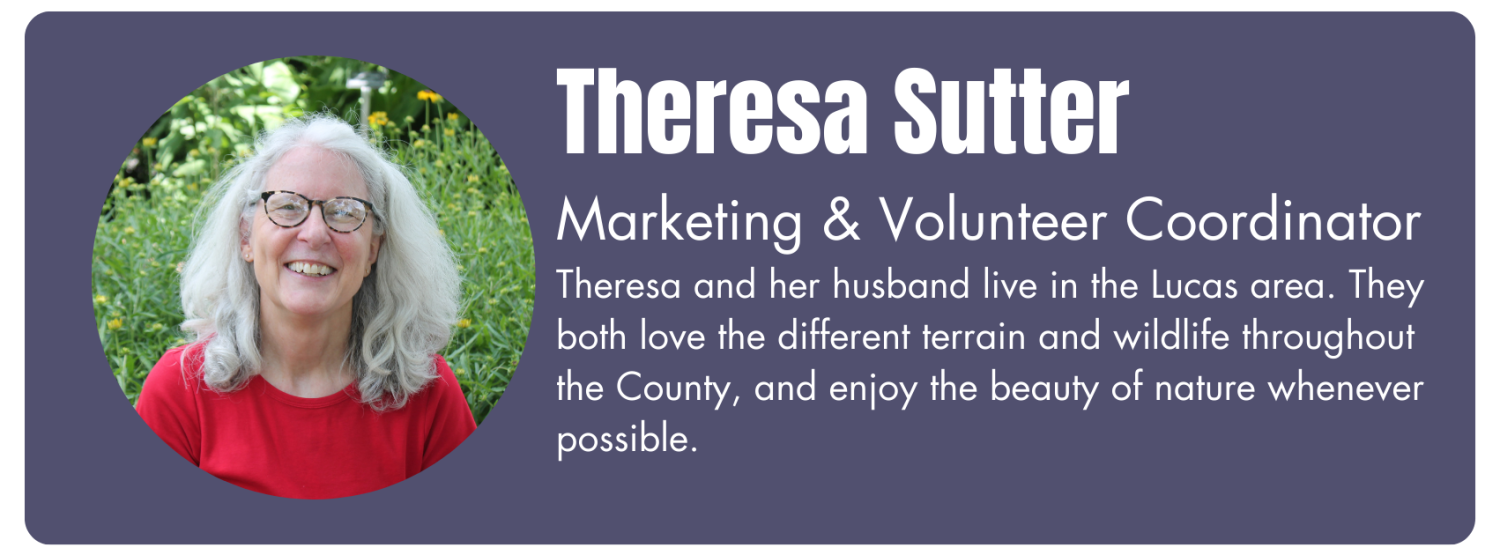
Photo of Theresa Sutter, Marketing & Volunteer Coordinator. Her bio reads "Theresa and her husband live in the Lucas area. They both love the different terrain and wildlife throughout the County, and enjoy the beauty of nature whenever possible."

Blue is the New Yellow – Stormwater Program Notes

Why are we so blue?, Stormwater Permit numbers, and MS4 happenings.

Richland SWCD staff in their new vests posed in front of a truck with the Richland SWCD logo on it.
A good-looking bunch. Credit: Richland SWCD

Why Are We So Blue?

We recently traded our old, yellow, high-visibility vests for new blue ones with our logo! These vests will help keep us safe and stand out when we do stormwater inspections or other fieldwork.

Our Stormwater Technicians regularly inspect permitted projects, visiting projects in all 18 townships about once every other month. They also inspect storm sewer outfalls.

If you see the blue vest, know that Richland Soil & Water is hard at work!


Graphic showing the number of permits issued in the third quarter. 87 residential/agricultural permits and 6 commercial.

Busy With Stormwater Permitting

This quarter, our office issued 87 residential permits (this includes all residential & agricultural permits, fee exemptions, and permit exemptions), up from 66 last quarter.

We also issued 6 commercial permits. We’re as busy as ever.

Richland Soil & Water Conservation District (Richland SWCD) manages Richland County’s Stormwater Management and Sediment Control Regulations. For more info, click on the link below.


Zoe crouching in a stream taking a photo of an outfall pipe
A dry weather screening in progress. Credit: Richland SWCD

Successful Screenings – MS4/NPDES Update

This quarter we focused on conducting dry weather screening of stormwater outfalls in Madison Township as part of our ongoing MS4 efforts. We successfully screened 4 outfalls for signs of illicit discharge or pollution.

These screenings are an essential part of our work to ensure stormwater runoff remains clean and free from harmful pollutants. We only have 6 more dry weather screenings to complete this permit term!

Graphic showing the number of screenings that have been completed and remain. 6 occurred in Madison with 4 remaining. 1 in Springfield with 1 remaining. 3 in Washington 1 remaining. No screenings needed in Mifflin.

The MS4/NPDES permit is a crucial regulatory measure designed to manage and reduce pollution from stormwater runoff in urbanized areas. For more information, click on the links below.

Did You Know that You Can Preserve Farmland in Ohio?

Has your farm been in your family for more than a century? Would you like to preserve and honor that history? If so, Ohio’s Historic Family Farm Program might be a good choice…

Lush green field with a partly cloudy sunset.

Ohio’s Historic Family Farm Program

Has your farm been in your family for more than a century? Would you like to preserve and honor that history? If so, Ohio’s Historic Family Farm Program might be a good choice.

There are three designations for historic farms in Ohio: Century Farms (in the family for 100-146 years), Sesquicentennial Farms (in the family for 150-199 years), and Bicentennial Farms (200+ years in the family).

For more information, you can call the Ohio Department of Agriculture (ODA) at 614-752-4505 or email them (see below).


Farmland Preservation Program

Do you want to preserve your farmland as an agricultural asset in your community, in perpetuity? If so, look into the Farmland Preservation Program offered by the Ohio Department of Agriculture and sponsored by your local Soil and Water Conservation District.

This program has two options for preservation:

  1. Clean Ohio Local Agricultural Easement Purchase Program (LEAPP) where you compete in a ranking process to enter the program.
  2. Agricultural Easement Donation Program (AEDP), which includes some tax benefits.

There are similar programs offered by the United States Department of Agriculture’s Natural Resource Conservation Service (USDA-NRCS). You can enroll in them at the same time as ODA’s programs. Contact us or the Farm Service Agency for more information.


Photo of Matt Wallace, District Technician. His bio reads "Theresa and her husband live in the Lucas area. They both love the different terrain and wildlife throughout the County, and enjoy the beauty of nature whenever possible."

Conservation in Action! – Agriculture Program Notes

H2Ohio’s Impact, Why Grassed Waterways?, and Field Work

H2Ohio Wraps Up for 2023 Program Year

In H2Ohio, verifications for one year of the program don’t wrap up until halfway through the next. That is why we are sharing 2023’s impact instead of 2024’s.

The Ohio Department of Agriculture designated over $2.7 million for Richland County farmers in H2Ohio. 2023 appropriated cost share alone totaled nearly $700,000.

Our participating farmers worked hard in 2023 as you can see from the impact infographics below.

Overall, H2Ohio farmers received north of $320,000 in cost share last year. The total cost share paid to date totals over $700,000.

As we look ahead to the coming years we are excited to announce that 11 new producers were signed up for H2Ohio this year! This brings the total cropland acres enrolled through Richland County to 25,500, the most we have had since the program began!

All numbers are approximate

For more information on H2Ohio, visit these links!


Aerial view of a grassed waterway in a farm field
Credit: Greg LaBarge, OSU Extension

Agriculture Best Management Practice Highlight: Grassed Waterways

Ever pass a farm field and wonder why a seemingly random strip of grass runs through the middle of it? Chances are, you are looking at a grassed waterway.  

When a whole field is tilled and planted, there may be areas where two hill slopes come together (called a swale). When it rains, water will naturally flow to these swales and eventually to a stream or creek.

In conventional cropping and tillage systems, these areas can erode into gullies and are difficult or impossible to cross with farm equipment. Furthermore, they will continue to erode as water carries the soil away.

Grassed waterways are engineered, shallow grassed channels designed to handle concentrated water flows. The grass slows water down so it is less likely to carve gullies and the grass’s roots help keep the soil in place.

If you think your field could benefit from a grassed waterway or two, we can help. Give our office a call at 419-747-8686.


A lush green pasture and a clear blue sky
Credit: Richland SWCD

Seeing Conservation in Action

Over the spring/summer, Richland SWCD technicians helped our USDA-NRCS partners by performing practice check-outs. In other words, these practices were completed and needed to be verified that they were done correctly. As a result, our technicians saw some conservation practices in action!

Technicians verified 7 acres of Grassed Waterways, 4 acres of Quail Buffer, 5 acres of Hardwood Tree Planting, and 25 acres of Tall Grass Prairie. The practices our technicians verified encompass nearly 40 acres and are helping to reduce soil erosion and promote wildlife habitat and diversity.

The United States Department of Agriculture’s Natural Resource Conservation Service (USDA-NRCS) offers and administers a wide variety of voluntary, cost-shared conservation practices for farmers to implement on their land and homestead.

Richland SWCD technicians assist USDA-NRCS with technical assistance and administrative efforts and are available to help producers interested in programs and practices offered in Richland County. Our technicians also assist those who do not wish to be enrolled in government programs but want to implement conservation practices.

Small Space, Big Impact: Urban Composting

Following our 2024 “Pollution Prevention” theme for the MS4 program, composting is one of the easiest ways for the average person to keep food scraps and other organic matter out of the landfill…

Close-up of Sam's worm bin containing soil medium, red wiggler worms, and some paper scraps.
Figure 1: Worm bin at the Foley household

The Importance of Composting

Following our 2024 “Pollution Prevention” theme for the MS4 program, composting is one of the easiest ways for the average person to keep food scraps and other organic matter out of the landfill. Nearly 1/3 of all food produced is wasted (~1.3 billion tons each year) and around $165 billion a year is spent managing that waste (data from TED Ed, link below). Composting is a sustainable practice that can coincide with organic gardening.

“Urban Composting” is a practice that can be performed in a city setting with limited space. In this article, I’ll discuss two unique and viable options to get you started: vermicomposting and using compost tumblers.


Vermicomposting

Vermicomposting uses earthworms to decompose organic matter (see Figure 1). The byproduct of vermicomposting is vermicast, a substance rich in humus, nitrogen, phosphorus, potassium, micronutrients, and beneficial soil microbes. Vermicast can help neutralize soil pH and improve plant health and nutrient uptake. Some folks refer to it as “Black Gold”. Worms can be somewhat sensitive and picky, so avoid putting spicy foods or anything acidic in your vermicompost. You don’t want to upset the balance!


Compost tumbler surrounded by tomato plants at South Park Children's Educational Garden
Figure 2: Compost tumbler at South Park Children’s Educational Garden

Compost Tumblers

Traditional composting can be easily performed in a tumbler or similar bin at home. Again, this option does not require a ton of space, and the closed bin keeps any unpleasant smell contained. The composter needs to be turned often—and that is most of the maintenance required. Adding composted organic matter to your soil is a fantastic way to supplement it. Your plants and the planet will thank you.

Photo of Sam Foley, District Technician. His bio reads "Sam is passionate about sustainability and enjoying the finer things in life. He grew up in Shelby, OH, but moved to the big city and now resides with his family in Mansfield. When he’s not at work, he’s spending time with them."

Don’t Miss Out!

Highlighted upcoming events for October through January!

Highlighted upcoming events for October, November, December, and January

For our full list of upcoming events – including Board Supervisor meetings – go to our calendar by following the link at the bottom of this page!

October


Jack-o-lanterns carved and lit up on a hay bale.

Fri, Oct. 18 & Sat, Oct. 19 @ 4:00 pm – 9:00 pm

The Great Pumpkin Glow & Children’s Carnival @ Kingwood Center

Come find our booth on the first two days of this event for some Halloween fun!

Admission is required for Kingwood’s event.

November


Richland Gives logo - green palm with the outline of a tree

Mon. Nov. 18 @ 7:00 am to Tue. Dec. 3 @ 6:59 am

Richland Gives: Early Giving

Richland Gives is a local online giving campaign held once a year. It encourages people to contribute to local non-profits. Thanks to previous generous donors, Richland SWCD has benefited from this campaign.

Want to donate to Richland SWCD or learn how to maximize your donation? See the links below!

Soiled undies on a display rack at the annual celebration

Wed. Nov. 13 @ 4:00 pm – 6:00 pm

Cancelled: Stupendous Soils Open House

Join us for some soil-themed fun for the whole family! Learn about soil health, watch out for hanging undies, and eat dirt (pudding)!

The event is FREE and will be held at the Longview Center – 1495 W. Longview Ave, Mansfield. Contact us for more information.

Richland Gives logo - green palm with the outline of a tree

Tue. Dec. 3 @ 7:00 am – 7:00 pm

Richland Gives: Day of Giving

Richland Gives is a local online giving campaign held once a year. It encourages people to contribute to local non-profits. Thanks to previous generous donors, Richland SWCD has benefited from this campaign.

Want to donate to Richland SWCD or learn how to maximize your donation? See the links below!


Our Full Calendar of Events

Photo of Theresa Sutter, Marketing & Volunteer Coordinator. Her bio reads "Theresa and her husband live in the Lucas area. They both love the different terrain and wildlife throughout the County, and enjoy the beauty of nature whenever possible."

A Summer of Agricultural Outreach

Thanks to the encouragement of our partners during our five-year strategic planning process in 2023, we at Richland Soil & Water Conservation District (Richland SWCD) saw a clear need to re-focus on agricultural outreach.

Plants on a picnic table and people gathered around them in conversation

Thanks to the encouragement of our partners during our five-year strategic planning process in 2023, we at Richland Soil & Water Conservation District (Richland SWCD) saw a clear need to re-focus on agricultural outreach. In the past, our district has found it difficult to do this due to financial and staffing limitations. Now, thanks to community support, we are able to offer these services again. Most notably, support for these services was generously provided by a grant from the Richland County Foundation.

St. Mary’s Farm Field Day

We hit the ground running this summer. On May 28, as the school year drew to a close, Richland SWCD was invited to the McKown farm for St. Mary’s (Shelby) Farm Field Day. Technician Jordan Keller brought along the rainfall simulator to discuss how different land uses impact water quality.

Each of the five groups of students ages K-6 grade buried a pair of (clean) underwear for our Soil Your Undies experiment. Locations where students buried the underwear included: Woodland Edge, Turf Grass, Conventional Tilled Cropland, Pasture, and a Hay Field. The students had a blast with the Soil Your Undies experiment and a pair of underwear seemed to end up on a kid’s head in every group. 

Don’t forget to stop by our booth at the fair this year to check out our county wide “Soil Your Undies” challenge! What is this? Click or tap at the bottom of this page and scroll down the the article from the last newsletter!

Grazing Field Day for Plain Growers

On June 14th Richland SWCD hosted a Field Day for Plain Growers emphasizing grazing management practices. State Grazing Specialist, Megan Burgess – United States Department of Agriculture – Natural Resources Conservation Service (USDA-NRCS), led a field day where participants enjoyed learning about pasture weeds and forage identification, grazing equipment, rotational grazing, and a pasture visit.

A HUGE thank you to the Randy and Eileen Eisenhauer for letting us use their pasture, last-minute, for demonstrations on how to use a grazing stick. Randy was more than happy to discuss the management decisions he’s made on his pasture and highlighted how Richland SWCD and USDA-NRCS have assisted with improving his operation.

If you feel like you missed out on your opportunity to learn about grazing, you’re in luck! Richland SWCD will be hosting a three-part grazing school series called Pastures for Profit Grazing School July 23rd & 25th from 6-9 pm with a pasture walk at Eisenhauer farm scheduled for July 27th from 9am-2pm. The cost is $30 for the series and includes a grazing stick and USB with course manual. Registration is requested by July 19.


Photo of Jordan Keller, District Technician. His bio reads "Jordan lives in Mansfield with his wife and their baby girl (who has Jordan wrapped around her finger). He likes plants, bugs, and the outdoors."

Richland SWCD Veteran Returns As Director

Matt has lived in the Richland County area his whole life, attending college at Ashland University and Wooster ATI, completing a degree in Environmental Resource Management in 1998…

Matt seated in front of some yellow flowers that are just starting to bloom. He's wearing a Richland SWCD shirt and smiling for the camera.

Welcome back Matt Christian!

Matt has lived in the Richland County area his whole life, attending college at Ashland University and Wooster ATI, completing a degree in Environmental Resource Management in 1998. “I knew I wanted something to do with the environment; I always liked the outdoors, and nature.” After completing an internship with Richland Soil & Water Conservation District (Richland SWCD) in 1997 Matt began his Soil and Water Conservation career in Crawford County as a Technician. He joined Richland Soil and Water Conservation District as a Technician in 2000, staying for 17 years.

Matt began his new role as Director on May 6 and says his favorite part of the job is passing on conservation knowledge to the community “The ability to pass on the ideas and principles of what conservation means, its importance, and explaining the primary principles of conservation is what I enjoy most.”

Matt’s Goals

As the Director of Richland SWCD, Matt envisions a busy and bright future for the district. “I foresee many issues in the county are only going to become more focused and important. Agriculture is still a big part of Richland County, and development is going to continue to increase. Anytime new impervious areas are developed, water has a chance to get into the streams faster. It’s important for us to work with new (stormwater) applicants before construction begins to ensure water run-off stays on their property and is absorbed into the soil as much as possible.”

If you would like to reach out to Matt and welcome him in his new role, he is available by phone at 419-747-8684, or email him at the link below!

Matt is excited to continue the mission of assisting the citizens of Richland County in protecting and improving the County’s natural resources.


Photo of Julian Papania, summer intern. His bio reads "Julian is a lifelong resident of Mansfield, Ohio. He enjoys reading, hiking, and watching a good movie."

Meet Our Newest Interns!

Here at Richland Soil & Water Conservation District (Richland SWCD), we often have interns helping us out in various areas. This summer we are pleased to announce that we have three!

Here at Richland Soil & Water Conservation District (Richland SWCD), we often have interns helping us out in various areas. This summer we are pleased to announce that we have three! We are very thankful to the Richland County Foundation Fran and Warren Rupp Fund for the grant to fund these positions! It is appreciated!

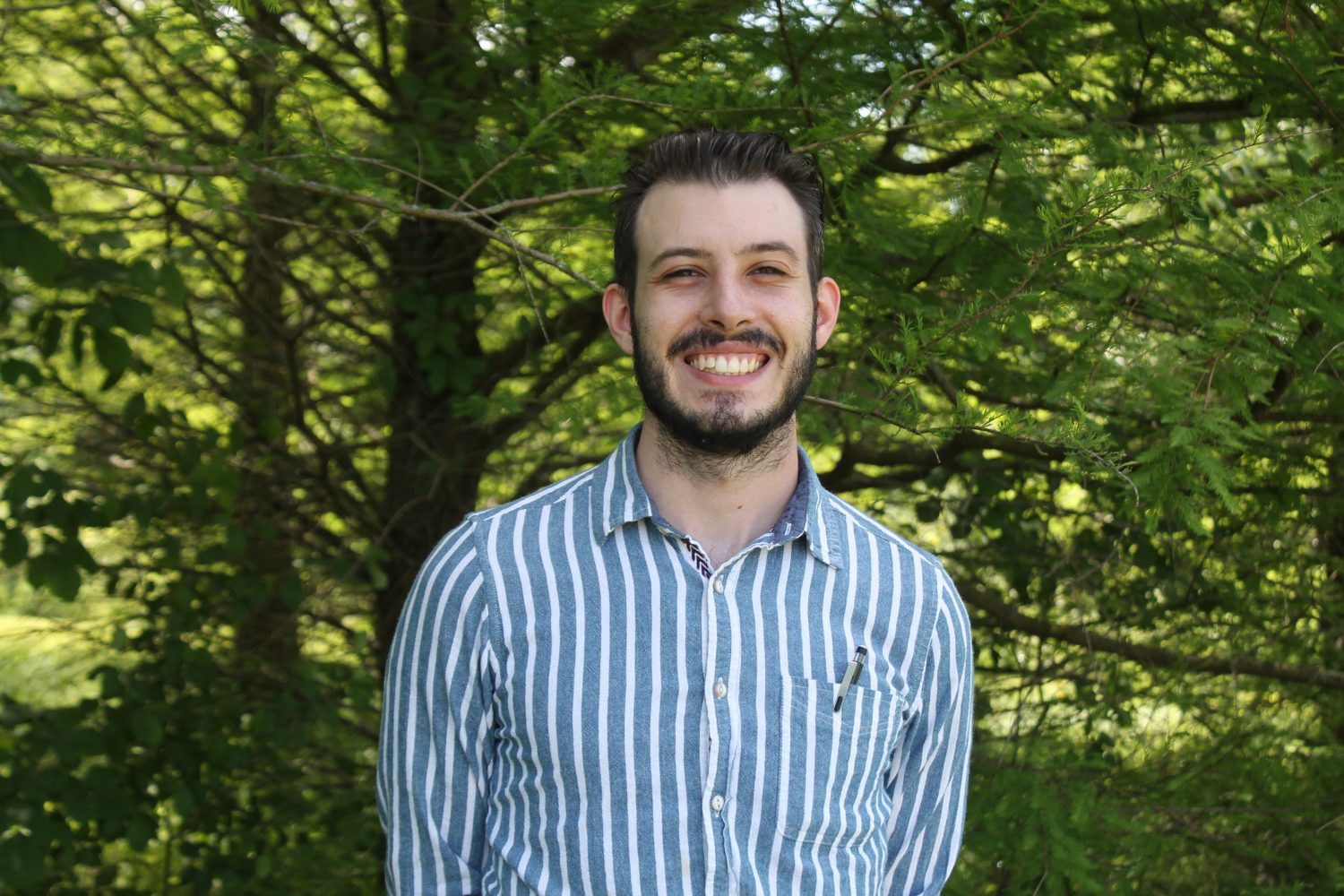
Portrait of Julian. He's posed in front of an evergreen tree and is smiling.

Julian Papania

Julian is our in-office summer intern for 2024. He was born and raised here in Mansfield and graduated from Pioneer Career and Technology Center in Shelby, OH, in 2014 with a certification in carpentry. He is currently pursuing a Bachelor’s of English at The Ohio State University at Mansfield.

He is assisting Richland SWCD with special events, videography, and photography.

During his free time, he enjoys hiking, spending time with family and friends, reading, and watching a good movie. He is passionate about environmental health.

Portrait of Mackenzie. She's outdoors with a white brick wall on her left and green vegetation to her right and behind her.

Mackenzie Phenecie

We are thrilled to welcome Mackenzie back to the team this summer! Mackenzie interned with us last summer, and is returning again as a Communications Intern, focusing on our social media accounts and graphic design.

She will graduate from Miami University later this year with a Bachelor’s in Strategic Communication.

Portrait of Anna. She's posed in front of a gray backdrop and is smiling.

Anna Rozic

We are happy to welcome Anna Rozic to the team this summer! Anna will assist Evan with podcast editing. She joins us from Kent State University, where she is an upcoming senior majoring in Digital Media Production.

Anna has a passion for writing and filmmaking, and she currently serves as the president of the Kent State Writers Room.

Fun Was Had on the Farm, Despite the Rain

The Family Fun on the Farm Festival has been a Richland County tradition for four years. The event offers a family friendly and accessible atmosphere where visitors can learn about farm life,

Visitors at Richland SWCD's booth

The Family Fun on the Farm Festival has been a Richland County tradition for four years. The event offers a family friendly and accessible atmosphere where visitors can learn about farm life, where their food comes from, and conservation.

Visitors can learn to shoot arrows at the Ohio Department of Natural Resource’s (ODNR) archery trailer, go fishing in the pond below Louis Bromfield’s house, go on a wagon ride, get up close and personal with farm animals, and interact with local organizations (including yours truly, Richland Soil & Water Conservation District! – or Richland SWCD for short)

Of course, everyone’s hope for an event as big as this one is for perfect weather. Unfortunately, there was no such cooperation from Mother Nature. It drizzled on and off during the festival held from noon to 4 pm on Saturday, June 29. It even poured once.

However, despite the bummer weather, the Festival was still a huge success. Approximately three hundred people came out from the community to brave the rain. Smiles were still lighting up on kids faces as they planted their own green beans or got a fun farm animal stamp at the Richland SWCD booth. Visitors were very thankful we held the festival, co-sponsored with Malabar Farm State Park, and told us so.

To all our partners who stood out in the weather for a few hours on a Saturday, thank you! Special thanks needs to go out to Malabar Farm State Park, ODNR, their respective staff and the many volunteers who hosted and assisted. And to our soggy but happy visitors, hats off to you. You are the reason we do what we do.


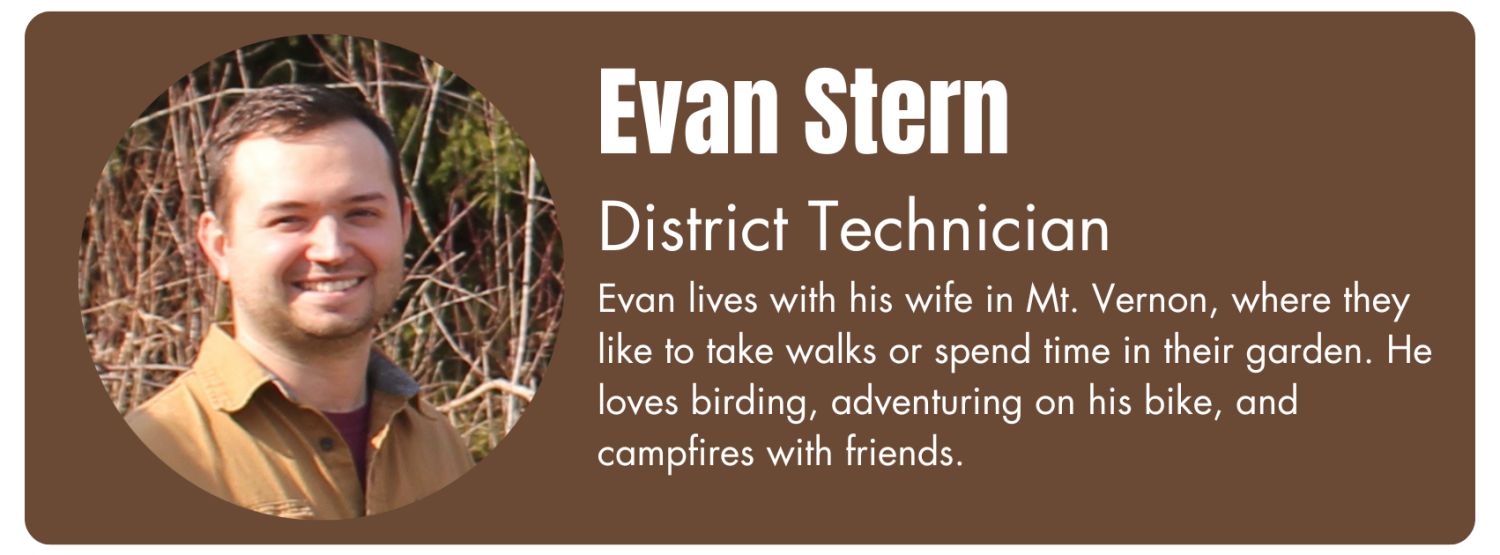
Photo of Evan Stern, District Technician. His bio reads "Evan lives with his wife in Mt. Vernon, where they like to take walks or spend time in their garden. He loves birding, adventuring on his bike, and campfires with friends."

You may have noticed things look differently…

Hello readers!

Welcome to Richland Soil & Water Conservation District’s (Richland SWCD’s) brand new blog! We have been working hard with DRM (who helped us to create our new website) on this new platform which allows us to post our newsletter and other informative articles as a “blog”.

Hello readers!

Welcome to Richland Soil & Water Conservation District’s (Richland SWCD’s) brand new blog! We have been working hard with DRM (who helped us to create our new website) on this new platform which allows us to post our newsletter and other informative articles as a “blog”.

Our newsletter will live here from now on. Don’t worry, you will still get an email from us every quarter letting you know that our newsletter has been published.

Read on to learn how to navigate the site (with some helpful screenshots)!

Getting to the Blog (if not through our e-newsletter)


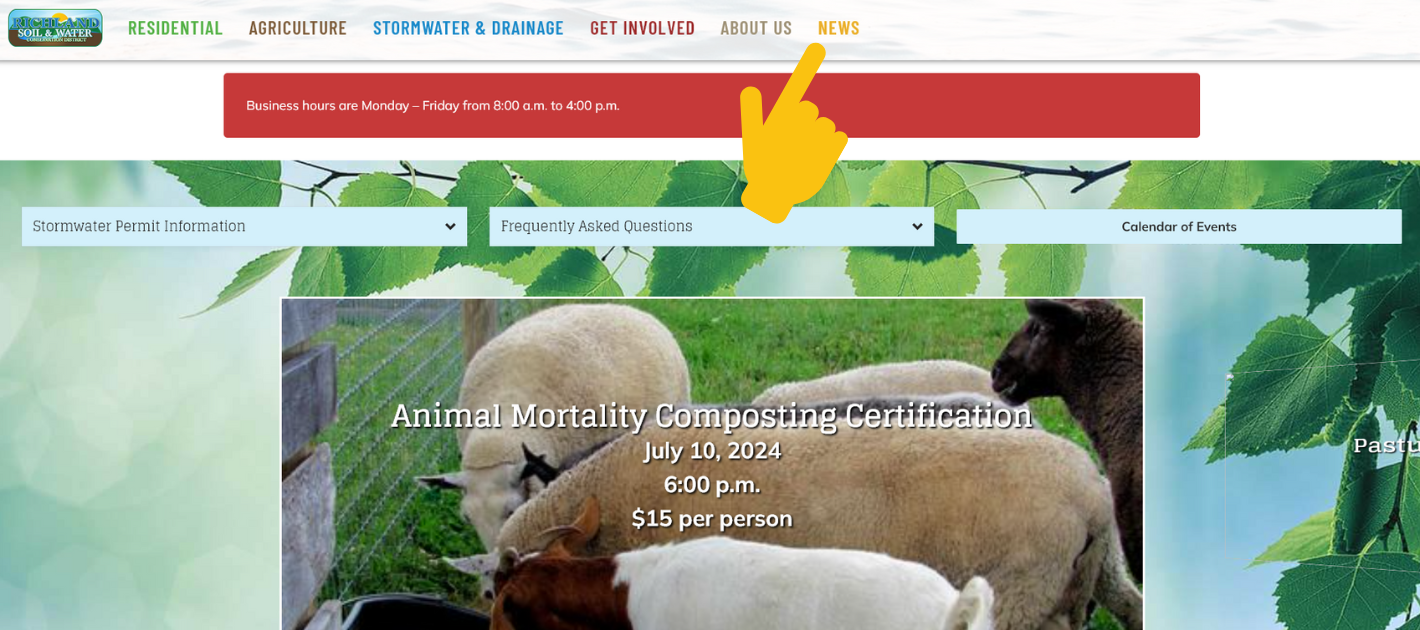
If you want to get to our blog from our website’s main page, select the new “News” tab at the top of the screen.

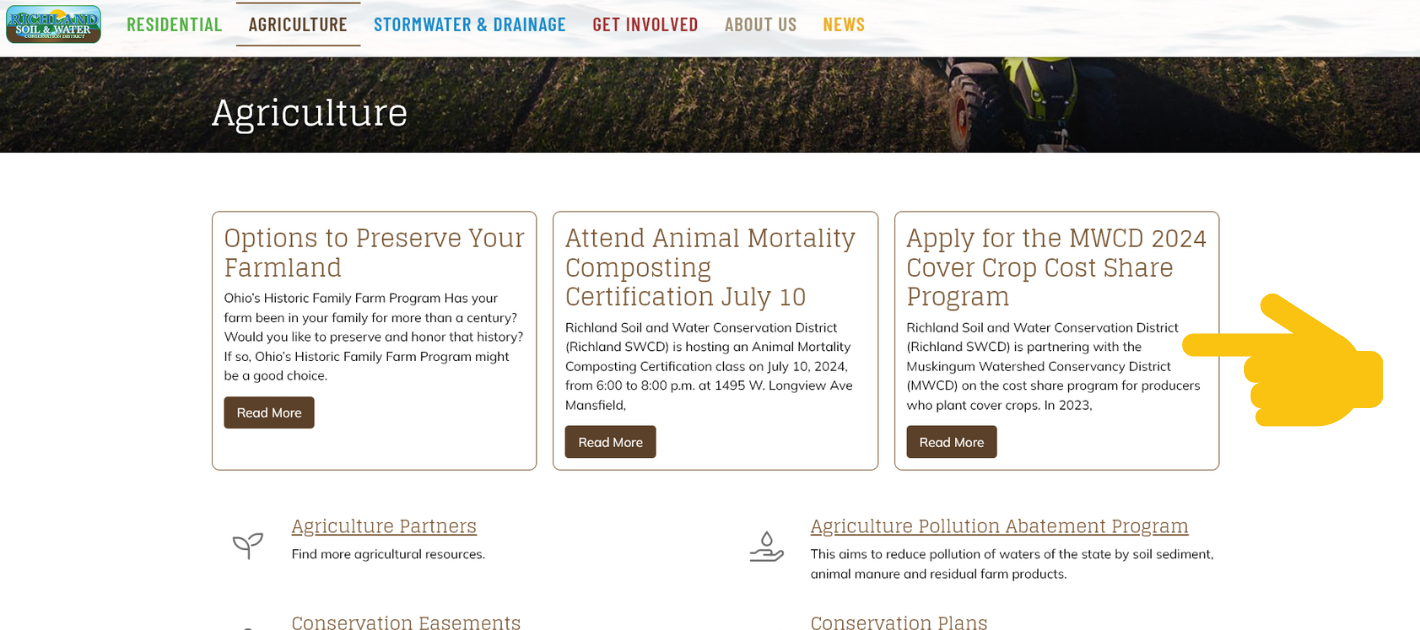
Screenshot of Richland SWCD website with a hand pointing to the news tab at the top of the page.

Navigating the Blog


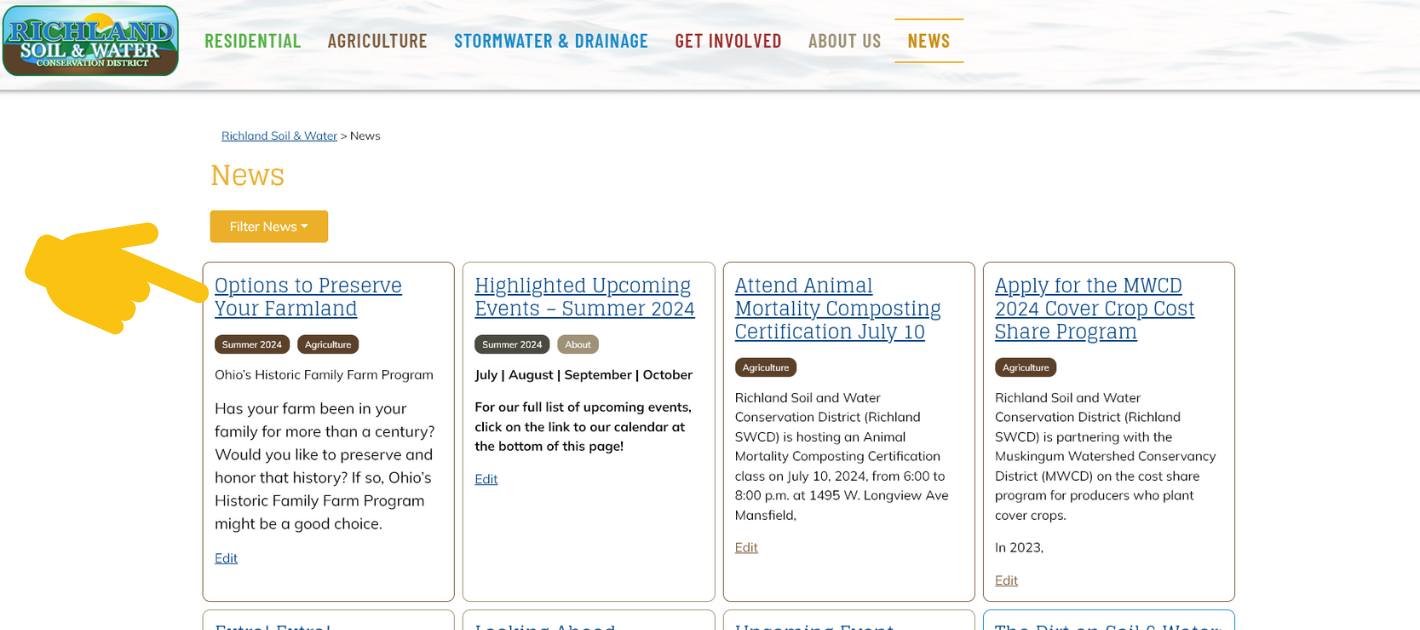
Once on the “News” page, you can see a dozen or so of the most recent articles. Click on the article’s title to view each article.

Screenshot of Richland SWCD website with a hand pointing to the most recent article.

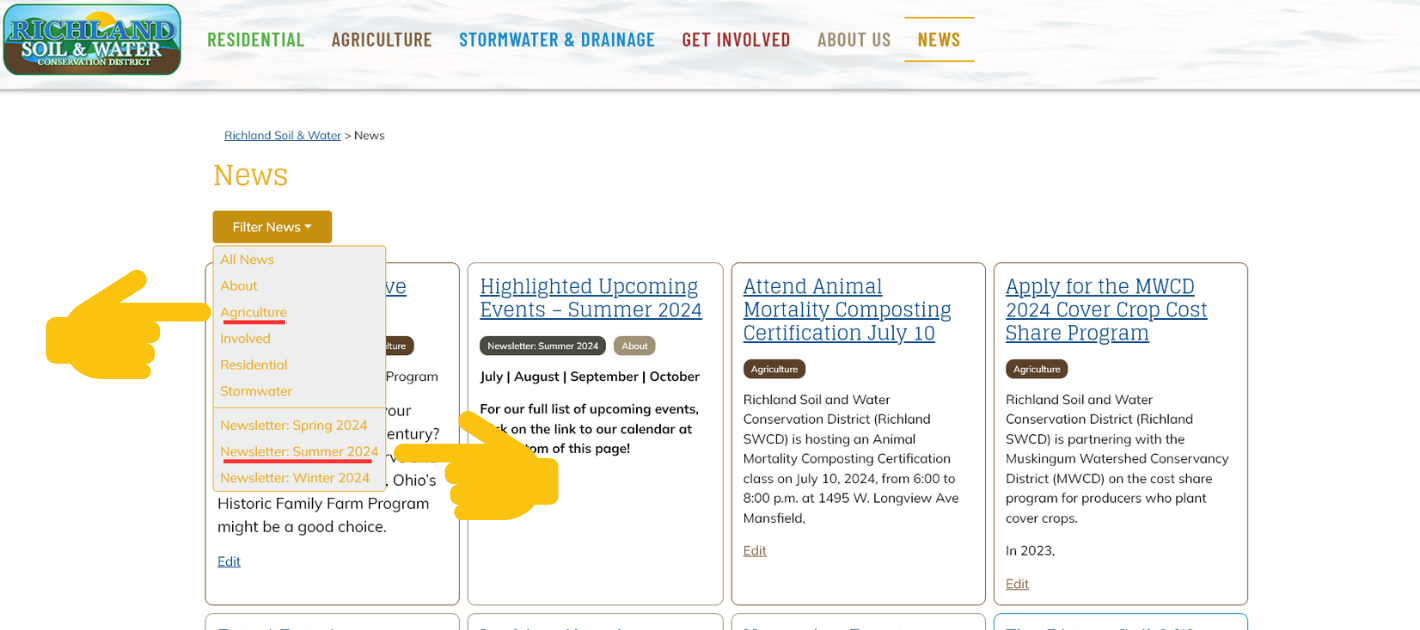
If you want to filter what you see on the news page, or want to explore the article archive, you can open the “Filter News” drop down and pick a category or a specific newsletter to see the articles tagged under each. For example, select “Newsletter: Summer 2024” to see articles from that one issue.

Screenshot of Richland SWCD website with a hand pointing to the filter news drop down menu.

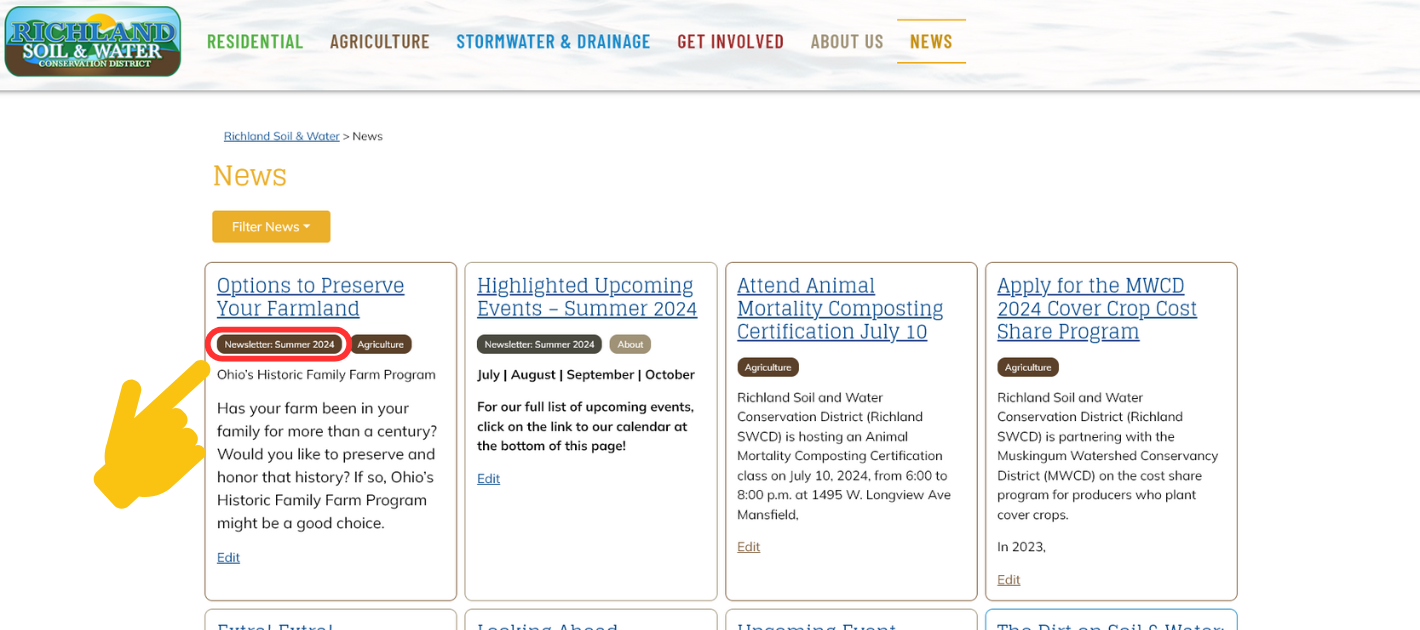
Additionally, you can select the category or newsletter “tags” under the header of each article to similarly filter the news page.

Screenshot of Richland SWCD website with a hand pointing to the category of newsletter.

Another neat feature: recent blog articles with a unique category “tag”, like “stormwater” or “agriculture” will pop up on their respective pages on our website. See below for a view of our Agriculture page.

Screenshot of Richland SWCD website with a hand pointing to the agricultural articles.

If you have any questions or comments on the new blog, please let us know!


Photo of Evan Stern, District Technician. His bio reads "Evan lives with his wife in Mt. Vernon, where they like to take walks or spend time in their garden. He loves birding, adventuring on his bike, and campfires with friends."

Stormwater Program Updates – Summer 2024

Stormwater Permitting | MS4/NPDES

Stormwater Permitting

Richland Soil & Water Conservation District (Richland SWCD) is the manager of Richland County’s Stormwater Management and Sediment Control Regulations.

Stormwater Permitting | MS4/NPDES

Water running off of one roof and onto another

Stormwater Permitting

Richland Soil & Water Conservation District (Richland SWCD) is the manager of Richland County’s Stormwater Management and Sediment Control Regulations. Any building projects that entail earth disturbance and/or new impervious surface are permitted through our office (applies to all unincorporated areas in Richland County, and the Village of Lexington, only). 

Arrow pointing to the number of stormwater permits issued by our office in the second quarter that began on April 1 and ended on June 30.
Graphic showing that 66 residential and agricultural permits were issued.
Graphic showing that 8 commercial permits were issued.

For more info on our Stormwater Permit process and how to complete the process fully online using GeoPermits, click or tap the links! 


Manhole cover that says "storm drain" on it.

MS4/NPDES Program Update

The MS4/NPDES permit is a crucial regulatory measure designed to manage and reduce pollution from stormwater runoff in urbanized areas. The permit, part of the National Pollution Discharge Elimination System (NPDES) program, specifically targets Municipal Separate Storm Sewer Systems (MS4s) in communities with populations of 100,000 or more. By mandating the implementation of effective stormwater management practices, the MS4/NPDES permit plays a vital role in minimizing pollutants entering local water bodies.

Sam and Zoe have been focusing on illicit discharge detection and elimination. This quarter, they dry weather screened five outfalls in Madison Township. Through these comprehensive efforts, Richland SWCD strives to ensure effective stormwater management, helping to prevent pollution and protect local water bodies.

Fore more information on MS4 in Richland County, click the link below.

Agriculture Program Updates – Summer 2024

H2Ohio | USDA-NRCS

H2Ohio Update

Spring and early summer have been an exciting time for H2Ohio in Richland County! Richland Soil & Water Conservation District (Richland SWCD) is happy to report that nine new producers have enrolled in the program this year,

H2Ohio | USDA-NRCS

Blurry figures in the background shaking hands. Wheat field is in focus.

H2Ohio Update

Spring and early summer have been an exciting time for H2Ohio in Richland County! Richland Soil & Water Conservation District (Richland SWCD) is happy to report that nine new producers have enrolled in the program this year, representing approximately 5,450 total acres! Enrollment will likely wrap up in the next couple of weeks, so if you are still interested or know someone who might be, talk to us as soon as possible.

In other news, technicians Jordan and Evan have been steadily finishing 2023’s practice verifications, completing field checks, and getting ready to dive into 2024 nutrient management meetings with current participants.

If you are interested in seeing the impact of H2Ohio across the state, tap or click the “H2Ohio Progress Maps” button below to see some fascinating maps developed by the State (this will take you to the main H2Ohio site, scroll down to the “H2Ohio Dashboards on the DataOhio Portal”.

Close-up of wheat seed heads in a field

H2Ohio Practice Highlight: Conservation Crop Rotation – Small Grains

Just in the last few weeks, farmers that grow wheat or other winter annuals (like rye or spelts) for grain have been harvesting it. For H2Ohio, farmers are allowed to enroll in a practice called “Conservation Crop Rotations – Small Grains”.

Diversifying crop rotations includes many benefits: increasing soil and crop health, decreasing erosion and pest/disease pressures, covering the soil for longer periods of the year, increasing cash crop yields, and many more. For 2023, H2Ohio producers in Richland County completed about 770 acres of this practice. Here are a few resources for further reading:   

Man standing in a pasture and pointing to something off camera. Round bales are in the field in the distance.

USDA-NRCS Update

The United States Department of Agriculture’s Natural Resource Conservation Service (USDA-NRCS) helps people help the land. They offer and administer a wide range of voluntary, cost-shared conservation practices for farmers to implement on their land and homestead. Richland SWCD assists USDA-NRCS with technical assistance and some administration.

So far this year, Richland SWCD technicians helped our USDA-NRCS partner with three conservation plans that have the objective of improving soil quality. The three plans encompass about 80 acres of Early Successional Habitat Development, Tree/Shrub Establishment, and Upland Wildlife Habitat Management.

Richland SWCD technicians are available to assist producers interested in programs and practices available in Richland county. Our technicians also assist those who are not or do not want to be enrolled in USDA-NRCS programs but are still interested in related best management practices.

Clean and Green: How to Prevent Plastic Pollution

Single Use Plastics

In 2024, the focus of the MS4/NPDES permit theme is Pollution Prevention, highlighting its crucial role in protecting public health, preserving aquatic ecosystems, and ensuring clean water for future generations.

Plastic bottles, cans, and other litter floating in the ocean

Single Use Plastics

In 2024, the focus of the MS4/NPDES permit theme is Pollution Prevention, highlighting its crucial role in protecting public health, preserving aquatic ecosystems, and ensuring clean water for future generations.

Along with regulatory efforts, reducing the usage of single-use plastics emerges as a pivotal strategy in combating pollution. These plastics significantly contribute to stormwater pollution often ending up in waterways, where they harm wildlife and degrade ecosystems.

Examples of single-use plastics include take-out containers, straws, cups/bottles, and grocery bags. When aquatic organisms encounter these items, studies show they frequently ingest them, mistaking them for food, or become ensnared. The Environmental Protection Agency (EPA) notes, “Scientists have observed ingestion or entanglement in plastic waste by at least 558 species” with this number expected to rise as more waste enters water bodies.

Most plastics are non-biodegradable, breaking down into smaller pieces known as microplastics that persist indefinitely. National Geographic reports, “Microplastics have been found in marine life ranging from plankton to whales, in commercial seafood, and even in drinking water.” The impacts of microplastics are still being studied, but both aquatic animals and humans inadvertently consume them, posing a significant environmental and health concern.


What Can You Do?

How can individuals help prevent plastic pollution? Simple actions like recycling plastics and reducing your reliance on single-use plastics can make a profound difference. Opt for reusable grocery totes instead of plastic bags, switch to reusable water bottles instead of disposable ones, and explore alternatives like reusable sandwich bags, wraps, and straws. Going further, consider picking up plastic litter in your surroundings with gloves to prevent it from reaching waterways.

Together, these efforts can significantly decrease plastic pollution in our waters and contribute to safeguarding aquatic environments for future generations.


Photo of Zoe Baumberger, District Technician. Her bio reads "Zoe and her fiance live in Ashland. When she isn't working on home improvement projects, she can be found reading, cooking, or napping with her two canine companions."

Options to Preserve Your Farmland

Ohio’s Historic Family Farm Program

Has your farm been in your family for more than a century? Would you like to preserve and honor that history? If so, Ohio’s Historic Family Farm Program might be a good choice.

Lush green pasture and a partly cloudy blue sky.

Ohio’s Historic Family Farm Program

Has your farm been in your family for more than a century? Would you like to preserve and honor that history? If so, Ohio’s Historic Family Farm Program might be a good choice. There are three designations for historic farms in Ohio: Century Farms (in the family for 100-146 years), Sesquicentennial Farms (in the family for 150-199 years), and Bicentennial Farms (200+ years in the family).

For more information you can call the Ohio Dept. of Agriculture at 614-752-4505 or email them (see below).

Farmland Preservation Program

Do you want to preserve your farmland as an agricultural asset in your community, in perpetuity? If so, you may want to look into the Farmland Preservation Program offered by the Ohio Department of Agriculture and sponsored by your local Soil and Water Conservation District.

This program has two options for preservation:

  1. Clean Ohio Local Agricultural Easement Purchase Program (LEAPP) where you compete in a ranking process to be enrolled into the program.
  2. Agricultural Easement Donation Program (AEDP), which includes some tax benefits.

There are also additional optional United States Department of Agriculture’s Natural Resource Conservation Service (USDA-NRCS) programs that are similar in nature, and you can enroll at the same time as the above. If you would like further information, please contact us or the Farm Service Agency for additional information.


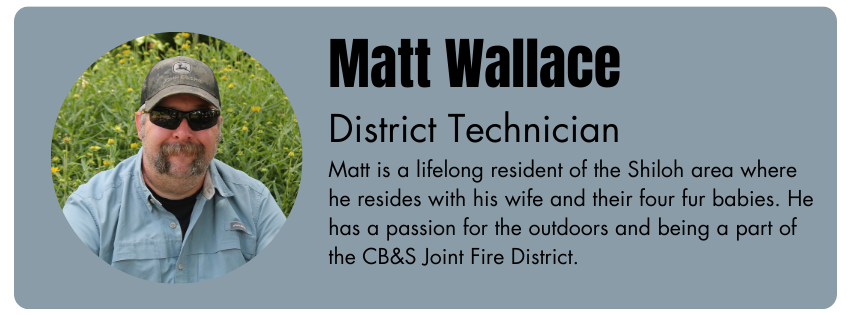
Photo of Matt Wallace, District Technician. His bio reads "Matt is a lifelong resident of the Shiloh area where he resides with his wife and their four fur babies. He has a passion for the outdoors and being a part of the CB&S Joint Fire District."

Highlighted Upcoming Events – Summer 2024

July | August | September | October

For our full list of upcoming events, click on the link to our calendar at the bottom of this page!

July | August | September | October

For our full list of upcoming events, click on the link to our calendar at the bottom of this page!

July


Cows in a pasture grazing

Pastures for Profit Grazing School Series

Lecture Session #1: Tue. July 23 @ 6:00 pm – 9:00 pm

Lecture Session #2: Thu. July 25 @ 6:00 pm – 9:00 pm

Pasture Walk (Session #3): Sat. July 27 @ 9:00 am – 2:00 pm

$30 per person covers all 3 days. Registration is requested by July 19.

August


3 boys and their mom and the Richland SWCD fair booth

Mon. Aug. 5 – Fri. Aug 9 @ 11:00 am – 7:00 pm

Richland SWCD Booth at the Richland County Fair

Come visit us at the Nature Park!

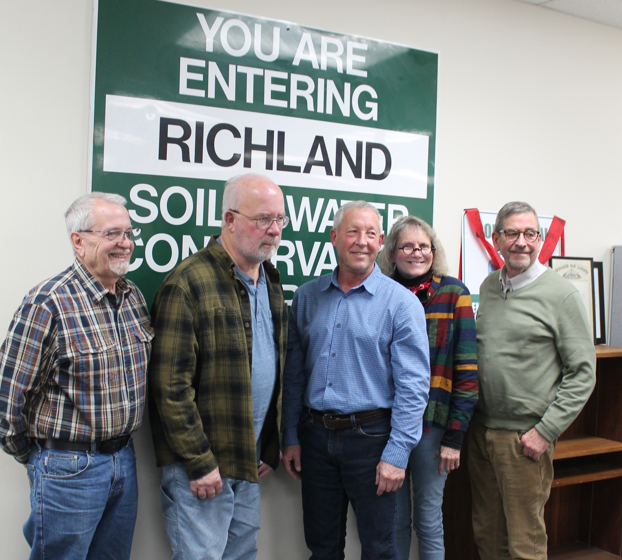
Board of Supervisors standing in front of a Richland SWCD sign smiling for the camera.

Wed. Aug. 28 – Wed. Sept. 25 – Voting open during Richland Soil & Water Conservation District’s business hours of 8:00 am – 4:00 pm, Mon. – Fri. and at the Annual Celebration September 26 from 11:30 a.m. to 12:30 p.m.

Board Supervisor Elections

Richland Soil & Water Conservation District is under a five-person, publicly elected, supervisory board. Board members serve three-year terms. Richland County residents who are at least 18 and live or own land within the County are eligible to vote in this special general election.

September


Theresa and a man posing with a giant 75 for our 75th anniversary at the annual celebration

Thu. Sept. 26 @ 11:30 am

Richland SWCD’s Annual Celebration!

Come join us as we celebrate conservation in Richland County and the work we accomplished this past year with our partners and supporters.

$20 a person at Area Agency on Aging – 2131 Park Avenue West, Ontario.

October


Close-up of shelled buckeyes.

Tue. Oct. 8 @ 6: 00 pm – 8:00 pm

Conservation Creation Arts & Crafts Workshop: Buckeye Beauties

$12 a person; Gorman Nature Center


Our Full Calendar of Events

Photo of Theresa Sutter, Marketing & Volunteer Coordinator. Her bio reads "Theresa and her husband live in the Lucas area. They both love the different terrain and wildlife throughout the County, and enjoy the beauty of nature whenever possible."