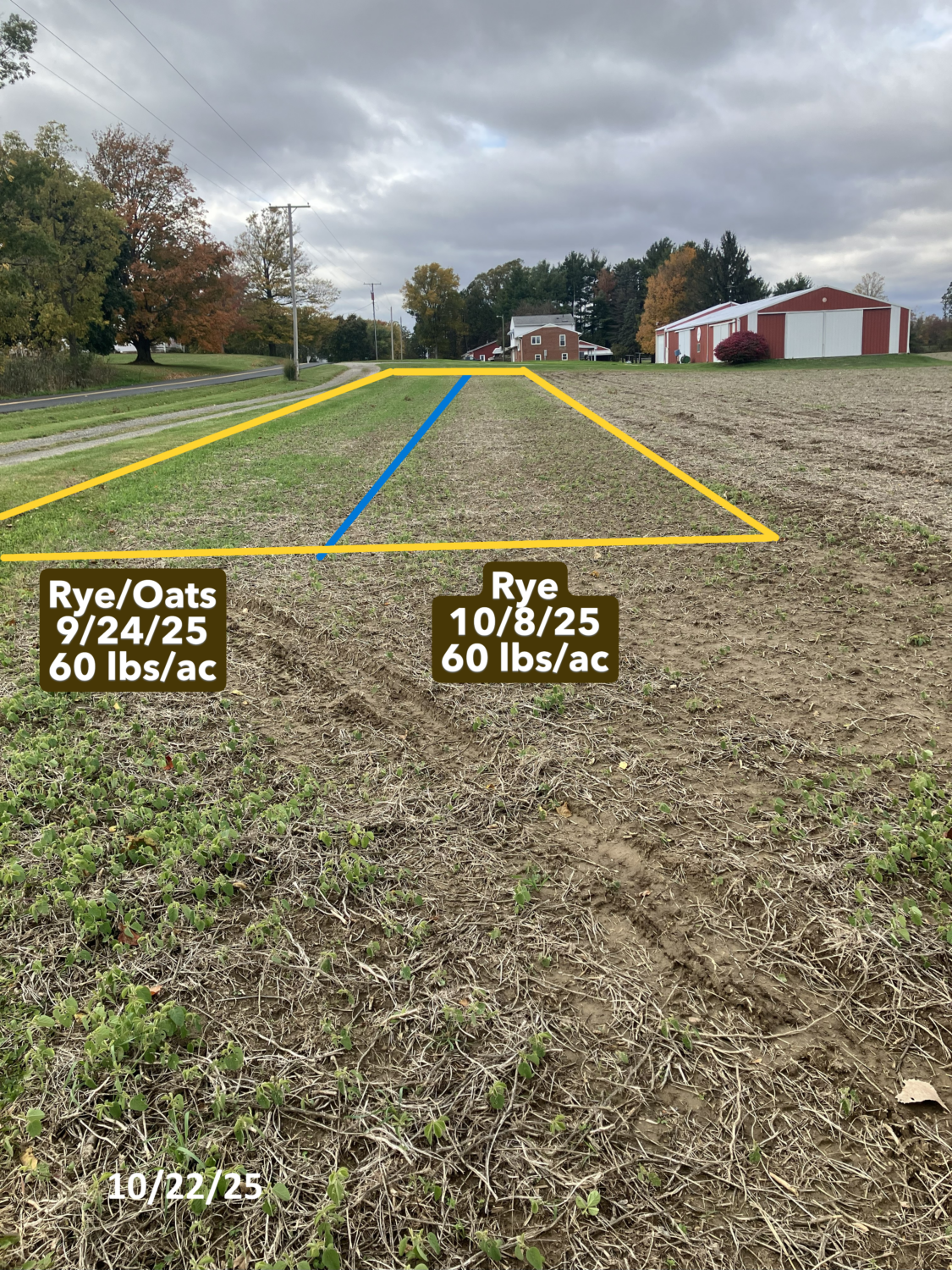
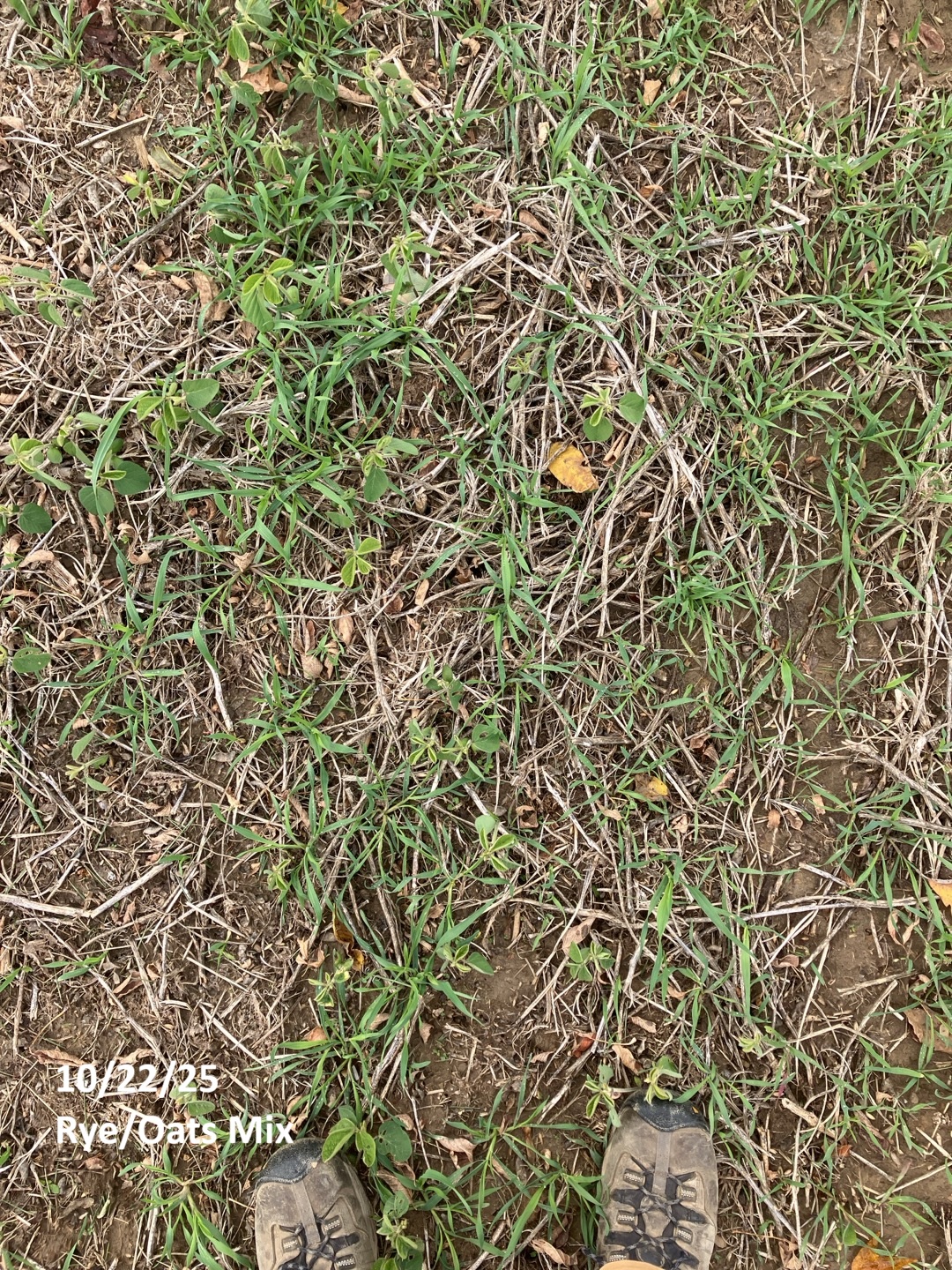
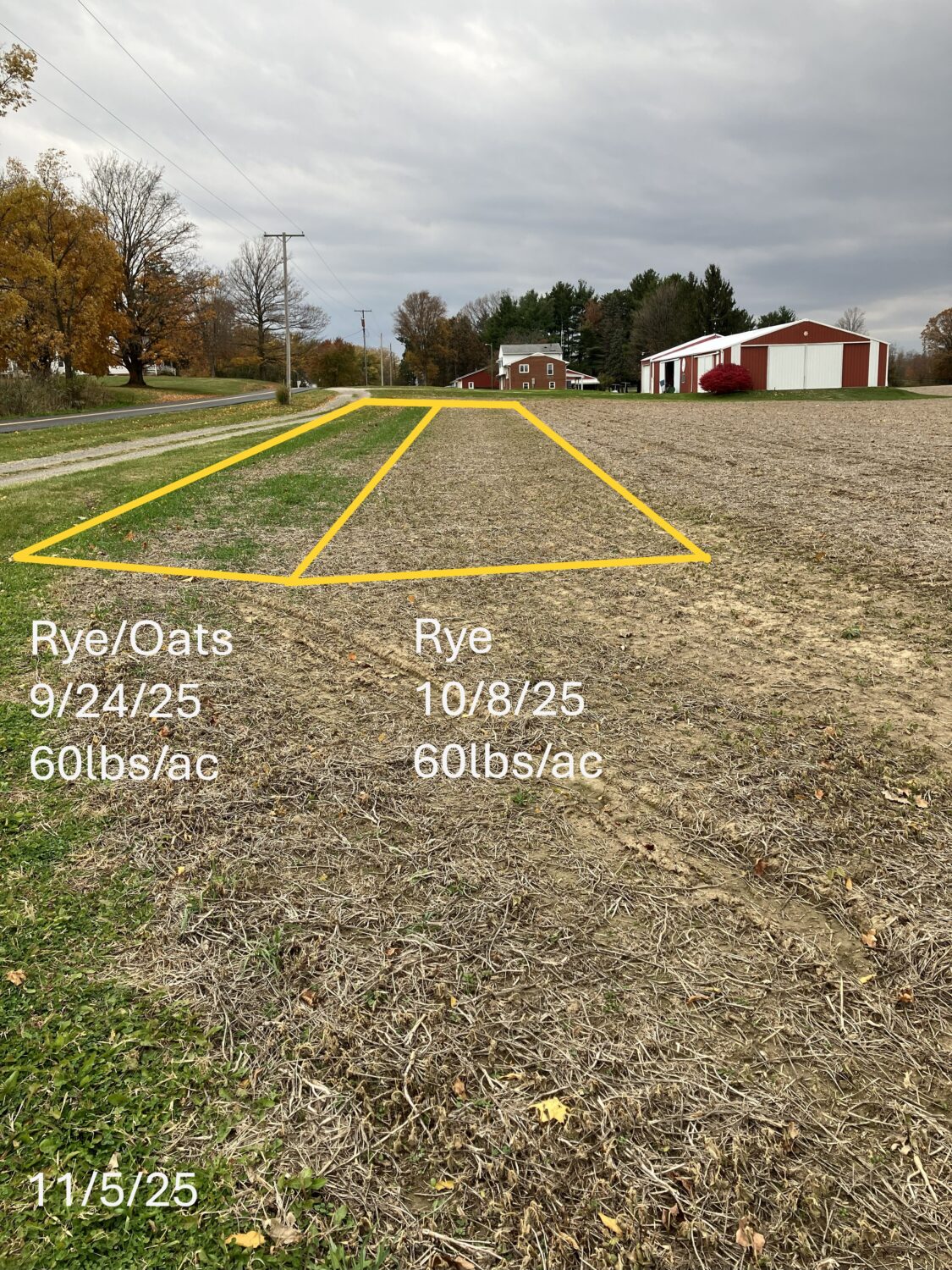
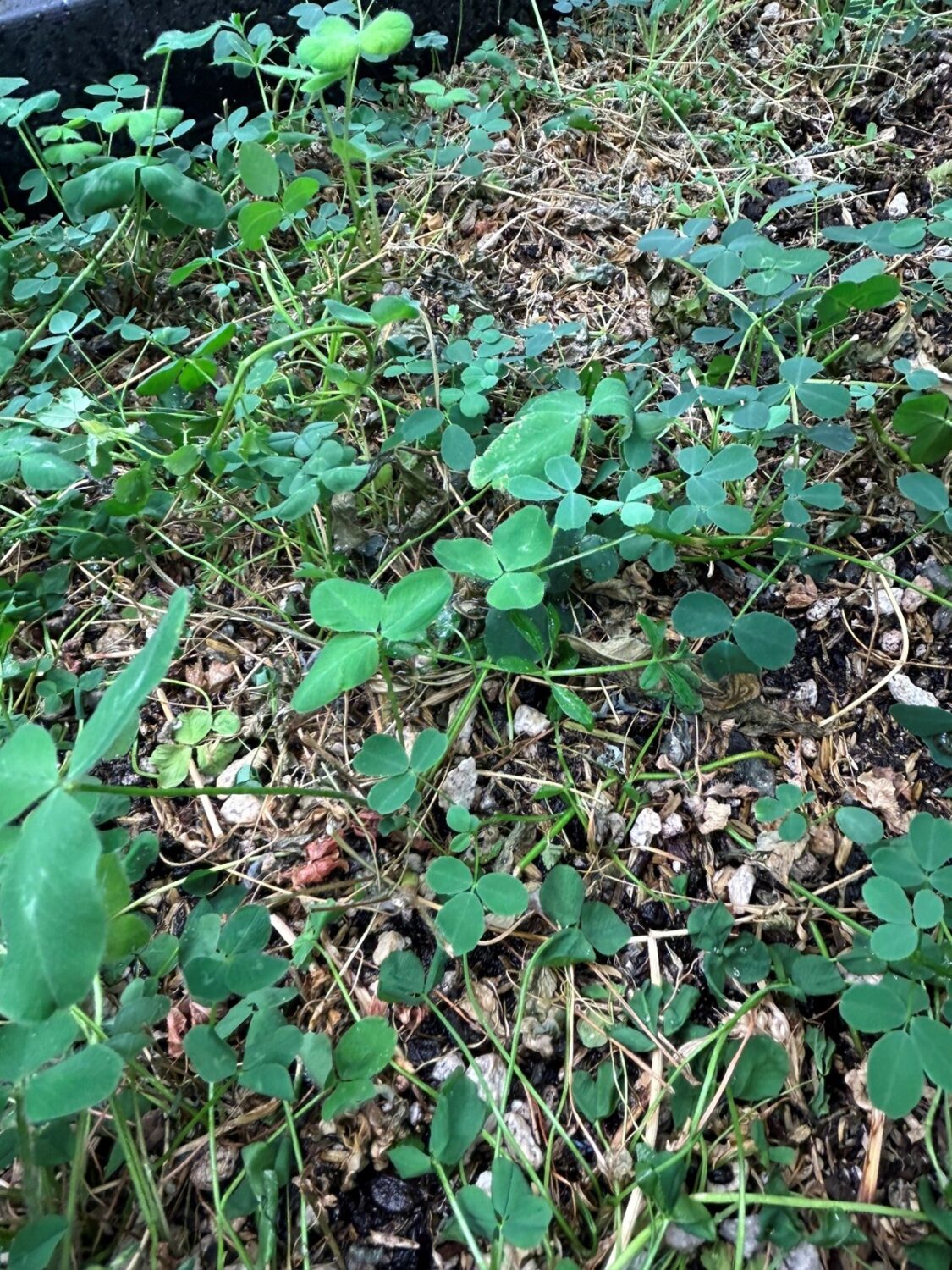
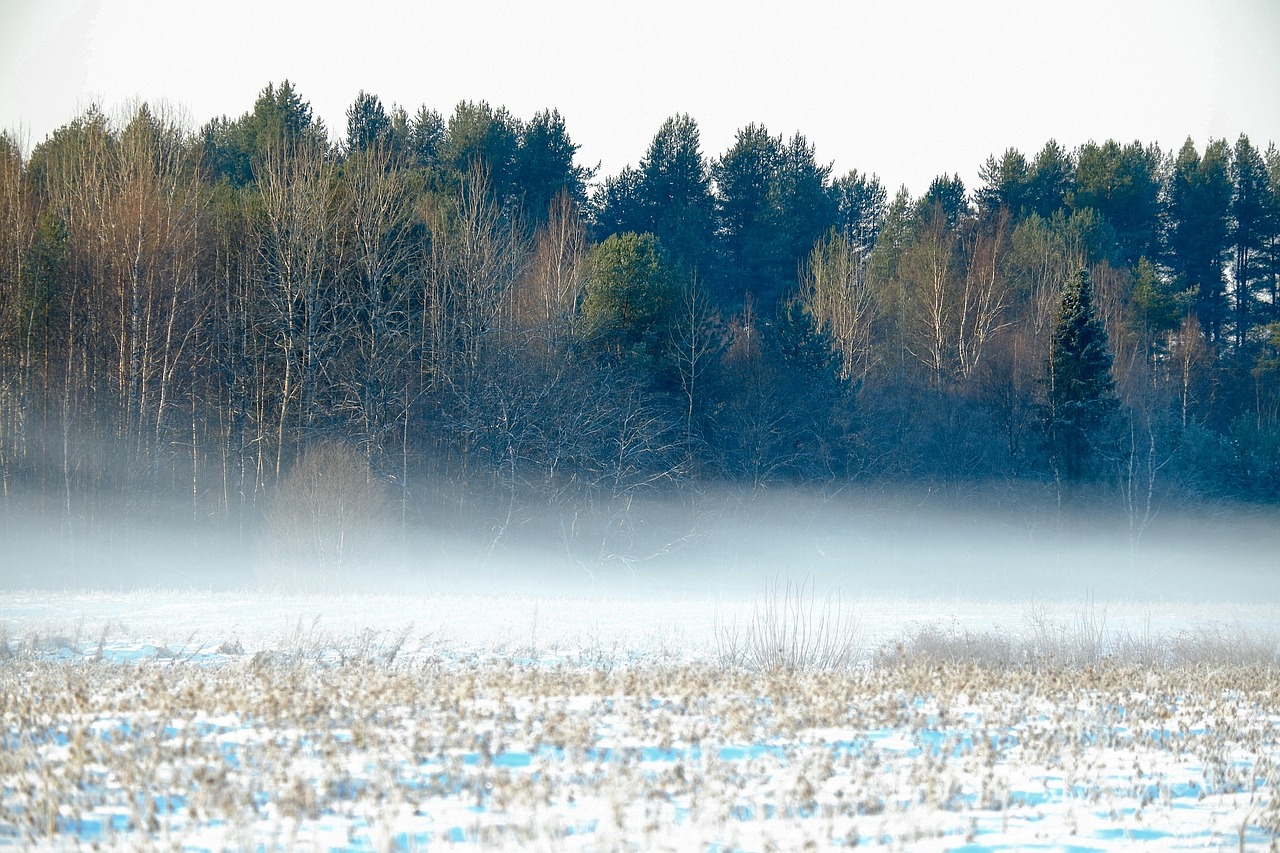
With assistance from the Ohio Department of Agriculture and cooperation from a local producer, Richland SWCD installed two overwintering cover crop demonstration plots after the harvest of a soybean crop in Fall of 2025. Following harvest, the field was lightly tilled by the producer to allow for better seed-soil contact. On September 24, 2025, we broadcast a rye/oat cover crop mix at a rate of ~60 pounds per acre (lbs/ac) across 0.1ac of the lightly tilled farmland. Then on October 8, 2025, we broadcast a rye-only cover crop at ~60lbs/ac on a 0.1ac plot directly adjacent to the first plot. The plots were monitored bi-weekly until going dormant at the end of November. The following is what we’ve observed so far:
We initially had some volunteer soybeans act as a cover crop while our first planting of rye/oats got established. The volunteer soybeans died back after the first hard frost.
The rye broadcast on Oct. 8 did not germinate well and that plot is sparsely covered as a result.
Going into dormancy, the rye/oats plot had an estimated coverage of 44% with average height of the rye grass around 7 inches. It does not appear that the oats germinated. The rye-only plot had an estimated coverage of 2% with an average height of 2 inches headed into dormancy.
We will revisit the plots this Spring as they come out of dormancy and continue our biweekly monitoring until the cover crops are terminated. For cover crop rates and seeding dates reference NRCS appendix A. The goal of the demonstration is to gain a better understanding of the overall impact of NRCS appendix A (download below) cover crop seeding dates and rates across Ohio.
Updates from the final quarter of 2025 and advice on preventing runoff through snow melt.
By Sam Foley
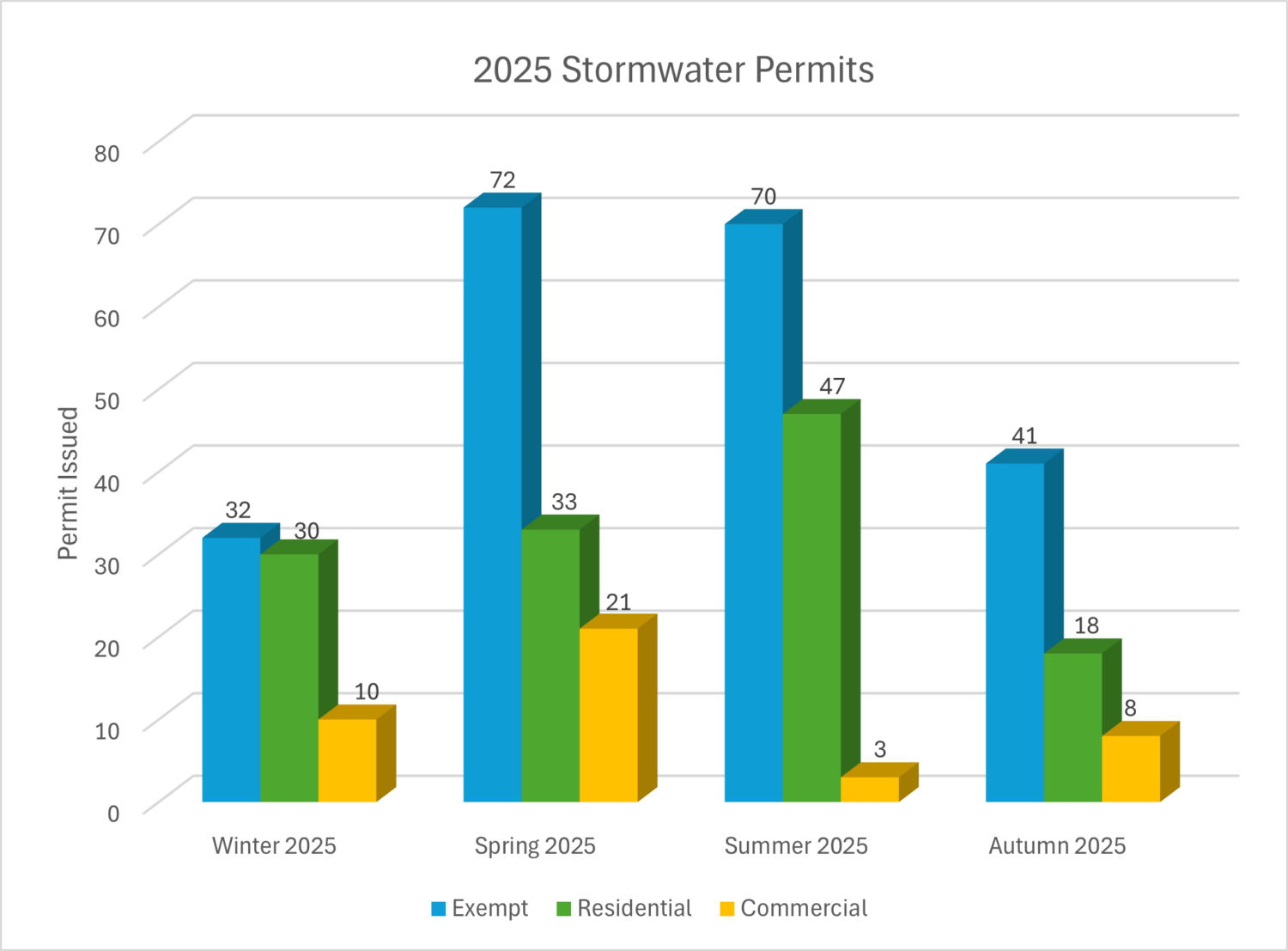
Our final quarter of the year brought in fewer permits than the summer months, but that’s to be expected. Despite the unpredictable winter weather, we still issued 8 permits for commercial projects and 59 residential permits between October 1 and December 31, 2025. Of those 59 residential permits, 41 of them were some sort of exemption.
In 2025 we issued a total of 385 stormwater permits and performed over 700 site inspections.
Please remember, if you are moving soil in the unincorporated areas of Richland County you need to consult with us about a stormwater permit to ensure you are following the Stormwater Management and Sediment Control Regulations of Richland County. Reference Matt Christian’s article on what information and documents you need to obtain a stormwater permit.
Stormwater Permits in 2025 by Quarter
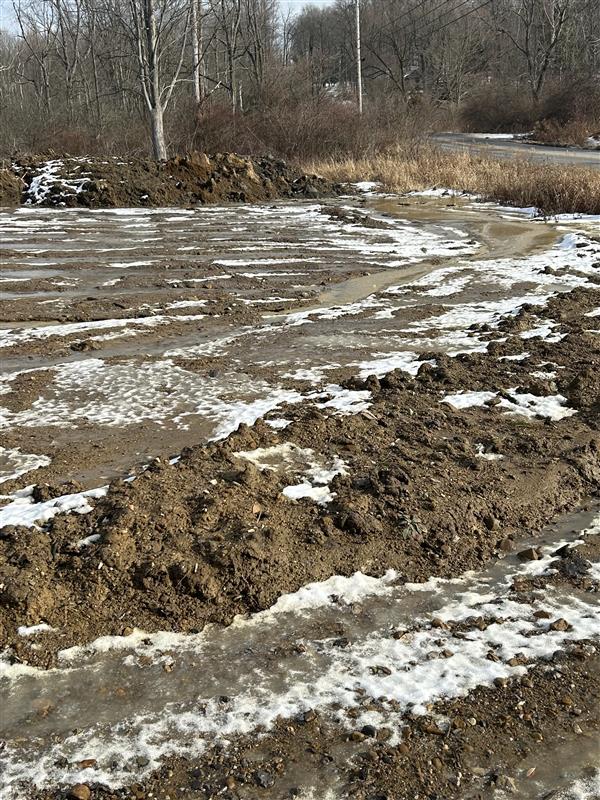
How about a stormwater minute? Even though colder weather is here, and the ground is mostly frozen, you can still find Zoe and I out and about performing site inspections. Frozen ground could maybe be considered temporarily stabilized, but as soon as the thaw comes, the potential for runoff and erosion concerns is very high! Snow melting can contribute to runoff volume and if you are unable to achieve permanent stability in the fall, chances are you are going to see some erosion and soil loss as the ground thaws. Please ensure that you are monitoring site conditions and add the appropriate sediment controls as needed. If you need advice on managing your site, please give us a call, we are happy to help. Be sure to have a plan in place for finish grading and seeding as the warmer weather returns in the spring. Please keep in mind that we don’t consider the permit requirements completed until your site reaches permanent stability.
Thanks to the generosity of the Fran and Warren Rupp Fund of the Richland County Foundation, we have a marketing internship available.
By Theresa Sutter
Thanks to the generosity of the Fran and Warren Rupp Fund of the Richland County Foundation, we have a paid marketing internship available for a college student. The intern will gain hands-on experience in the areas of graphic design, writing press releases, and social media plus learn about soil and water conservation. Information about the internship is available at: https://richlandswcd.net/get-involved/careers-and-Internships/
The easiest and most immediate step you can take towards healthy soil is mulching. Learn how!
By Sam Foley
I’m going to let the audience in on a secret today; I’m incredibly passionate about healthy soil. I love talking to folks about their soil test results and discussing ideas to increase soil health. The easiest and most immediate step you can take towards healthy soil is mulching. The benefits a mulch layer can add to your garden are listed below:
Preventing soil erosion: By covering the top layer of soil there’s greater protection from erosion during watering and rain events.
Retaining moisture: Mulch helps lock in moisture after watering and prevents rapid evaporation. This also helps combat drought.
Controls temperature: Protects the soil during times of extreme weather. Beneficial for both winter and the hot summers. This can be especially helpful in raised beds.
Microbes: This extra protection for the top layer of soil increases microbe activity, which in turn, greatly impacts soil health and productivity. Find the microbial activity in your soil by taking the Soil Your Undies Challenge.
Weed suppression: Though it’s not 100% effective, mulch greatly reduces weed pressure and makes pulling what weeds do pop up that much easier. Most weeds spread by seed, and a few inches of mulch can prevent these seeds from even making it to the soil.
Mulch can be made of almost any material and is simply a cover spread over top of our growing media to enrich and insulate that media. My favorite mulches are organic options. Several examples of commonly used organic mulch are compost, leaf litter, straw, grass clippings, shredded bark, and rice hulls. Another option could be a living mulch. This could be made up of cover crops or even herbs, that grow as companions to a target crop. Living mulch can be “chopped and dropped”, cut and laid on the surface of soil, providing an additional layer of cover. Organic mulch not only provides the traditional benefits of mulch, but it also adds nutrients back into the soil as it slowly breaks down over time. This is a regenerative solution that can help build up soil health year after year.
Soil in your garden should never be left bare. Keeping soil covered with mulch and cover crops is essential to soil health. Always maintain a layer and leave mulch in place year-round. If you’re looking for guidance or just want to chat about growing, please reach out to me! Stay tuned for future articles on gardening.
Native plants and vegetation have historically evolved in the locations they are found, and their evolution coincides with that of the soil, water/drainage, climate, topography, and site history. These plants are adapted to the conditions of a certain area, and in nature nothing happens by accident. Good land management practices include utilizing native species to fill out resource concerns and goals before resorting to non-native alternatives. Along with the native plants being adapted to the conditions of a given site, native wildlife has been evolving and depending on these species throughout their mutual history with one another. A few examples are monarch and milkweed, bee balm and hawk moths, spice bush and the spicebush swallow tail, the list goes on and on.
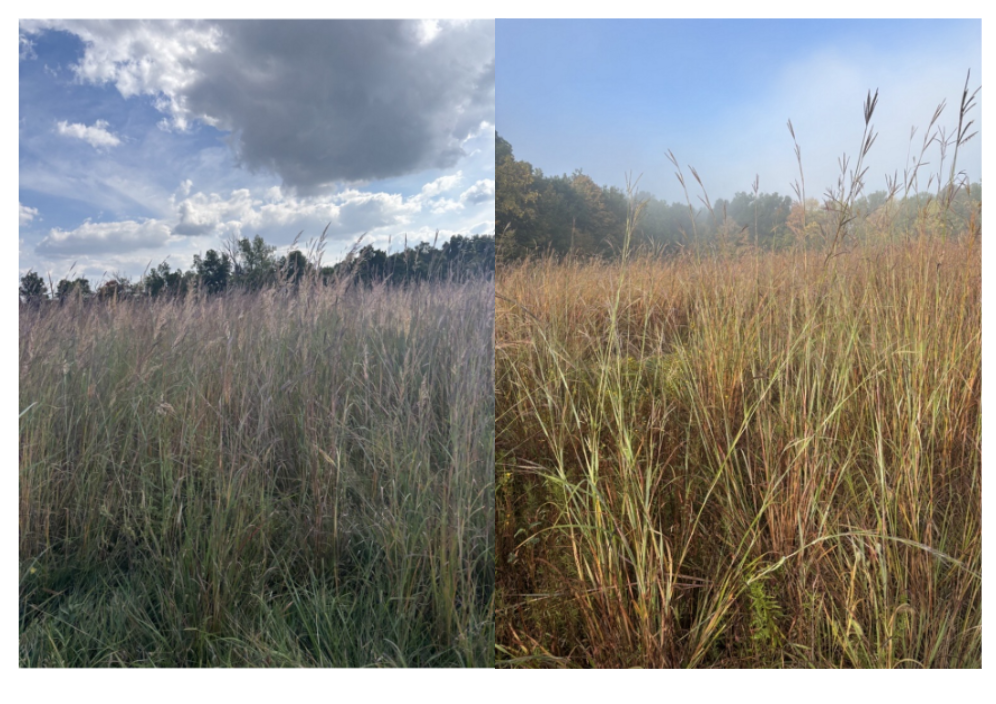
Big Bluestem and Indiangrass
Why would non-native species be desirable?
A general lack of knowledge on the topic is usually how non-natives find their way into our landscape. Native plants can almost always address the goals of landowners without adding the potential for future landscape escapement, possibility of natives not getting pollinated for future populations, and energy being focused on conserving the WRONG species. A lot of our invasive species were brought over for one of three reasons: intentional landscape management (i.e. autumn olive on reclaimed mine land), beautification (i.e. Bradford Pear in garden beds), or the unintentional transport of the seeds/ species. To be non-native simply means the plant is growing outside of its native range. A non-native invasive is growing outside its native range, has escaped its controlled setting into neighboring landscapes, and has an advantage over the native species that grow there (i.e. prolific seed spreader, longer growing season, etc.) Additionally, natural checks that keep this species in balance in its natural range no longer exist (herbivore partners, insects and pests, disease, etc.) Plants observed in their native range typically are seen as well behaved based on observations from the species’ host territory, where it belongs and behaves accordingly with surrounding vegetation, as opposed to the transplanted site where it may have advantages over the natives on site.
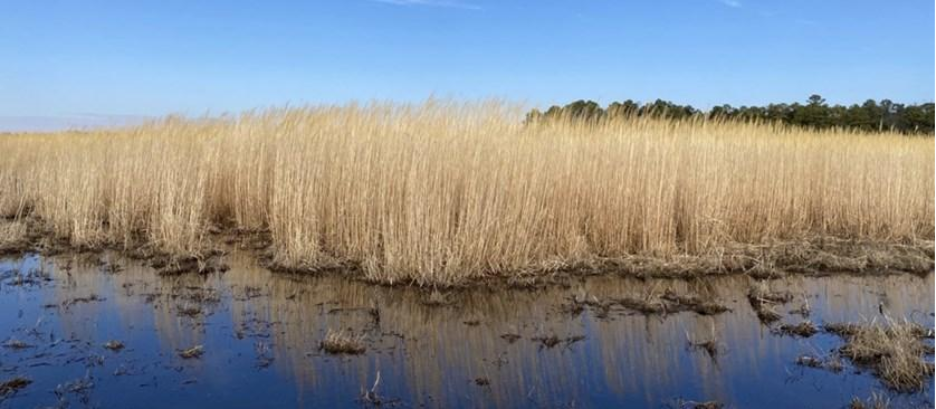
Photo from University of Maryland Extension of Giant Miscanthus, a non-native perennial grass.
What can you do?
There are a lot of non-native species that are hot commodities in landscaping! Things like butterfly bush, burning bush, miscanthus for deer hunters, and so many more. Below is a list of native alternatives to popular landscape plants:
Plant spice bush, red chokeberry, or red osier dogwood instead of burning bush
Plant Indiangrass or switchgrass instead of miscanthus
Plant mountain Mint (brushy herbaceous) instead of butterfly bush
Plant native apples or flowering dogwood instead of Bradford pear
Plant creeping mint or phlox instead of English Ivy
Plant redbud instead of princess tree
Plant American wisteria instead of Chinese/Japanese wisteria
Plant viburnum instead of privet
Plant ninebark instead of barberry
By utilizing natives in your landscape plantings, we are not only achieving the aesthetic factor many are drawn to, but the environmental factors that often don’t get considered.
Do you have everything you need to apply for a stormwater permit? Use the I Have a Project questionnaire to be sure!
By Matt Christian
Winter is upon us. When we’re not thinking about snuggling up to a fire to stay warm, planning skiing trips, drinking hot chocolate, and cleaning snow off our driveways, we begin to start thinking about projects we’d like to do when the weather breaks. This could involve building something on your property; maybe an addition, new garage, pole barn, shed, or possibly a pond. If you are thinking about a project like this, you may need to contact our office about obtaining a Stormwater Permit.
Richland SWCD implements the Stormwater Management and Sediment Control Regulation program on behalf of the Richland County Commissioners. This program was created to ensure that disturbed soil from construction stays on site and does not run off the property. It also considers how rainwater will flow off of new buildings, driveways, and concrete and that it outlets in a way to encourage water to soak into the soil onsite.
If you need a Stormwater Permit, we want to make sure the process is as smooth and painless as possible. We have two technicians that are happy to assist you with the permitting process, Sam Foley and Zoe Baumberger. A few years ago, we developed an interactive questionnaire that will assist you in making sure that you have everything you need before you come see Sam or Zoe, It is called “I Have a Project” and it’s located on our website, Richlandswcd.net (linked below).
It asks you a series of questions about your project then provides a list of all the other permits or documents you will need to get beforeyou apply for a Stormwater Permit. It will even prepare you whether to expect a permit fee or not. The goal of “I Have a Project” was to inform applicants of what they needed before coming in. One of the most frustrating things for applicants is to make the trip to the office to get the permit only to find out they actually have to leave and go acquire a septic permit first, for example, then make another trip back to the office.
So, if you’re looking to complete a project in Richland County, please check out “I Have a Project”. There are a couple of different ways to find it on our website:
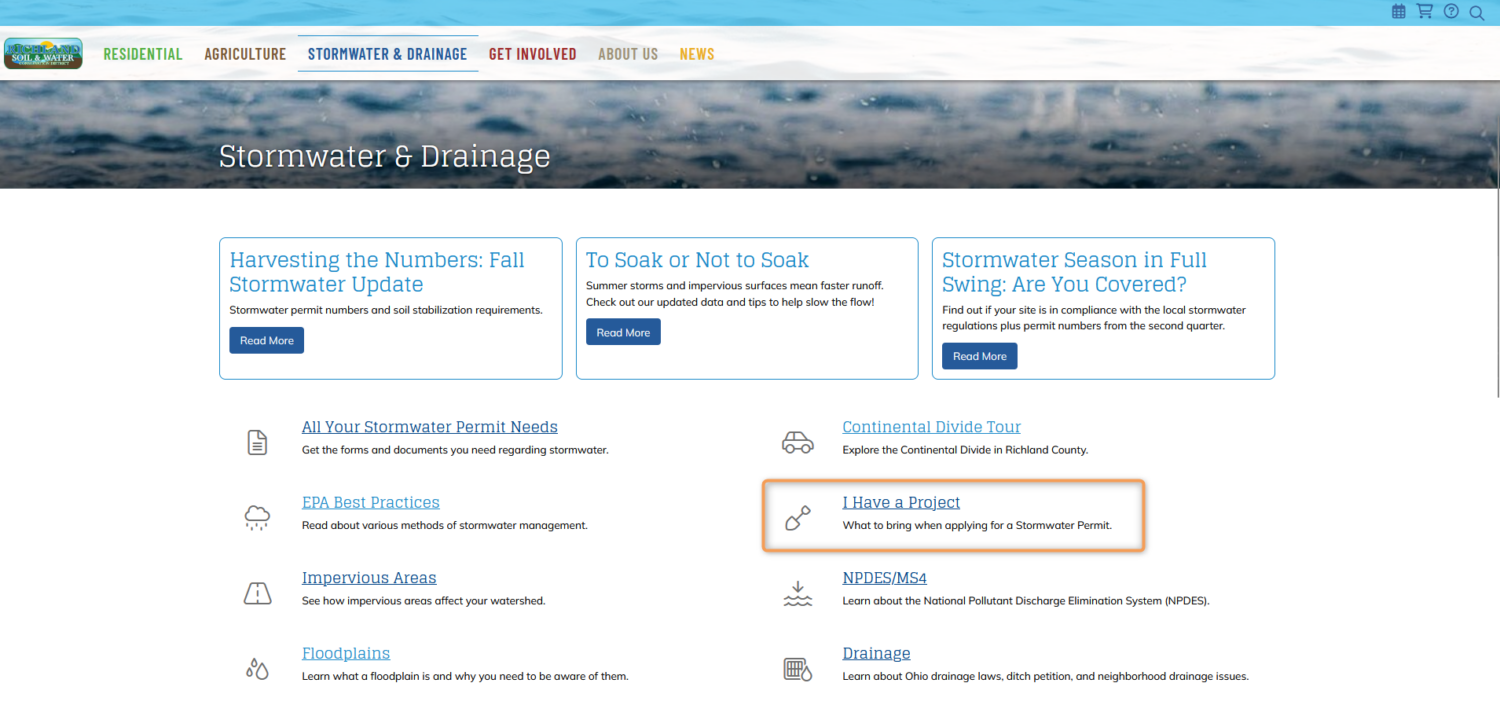
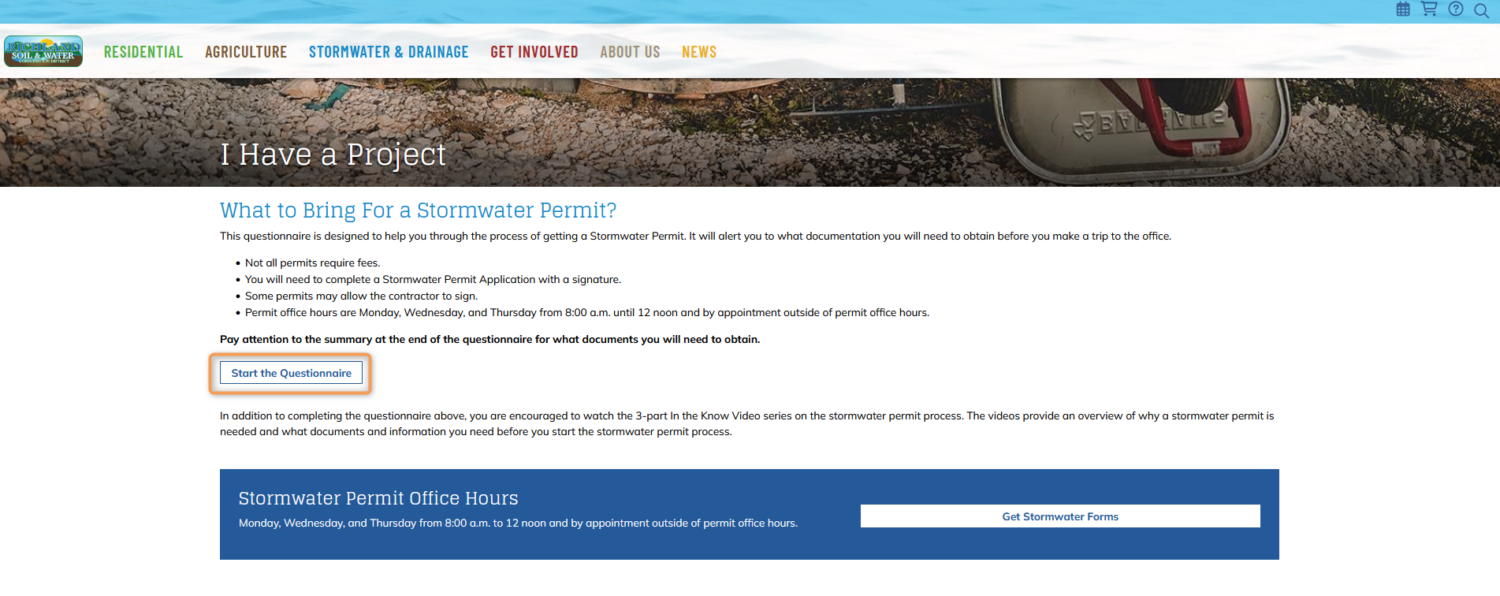
Go to www.richlandswcd.net , click on “Stormwater & Drainage” at the top of the page, scroll down to the links and just below “Continental Divide Tour” you will find “I Have a Project”, click on that link and click “Start the Questionnaire”. Then answer the prompted questions. (See photos below for guidance)
If you have any questions about the permit process, please contact Sam Foley at (419) 747-8077 or Zoe Baumberger at (419) 774-8986.
Guidance on applying nutrients to farm fields and working in a floodplain.
By Matt Wallace
Field Nutrients and You
Application of nutrients prior to planting is common and may be seen throughout farm fields in Richland County. It is recommended that nutrients be placed on your field and tilled into the soil before you plant. If that can’t be done, apply nutrients once the crop begins to grow. Both options allow for the biggest return on your investment (fuel, time, wear and tear on equipment) and the best chance for waterways to not be polluted.
Placing manure on snow covered, frozen, or rain-saturated ground is discouraged. Nutrients produced on your farm or brought in from other sources can readily leave your farm fields through melting snow or saturated soils. A good rule of thumb is to not apply nutrients when there is a chance of a half inch of rain or more. Winter applications are only recommended if there isn’t any more manure storage space available. In that case, only apply enough to free up the amount of storage space needed.
Additional best management practices include looking for tile blowouts and fixing them before nutrient application. During drier times when soil may be deeply cracked, utilize a tillage implement to close the soil cracks and keep nutrients from directly accessing field tiles.
Setbacks are highly recommended by the Ohio Department of Agriculture (ODA) to keep your nutrients on fields. The recognized setback standards to follow may be found in the United States Department of Natural Resources Conservation Service (USDA-NRCS) 590-CSP-1 document. Click on the link below to access the document, pick up a copy in our office, or request it be emailed. https://www.nrcs.usda.gov/resources/guides-and-instructions/nutrient-management-ac-590-conservation-practice-standard
Richland SWCD photo
Floodplain 101
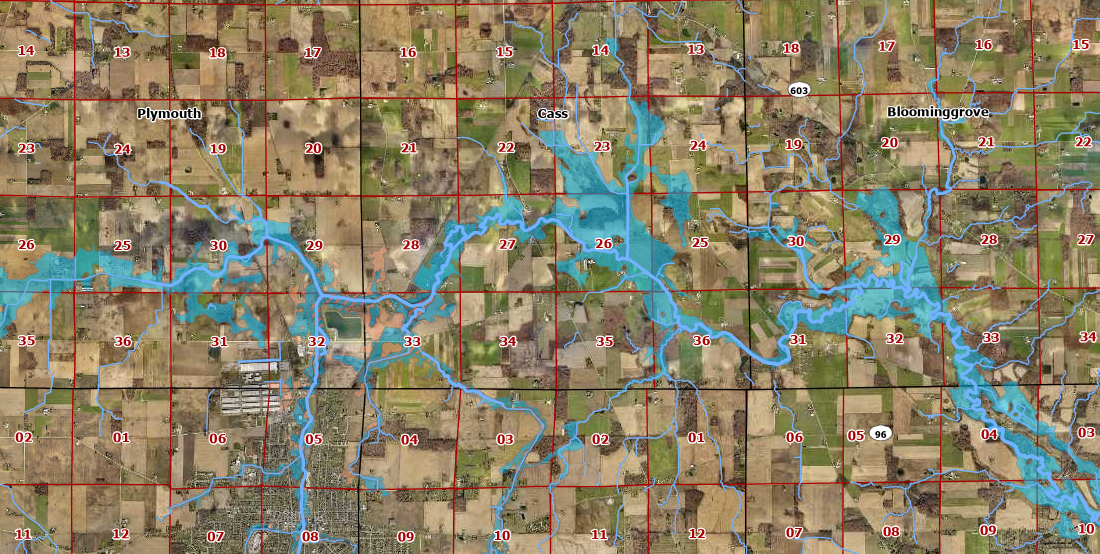
What is a floodplain? A floodplain is an area adjacent to a river, stream, or low-lying area that is adjacent to another water body that becomes overwhelmed with water during times of heavy and/or prolonged rainfall or when snow melts. Typically, these areas contain soils that are nutrient rich and identified as being hydric, or very wet.
How are floodplains and maps determined? These unique areas are determined by multiple factors such as topography, soils, proximity, engineering, historic floods, and photographs of historic floods.
Floodplain maps, officially known as Flood Insurance Rate Maps (FIRM), show areas of high, moderate, and low-flood risk which are shown as series of zones. Communities use maps to set minimum building requirements for coastal areas and floodplains; lenders use them to determine flood insurance needs and costs.
Filling and building within the floodplain may come with many challenges which may be costly. Additional requirements for building in a floodplain may include but is not limited to hydraulic/hydrologic studies, additional permits, elevation of entire structures, and additional compaction. These construction standards can influence decisions like “Should I build here? or Should I purchase this property?”.
Floodplain layer on the county auditor’s site. Flood zones are in blue.
Each municipality and community has a set of Federal Emergency Management Agency (FEMA) approved regulations for their communities designed to help improve the safety of a community’s residents and plan future development. Regulations vary within Richland County due to each municipality adopting their own regulations. Check the regulations of the municipality under consideration before purchasing or developing property. Richland Soil and Water Conservation District serves as the Floodplain Administrator and Floodplain Manager for Richland County. We encourage you to reach out to us before purchasing or developing a property.
2026 brings a new MS4 theme: Only Rain Down the Drain! Learn more by clicking.
By Zoe Baumberger
In the final quarter of 2025, we inspected our MS4 township garage facilities to confirm their good housekeeping practices. We enjoyed catching up with the township road supervisors and discussing our plans for the new permit term, which will run from 2026 to 2030.
2026 brings a new MS4 theme: Only Rain Down the Drain!
Many people don’t realize that, unlike a sanitary sewer, the water that enters a storm drain or ditch is NOT treated. There’s no filtration or disinfection process. Stormwater simply flows (often through a system of pipes, culverts, and catch basins) to the nearest stream, lake, or river. That means anything the water picks up along the way (from litter to oil) is carried into our local waterways. What goes down the drain goes into our environment.
Join us throughout 2026 as we highlight simple ways to protect our waterbodies. If you’re planning a project this year, come get your stormwater permit to ensure you’re only sending rain down the drain. Small choices can make a big impact! Learn more here: https://www.onlyraindownthedrain.com/
The Ohio Lake Management Society (OLMS) honored Theresa Rozic Sutter, Marketing and Volunteer Coordinator…
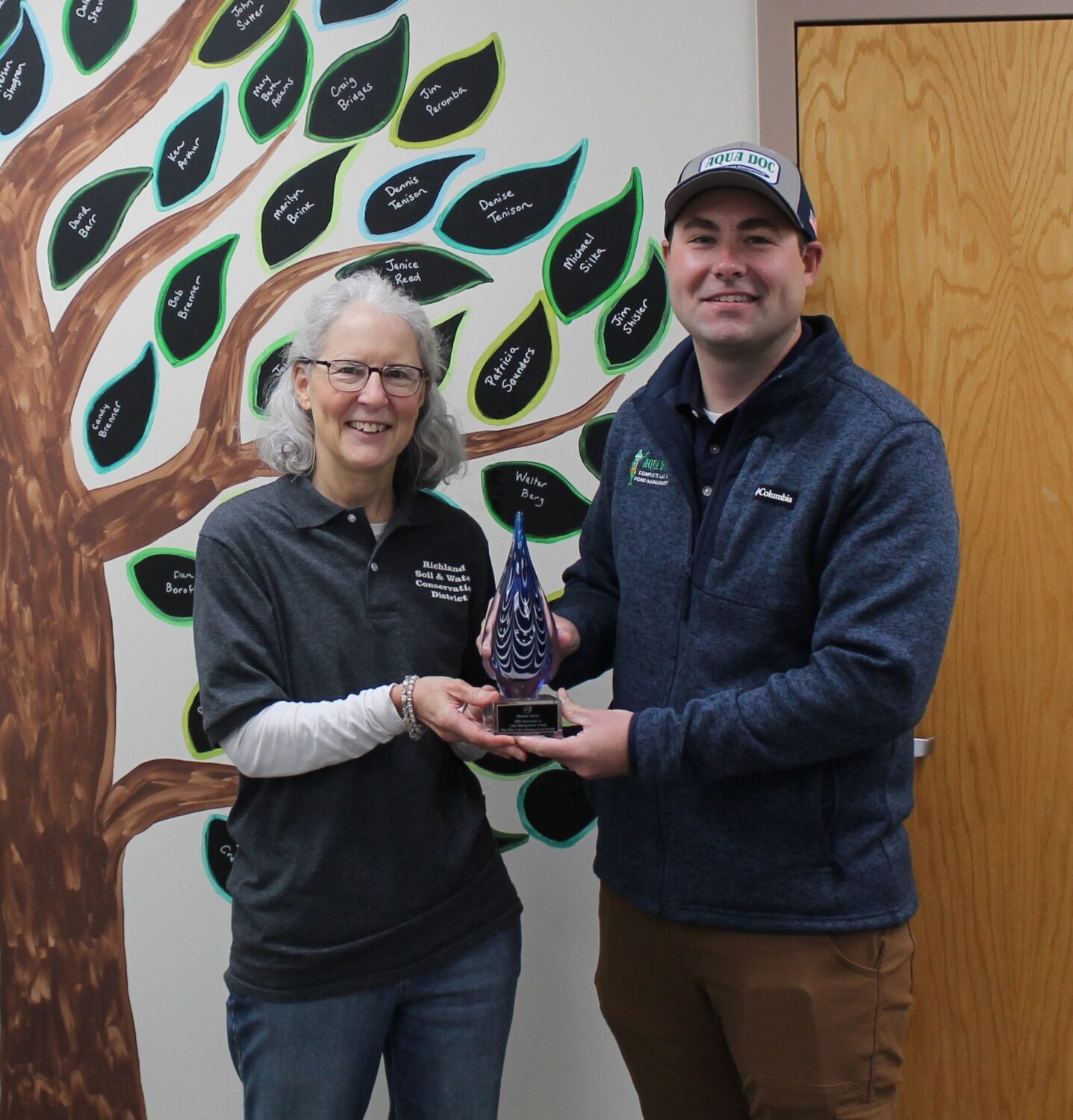
The Ohio Lake Management Society (OLMS) honored Theresa Rozic Sutter, Marketing and Volunteer Coordinator, the Innovation in Lake Management Award for 2025 in recognition of her contributions to water quality education and outreach in Richland County. Theresa credits District volunteers for their commitment to monitoring Charles Mill Lake, Clear Fork Reservoir, and Pleasant Hill Lake and considers it an award for them and the District.
Since joining Richland SWCD in 2013, Theresa has worked to advance the district’s mission to conserve, protect, and enhance the natural resources of Richland County, with focus on the health of the county’s soil and water resources. Carter Bailey of OLMS shared, “Due to her innovative and tireless commitment working with individuals and organizations, Mrs. Sutter consistently demonstrates a deep commitment to public education, outreach, and engagement, using a variety of platforms and programs to increase awareness of water quality.”
Theresa’s approach to community engagement includes leading workshops, district sales, volunteer programs, and school and youth education initiatives among other efforts. Additionally, Theresa has effectively utilized social media and community events to reach a broader audience, ensuring residents across Richland County are informed of local soil and water conservation efforts and volunteer opportunities. Theresa’s efforts embody the importance of local involvement and fostering community-driven efforts to protect and improve water quality.
Richland County is unique in that it contains eight distinct watersheds, compared to the more typical one per county. These watersheds are critical to water quality, as three flow to Lake Erie and five to the Ohio River. The county is also home to several important water bodies, including Charles Mill Lake, Clear Fork Reservoir, and Pleasant Hill Lake—all vital to environmental health and recreational activities. Learn more about watersheds in Richland County.
Richland Soil and Water Conservation District participated in this year’s Richland Gives, an online donation platform designed to…
By Theresa Sutter
Richland Soil and Water Conservation District participated in this year’s Richland Gives, an online donation platform designed to encourage people to contribute to local nonprofits they care about through a single giving website. It is hosted by The Richland County Foundation to build capacity, grow philanthropy, and make the community stronger.
Due to the generosity of donors, $1,000.00 was raised to provide free quarterly Conservation Creation Arts & Crafts Workshops this year for up to 25 people. In the past, participants were charged to cover the cost of workshop supplies. Funds will buy supplies needed for the craft or art project.
The workshops pair an educational topic about the natural world with a related craft or art project and allow participants to learn more about the services and programs offered by the District. They bring people together in an informal setting where they learn about topics related to soil and water conservation but also visit with each other, build community, and be creative. Each evening is fun and educational. Register for the April 14 workshop at https://richlandswcd.net/event/conservation-creation-arts-craft-workshop-spring-seeds/.
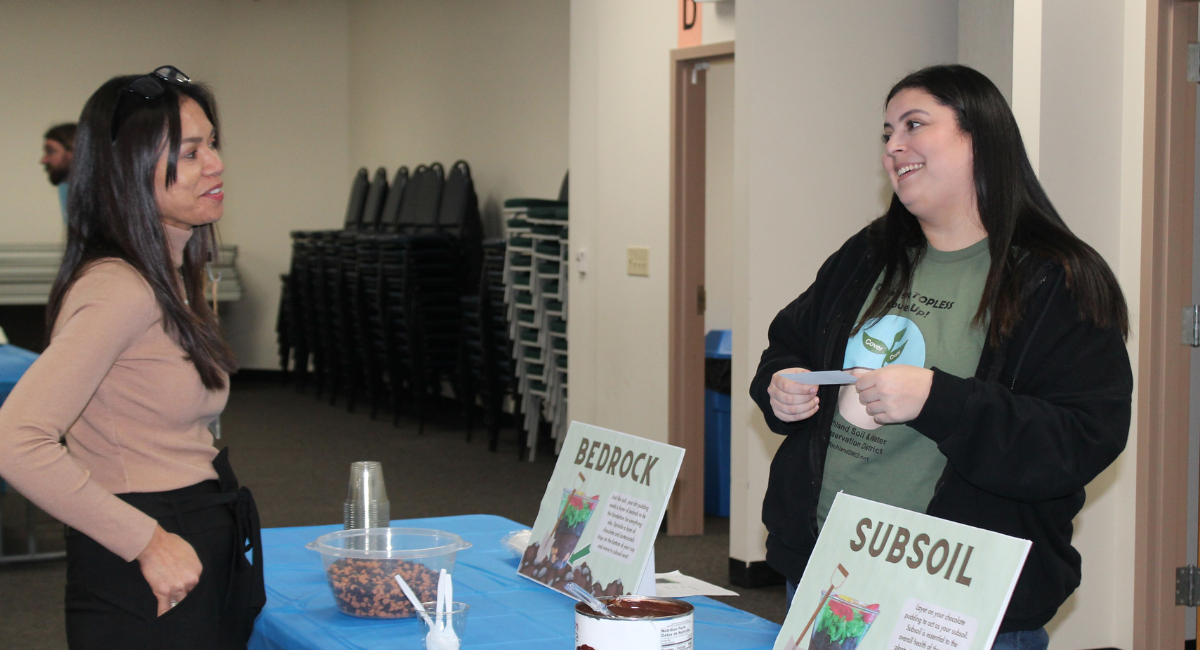
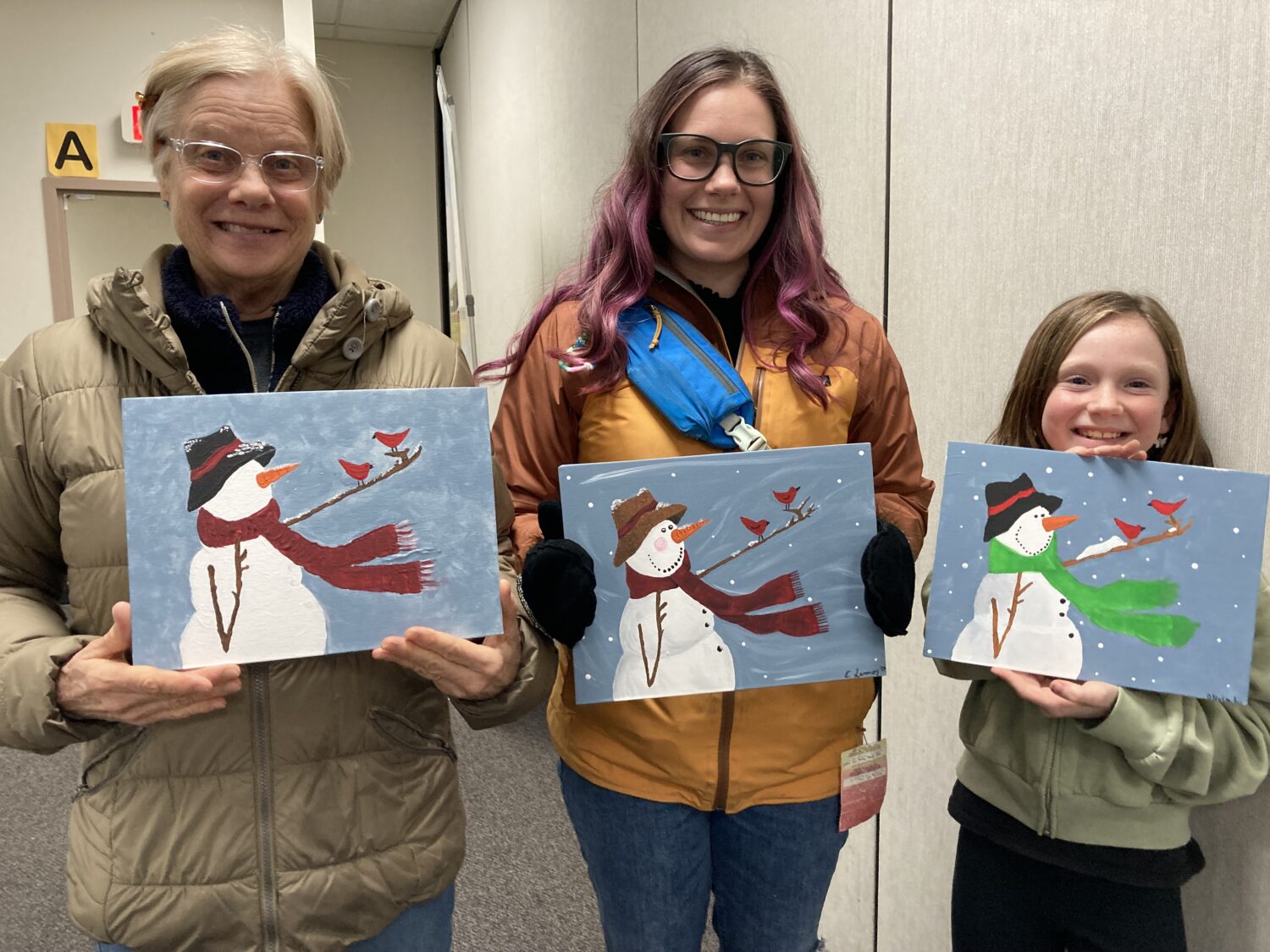
January 2025 Conservation Creation Workshop
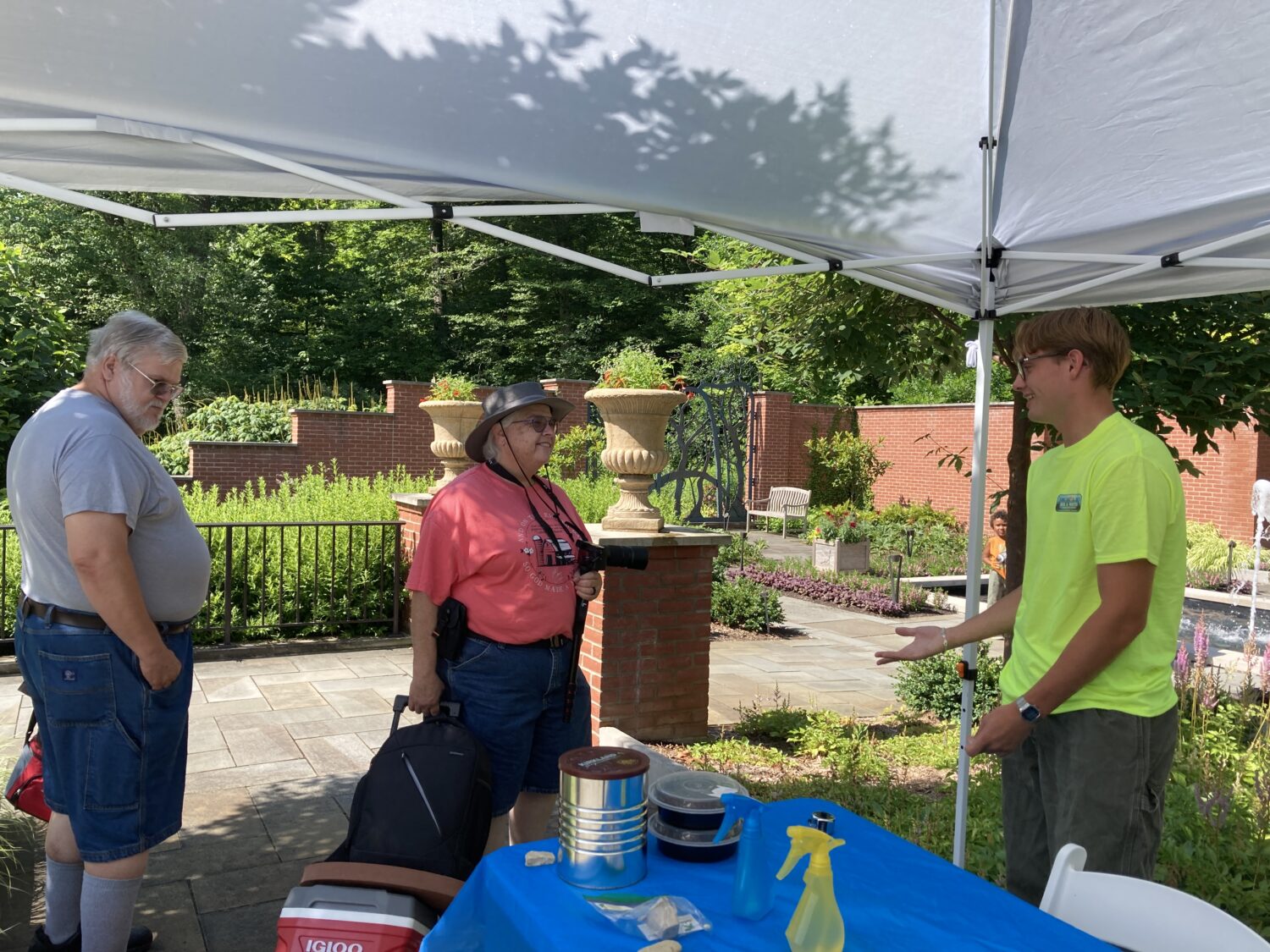
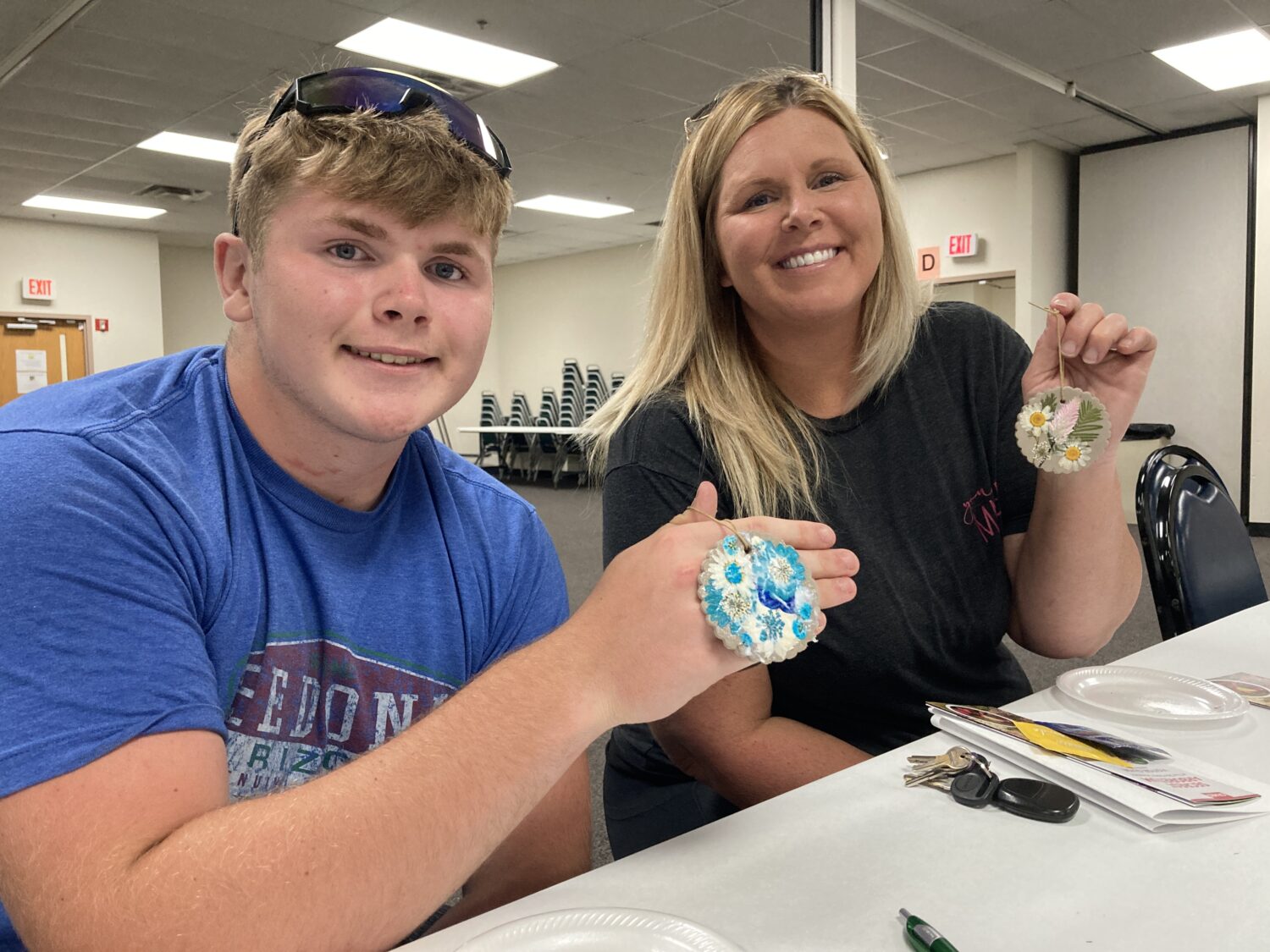
July 2025 Conservation Creation Workshop
Sign up for updates!Get news from Richland Soil and Water Conservation District.